One year after a U.S.-mediated ceasefire was
announced in the Gaza Strip, displaced Palestinians continue to face severe
hardships. Residents of displacement camps say Israeli airstrikes are still
occurring almost daily and that the peace they had hoped the ceasefire would bring
has yet to materialize. Israeli attacks continue, and Israel now controls
approximately 70 per cent of the Gaza Strip. Meanwhile, reconstruction of the
devastated Palestinian territory has yet to begin under the ceasefire plan. Fatima,
a displaced woman living in Gaza City, said conditions had not improved and
had, in fact, deteriorated further. “Our situation has still not improved.
Everything has become worse. They are lying to us; it is all a lie,” she said. “People
are still being killed and injured, and shelling continues. The constant
buzzing of drones means we cannot find peace even for a moment,” she added.
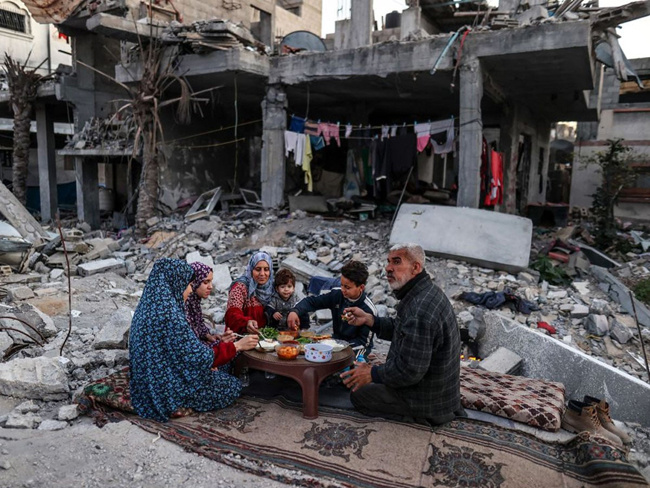
Along the streets of Gaza City, rows of white
tents line both sides of roads cleared through the rubble of destroyed homes.
In the distance, the shattered windows of standing buildings remain visible
reminders of the widespread devastation. Another displaced Palestinian, Ahmad
Junaid, said he had hoped to return home after the ceasefire. The 51-year-old,
who was carrying two containers of water towards his tent, said, “We thought we
would finally have some happiness and be able to return to our homes. Instead,
we find ourselves struggling in displacement camps and sleeping on makeshift
beds.”
During the war that began following the October
7, 2023, attack on Israel, almost all of Gaza’s more than two million residents
were displaced at least once. According to the United Nations, by mid-2026, 82
per cent of buildings in Gaza had either been destroyed or damaged. As a
result, large numbers of Palestinians remain forced to live in tents or
temporary shelters. Overcrowding and poor sanitation have also contributed to
the spread of various diseases. Dr Ahmad Shawan, who works at a hospital in
Khan Younis in southern Gaza, said he had yet to see any tangible signs that
the ceasefire was working on the ground. “A full year has passed since the
ceasefire was announced, but it exists only on paper,” he said.
Israel controls all entry points into Gaza and
continues to allow only limited quantities of aid into the territory. As a
result, prices of basic necessities have risen beyond the reach of many
ordinary Palestinians. Ismail Hamouda, 47, is among those struggling to meet
their basic needs. Displaced from Jabalia in northern Gaza to Gaza City,
Hamouda, a father of five, said people still urgently needed clean drinking
water, food and financial assistance. “We hoped that, after a year of the
ceasefire, conditions in the displacement camps would improve and life would
become easier,” he said. Expressing his disappointment, Hamouda added,
“Unfortunately, the situation is gradually getting worse, and we are still
displaced.”