Amid
the ongoing war between Iran and the United States, two major global financial
institutions, Goldman Sachs and Capital Economics, have issued new forecasts
regarding oil prices, causing concern in global markets. Major financial
institutions in the United States and the United Kingdom have warned that if
the issue of oil supplies from the Middle East is not resolved soon, crude oil
prices in global markets could rise to $150 per barrel.
In
a special report, the international news agency Reuters said that crude oil
prices could rise above $120 per barrel in the coming months, while Brent crude
could reach $130 per barrel. Similarly, according to global energy research
firm Facts Global Energy (FGE), if a prolonged disruption to oil supplies from
the Middle East continues, Brent crude could rise to between $120 and $150 per
barrel. Meanwhile, global ratings agency Fitch has estimated an average Brent
crude price of $120 per barrel for 2026.
Experts
say oil prices in global markets have already exceeded $110 per barrel and are
currently trading at around $108, which they describe as a dangerous trend.
They say global corporations are also discussing the possibility of pushing oil
prices as high as $200 per barrel in pursuit of higher profits, as they
consider profit to be their top priority. Experts say global powers should have taken
immediate steps to end the war, but "criminal negligence" was shown
in dealing with the situation. They therefore argue that pressure should be
increased on governments and world leaders.
American
economist Professor Jeffrey Sachs considers the current situation more
dangerous for humanity than the Cold War. He says the economic devastation is
not affecting just one region but is having consequences for people around the
world. He has called for
increased pressure on the United Nations, governments, and global leaders to
bring an end to what he described as this "absurd war." Meanwhile,
Reuters reported that the impact on global energy markets has become
increasingly severe. Concerns over global oil supplies have grown due to an
unusual decline in the movement of oil tankers and commercial vessels through
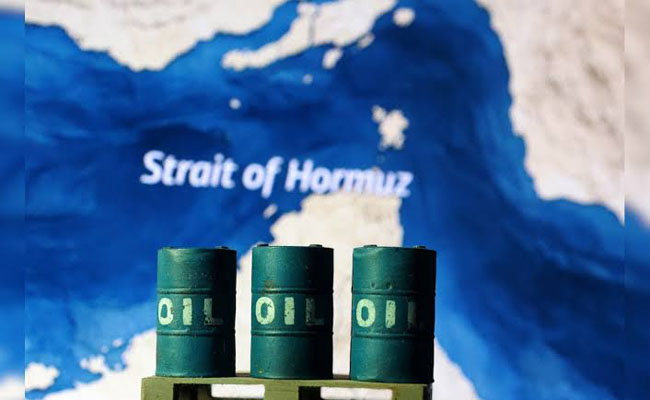
the Strait of Hormuz. According to Reuters, the number of vessels
passing through the Strait of Hormuz has fallen sharply compared with normal
levels before the war. The disruption in this strategically important waterway
has raised concerns in global markets because a significant share of the
world's energy trade passes through this route.
Amid
rising regional tensions, crude oil prices in the global market have once again
surged sharply. Brent crude has crossed $108 per barrel, while U.S. West Texas
Intermediate (WTI) has also risen above $103 per barrel. Fresh attacks on
energy facilities in Saudi Arabia have further intensified the situation.
Following disruptions to the transportation of oil through the important
East-West pipeline, concerns have grown in global markets that oil supplies
from the Middle East could decline further.
The
Strait of Hormuz is considered one of the world's most important energy routes.
If shipping through the strait remains disrupted for an extended period, global
shipments of crude oil and liquefied natural gas (LNG) could suffer significant
losses. Major markets, including those in Asia and Europe, would have to obtain
energy from alternative sources. According to experts, the impact of
continuously rising oil prices is not limited to petrol. Electricity,
transportation, industry, food prices, and overall inflation are also affected.
Higher oil prices can also increase trade and financial pressures on
oil-importing countries. Several major energy-consuming countries, including
China, are also using their oil reserves during the current crisis to limit the
impact of potential supply shortages.
The
situation is also a matter of concern for Pakistan. Rising crude oil prices in
global markets could increase Pakistan's import bill, put pressure on petroleum
product prices, and contribute to higher inflation. A sustained increase in oil
prices could also put pressure on the Pakistani rupee and affect other sectors
of the economy. Experts say that if tensions in the Strait of Hormuz continue,
further attacks on Saudi energy facilities occur, and disruptions to global oil
supplies increase, crude oil prices could rise to $120 per barrel or even
higher.
However,
if shipping through the Strait of Hormuz returns to normal as a result of a
ceasefire, diplomatic negotiations, or a reduction in tensions, pressure on
prices in the global oil market could ease quickly. The current situation
resulting from the Iran war has made it clear that military tensions in the
Middle East are no longer merely a regional issue. Their effects have now
extended to global energy supplies, trade, inflation, and economic stability.
The world's attention is now focused on the Strait of Hormuz, as any further
disruption to this vital maritime route could trigger a major energy crisis for
the global economy.