UN
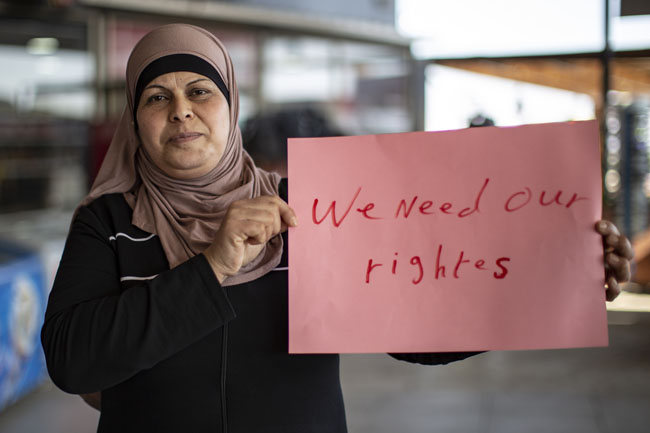
Women, a United Nations agency, has called for urgent action to end the
violence and hardships faced by Palestinian women in the occupied West Bank.
According to the Emirati news agency WAM, the organization warned that the
situation of women and girls in the occupied territory is continuing to
deteriorate due to increasing settler violence, military operations, and
restrictions on movement, while movement restrictions have reached their
highest level in the past two decades. In its latest analysis of the situation
of Palestinian women in the occupied West Bank, including occupied East
Jerusalem, the organization said that approximately 83,200 households are
headed by women, representing one in every eight households.
The
analysis said that this figure is likely lower than the actual number. It also
highlighted data released last July by the United Nations Office for the
Coordination of Humanitarian Affairs (OCHA), according to which more than
41,500 people have been displaced in the occupied West Bank. Based on
gender-disaggregated population data from the Palestinian Central Bureau of
Statistics, more than 20,000 of those displaced were women and girls. According
to UN Women’s analysis, women heading households face heavy responsibilities.
Among them, 82 percent manage the household income, 77 percent are responsible
for childcare, and 75 percent make all decisions concerning the safety of
family members on their own, while 65 percent independently submit applications
for assistance. Reviewing the hardships faced by Palestinian women, the
analysis said that there are approximately 925 movement obstacles across the
occupied West Bank, including checkpoints staffed by personnel, earth mounds,
roadblocks, and trenches.
This
is the highest number recorded in the past two decades, with 40 percent of
these checkpoints located in Area H2 of Hebron. The organization confirmed that
nearly nine out of 10 women heads of households surveyed said they felt unsafe
while traveling through checkpoints, while more than half said that
restrictions on movement hindered their access to employment opportunities. All
the women surveyed reported completely avoiding checkpoints. UN Women warned
that displaced households headed by women are facing severe difficulties in
meeting their basic needs, including access to cash, food, clothing, hygiene
supplies, and shelter. They are also increasingly concerned about the violence
and security risks faced by their children.