Politics
Japan Issues False Earthquake Alert Reporting Magnitude 9.9
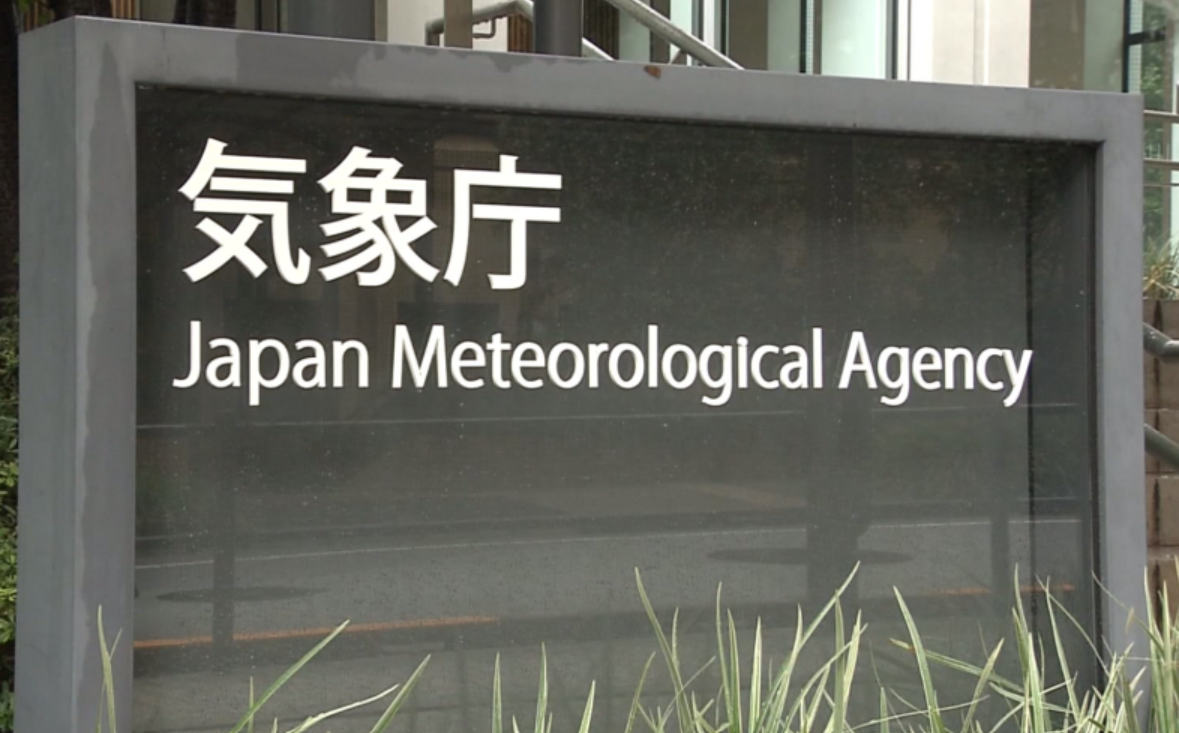
Japan’s Meteorological Agency mistakenly issued a preliminary earthquake alert reporting a magnitude 9.9 earthquake.
- Reading time
- 3 min read
- Published
- 16 Oct 2026, 08:23

Politics
Japan’s Meteorological Agency mistakenly issued a preliminary earthquake alert reporting a magnitude 9.9 earthquake.
Japan’s Meteorological Agency mistakenly issued a preliminary earthquake alert reporting a magnitude 9.9 earthquake. The alert was later cancelled. It had been triggered by a magnitude 6.9 earthquake that struck Russia’s Kamchatka Peninsula. On Friday morning, a magnitude 6.9 earthquake occurred near the village of Ozyornovsky in southern Kamchatka, Russia. Tremors from the earthquake were also felt in Hakodate, Japan. Shortly afterward, Japan’s Meteorological Agency issued an emergency earthquake alert that incorrectly reported the earthquake’s magnitude as 9.9. The warning was withdrawn a few minutes later. However, the error prompted experts around the world to consider what might happen if an earthquake of magnitude 9.9 were actually to occur. According to the United States Geological Survey (USGS), some of the most powerful recorded earthquakes in human history include the following:
Chile Earthquake (1960): The Valdivia earthquake was the largest earthquake ever recorded. It killed 1,655 people and left approximately two million people homeless.
Great Alaska Earthquake (1964): This magnitude 9.2 earthquake lasted approximately five minutes and claimed 130 lives.
Sumatra Earthquake, Indonesia (2004): The magnitude 9.1 earthquake triggered a tsunami in the Indian Ocean that killed more than 250,000 people.
Tōhoku Earthquake, Japan (2011): The magnitude 9.1 earthquake triggered a devastating tsunami and led to the Fukushima nuclear disaster. More than 1,800 people died in the disaster.
Kamchatka Earthquake, Russia (1952): This was the first recorded earthquake with a magnitude of 9.0. It generated tsunami waves approximately 30 feet (9 metres) high that travelled towards Hawaii.
According to the USGS, an earthquake’s magnitude depends on the length of the fault line and the area that ruptures. Experts estimate that a magnitude 9.9 earthquake would release approximately 32,000 times more energy than the recent magnitude 6.9 earthquake, making it far more powerful than the 1960 Chile earthquake and the 2011 Tōhoku earthquake in Japan. An earthquake of this scale would require the rupture of a fault extending approximately 3,000 to 5,000 kilometers. Ground shaking could continue for at least five minutes or even longer.
Changes to Earth’s Geography: Areas near the epicenter would face catastrophic destruction, while significant displacement of the seafloor could occur. Coastal land could permanently sink or rise by several meters, potentially altering coastlines and reshaping coastal geography. Effects on Earth’s Axis: Some experts suggest that an earthquake of such extraordinary magnitude could alter Earth’s rotational speed by a few microseconds and potentially cause a slight shift in its axis. Scientists explain that the scale used to measure earthquake magnitude is open-ended, meaning it has no fixed upper limit. However, the size of Earth imposes a practical limit on the magnitude of earthquakes that can occur. For example, a magnitude 12 earthquake would require a fault line larger than Earth itself, making such an event physically unrealistic.
Japan lies along the Pacific Ring of Fire, a horseshoe-shaped region stretching approximately 40,000 kilometers that is highly active in terms of earthquakes and volcanic activity. This is one of the main reasons earthquakes occur frequently across the Japanese islands. In addition, Japan is situated at the junction of four major tectonic plates: the Pacific Plate, the Philippine Sea Plate, the Eurasian Plate and the North American Plate, also associated with the Okhotsk Plate in this region. The continuous movement of these plates has contributed to Japan’s geological activity. The country has more than 100 active volcanoes, including Mount Fuji, and approximately 1,500 earthquakes are felt or recorded in Japan each year.