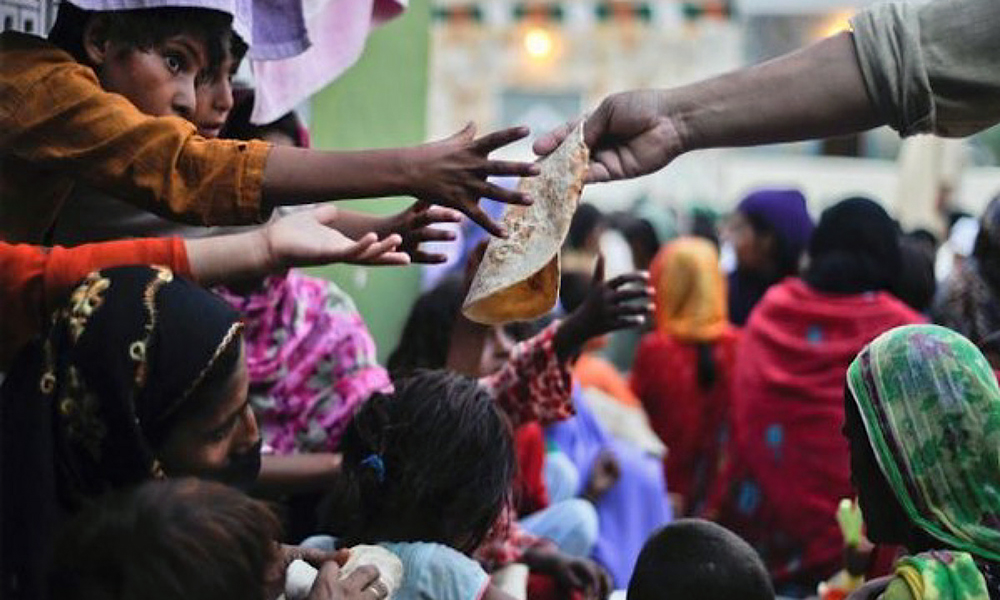
Afghanistan is experiencing unprecedented levels
of hunger and food insecurity, with 15.9 million people facing severe food
insecurity. The situation is expected to deteriorate further in the coming
months. Heads of various United Nations agencies have appealed for urgent
assistance to address the growing crisis. In its latest report on Afghanistan,
the United Nations Assistance Mission in Afghanistan (UNAMA) has documented
further serious human rights violations, including public flogging and new
restrictions on public protests.
According to the Integrated Food Security Phase
Classification (IPC), millions of people across the country experienced acute
hunger between August and October. Economic pressures are worsening household
hardships. More than 32 percent of the population is experiencing food
insecurity at IPC Phase 3 or above, while 3.4 million people are facing
emergency-level food insecurity, classified as Phase 4. The report identifies
the spread of diseases, inadequate access to clean water, sanitation and
hygiene facilities, and a significant decline in access to nutrition services
as major factors contributing to the deteriorating situation.
Risk of Further Deterioration in Food Security
Conditions are expected to become even more
severe between November and April. During this period, approximately 19.2
million people are projected to face food insecurity at IPC Phase 3 or above,
including five million who may experience emergency-level food insecurity. The
number of people suffering from severe malnutrition is also expected to
increase significantly. Between January and December 2027, an estimated 4.04
million children under the age of five may require treatment for malnutrition.
Opportunity for Humanitarian Assistance
The World Food Program (WFP) and the Food and
Agriculture Organization of the United Nations (FAO) have highlighted the
severity of the crisis and called for urgent financial assistance. Both
agencies have stressed the need to expand food distribution, emergency
agricultural support, malnutrition prevention and treatment program. John Ayliff,
WFP's Country Director in Afghanistan, said that an opportunity to provide
assistance still existed, but it was rapidly disappearing. He said timely
support could enable people to get through the winter with dignity. Without
assistance, many parents would be forced to make difficult choices that no
parent should ever have to face. Richard Trenchard, the FAO representative in
Afghanistan, said people needed support and livelihood opportunities that would
enable them to earn a sustainable income, withstand future crises and overcome
the hardships of winter.
Restrictions on Women and the Media
In its report, UNAMA stated that the human rights
situation across Afghanistan continued to deteriorate between July and
September. Women and girls have borne the greatest burden as a result of
restrictions imposed by Taliban authorities.
Ban on Girls' Education
Girls are still prohibited from receiving formal
education beyond the sixth grade. When questioned about the ban, a Taliban
spokesperson said that certain issues and considerations needed to be taken
into account from the perspective of Sharia law.
Arrests of Women
The UN mission documented more than 50 incidents
involving punishments related to hijab regulations, most of which occurred in
Herat and Kabul. In one incident, a 13-year-old girl was detained overnight. Women
were also prevented from entering medical facilities and markets without a
mahram, or male guardian.
Arbitrary Detentions
The mission recorded at least 443 cases of
arbitrary detention, along with 97 incidents of mistreatment by officials of
the Ministry for the Propagation of Virtue and the Prevention of Vice. These
actions were reportedly taken over alleged violations of hijab rules, trimming
beard hair, failing to perform prayers and listening to music.
Corporal Punishment Under Court Orders
Although the Taliban-established Supreme Court
stopped announcing public punishments on its website and social media accounts
in April, UNAMA documented public flogging in the cases of 22 men and six
women. The report also stated that 14 members of the security forces of the
former government had been arrested, while four others had been killed.
Restrictions on the Media and Civil Liberties
Several media outlets were suspended without
clear explanations, and no mechanism was provided for appealing these
decisions. A new police law published in August reportedly imposed a ban on all
public protests.
Cross-Border Violence
Since October 2025, cross-border violence has
killed 512 civilians and injured 1,236 others. Of these casualties, 33
civilians were killed or injured during the most recent quarter. The incidents
included the deaths of children during attacks by Pakistan in Kumar and Helmand
provinces.
افغ