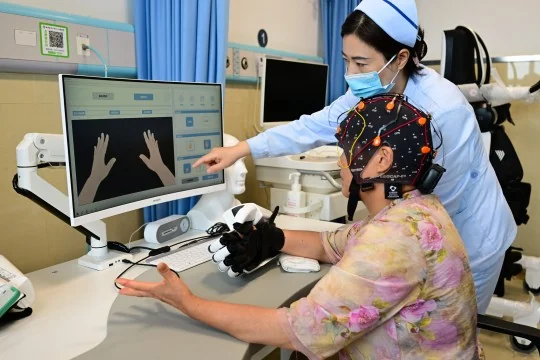
Chinese scientists have developed a new,
comfortable device that can read brainwaves and convert them into text on a
computer. The device has demonstrated an accuracy rate of more than 94 per cent
during full-day use. The device works without requiring anything to be
implanted in the brain. It uses specially designed soft electrodes that can be
comfortably attached to the scalp. Unlike conventional electrodes, which are
either too rigid or tend to deteriorate quickly, the new electrodes are designed
to resemble human skin. They are soft where they come into contact with the
scalp and firm in other areas.
Scientists incorporated the device into an
ordinary brain-monitoring cap and put it to the test. One participant wore it
comfortably for 14 hours while resting. It also successfully recorded brain
signals for up to eight hours during everyday activities, including walking,
eating, reading and sleeping. During the experiment, participants were asked to
type numbers and dates on a virtual keyboard simply by looking at the
characters. The device achieved an accuracy rate of more than 94 per cent. It
also recorded a success rate of over 90 per cent during tests involving
movement. Experts say the technology could also help provide early warnings of
neurological conditions such as epilepsy. It offers an advantage over
conventional gel-based electrodes, which tend to dry out and stop functioning
after a few hours. The research was conducted by scientists from Guangxi
University, Guangxi Medical University and Tsinghua University.