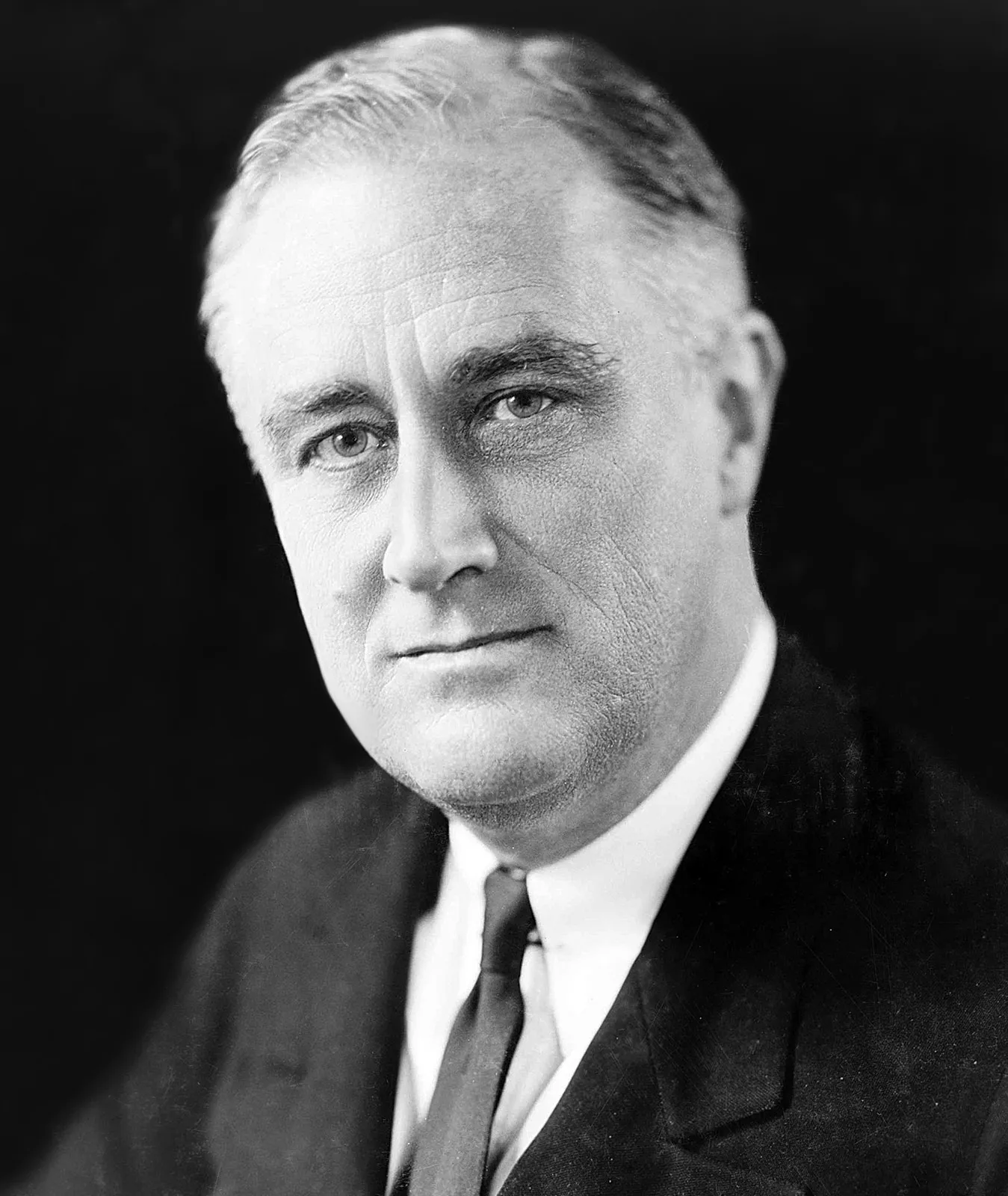
Since the end of the American War of
Independence, U.S. lawmakers had sought a way to limit the power of Congress
and prevent it from acquiring unlimited authority. During the Constitutional
Convention held in 1787, participants agreed, after lengthy deliberations, to
grant the U.S. president the power of veto. This would allow the president to
reject congressional decisions if he considered them unjust or harmful to the
country's interests. At the same time, Congress retained the power to override
a presidential veto and pass legislation if two-thirds of the members of both
the House of Representatives and the Senate voted in favour of doing so. Over
the years, U.S. presidents have exercised the veto on numerous occasions.
Franklin D. Roosevelt holds the record for using it more than any other
president, having exercised the power 635 times during his presidency.
Franklin D. Roosevelt’s Presidential
Career
Unlike other presidents, Franklin D. Roosevelt
served from 1933 to 1945, winning four consecutive presidential terms. He
formally assumed office at a time when the country was experiencing the severe
economic downturn of the Great Depression and exceptionally high unemployment. From the outset,
Roosevelt launched the “New Deal” program, which introduced economic and social
reforms aimed at easing the burden of the crisis. His administration also
strengthened the federal government's role in the economy, particularly through
banking regulations and the creation of government jobs.
In 1941, following Japan’s surprise attack on
Pearl Harbor, Franklin D. Roosevelt led the United States into the Second World
War. The attack killed approximately 2,000 Americans. During the war, the U.S. president led the
country's industrial and military mobilization. Following the defeat of the
Axis powers, he also took part in major conferences with Joseph Stalin and
Winston Churchill to discuss the course of the war and shape the post-war
international order. On April 12, 1945, just weeks before Germany's defeat,
Franklin D. Roosevelt died. His vice president, Harry S. Truman, succeeded him
as president.
635 Vetoes against Congress
Franklin D. Roosevelt is also regarded as the
president who used the veto more frequently than any other in the history of
the United States. During his presidential terms, Roosevelt exercised the power
635 times. These included 372 regular vetoes, in which he refused to sign
legislation passed by Congress and returned it with his objections, and 263
pocket vetoes, which occurred when he allowed the constitutional period for
signing a bill to expire while Congress was adjourned. Congress, meanwhile,
succeeded in overriding Roosevelt’s veto on nine occasions by securing the
support of two-thirds of the members of both the House of Representatives and
the Senate. Roosevelt primarily used the veto during the
Great Depression to oppose congressional decisions that ran counter to his
reform agenda under the New Deal program. He also resorted to the power during
the Second World War to limit spending and maintain confidence in special
wartime measures.
According to several sources, Roosevelt last
exercised his veto in March 1945.
Besides Franklin D. Roosevelt, several other U.S.
presidents also used the veto hundreds of times. During his two non-consecutive
presidential terms, Grover Cleveland exercised the power 584 times. Harry S.
Truman, meanwhile, used the veto 250 times.