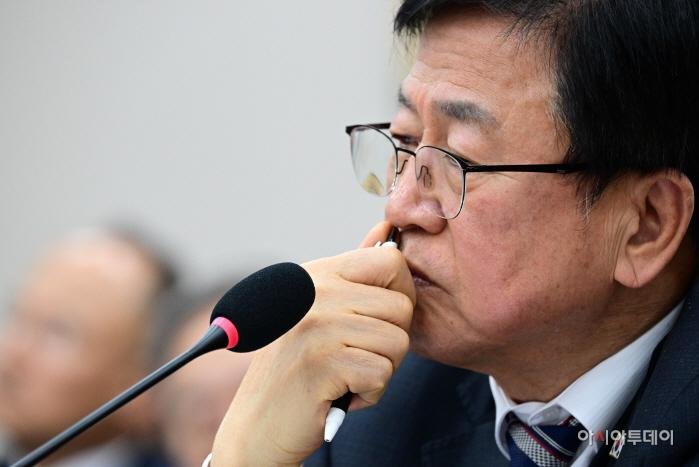
South Korean President Lee Jae-myung has accepted
the resignation of Education Minister Choi Kyo-jin. Early on Sunday morning
(November 22), Choi had expressed his intention to step down. Last-minute
changes were made to examination rules shortly before the 2027 College Scholastic
Ability Test (CSAT), South Korea’s national university entrance examination,
held on November 19, in an effort to prevent cheating with the help of
artificial intelligence (AI). The changes caused considerable difficulties for
students taking the examination. A group of students had been calling for the
education minister’s resignation. Amid mounting pressure, Choi submitted his
resignation, taking responsibility for the administrative failures.
While submitting his resignation, the education
minister said, “As the minister in charge of the relevant ministry, I do not
believe I can escape criticism that, in the eyes of the public, we failed to
make adequate preparations for the examination. Now that the CSAT has been
completed, I am submitting my resignation, taking full responsibility for the
mismanagement that occurred during the process.” According to the Yonhap News Agency, Kang
Yoo-jung, spokesperson for Cheong Wa Dae (South Korea’s presidential office),
said in a statement to the press that President Lee Jae-myung accepted Choi’s
resignation approximately one hour after the minister announced his decision to
step down. Kang said that the process of selecting a successor to Choi Kyo-jin
would be carried out in accordance with established procedures.
The Ministry of Education had faced criticism for
hastily introducing new rules to prevent AI-assisted cheating just one day
before the examination. The measures created considerable confusion among
students and teachers. Among the last-minute changes was a rule requiring
students to bring only pencils into examination halls. Students were also
instructed to cover buttons on their clothing with stickers to prevent the use
of miniature cameras concealed inside them. During the examination, officials
sent three emergency mobile phone alerts nationwide in an attempt to identify
students who had failed to surrender their phones.
On Friday, the Ministry of Education reported
that a total of 111 suspected cases of cheating involving electronic devices
had been detected during the examination. Students and teachers criticised the
measures, saying that the last-minute changes had further heightened anxiety
among candidates taking this highly important examination. In South Korea, the CSAT is regarded as one
of the most consequential milestones in a person's life, as university
admission can have a direct impact on future career opportunities. Choi had also come under criticism over
remarks he made during a parliamentary session ahead of the CSAT. When a
lawmaker asked whether he was confident that AI-assisted cheating could be
detected, the 72-year-old minister replied, “I don't think I would be able to
do that because I am quite old.”
The sudden changes to the CSAT rules came amid
growing concerns over the increasing use of AI to cheat in examinations.
Recently, a person who secured first place in this year's Certified Tax
Accountant examination admitted to cheating with the help of a miniature
camera, a smartphone and generative AI. Meanwhile,
a person who had achieved a perfect score in this year's Legal Education
Eligibility Test (LEET) was found dead on Thursday. The national examination is
conducted for admission to South Korea's national law schools. The individual
had been accused of cheating. Police said they would continue investigating the
allegations.