The world is entering an era
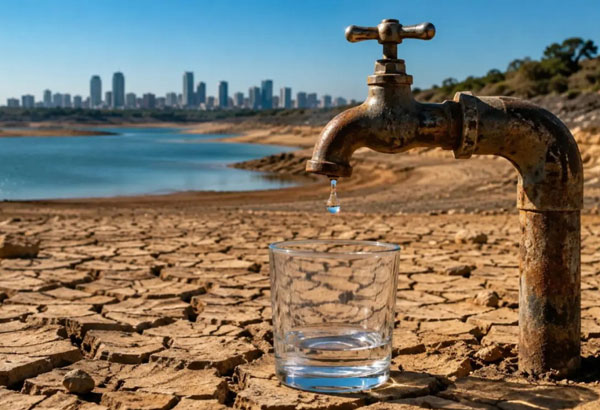
in which irregular water availability is gradually becoming the norm. The World
Meteorological Organization (WMO), a United Nations weather and climate agency,
has warned that rivers, groundwater and glaciers are undergoing persistent and
long-term changes, posing serious risks to populations and economies. WMO Secretary-General
Celeste Saulo, while releasing a report on the latest state of global water
resources, said that this is not an occasional phenomenon, but a pattern that
has been observed for the past decade.
According to the report, 2025
was one of the driest years in the past 35 years in terms of river flows worldwide.
During the year, water flows in about 36 percent of river basins were below
normal levels. It was the seventh consecutive year in which the majority of
rivers did not have historically normal flows. This indicates that the global
water cycle is becoming increasingly irregular and unpredictable compared with
the past. Groundwater, glaciers,
snow, soil moisture, lakes and freshwater stored on land act as a protective
buffer during droughts and dry periods. Celeste Saulo described these
slow-changing water reserves as the planet’s “water savings account,”
explaining that in the past, these reserves absorbed the effects of poor
rainfall years, preventing a single dry season from immediately turning into a
water crisis.
These reserves are now being
depleted rapidly. The decline in total water storage on land began between 2014
and 2016, while groundwater levels have also continued to fall in many regions.
However, some encouraging signs have also emerged. In parts of South America,
water storage has shown partial recovery after several years of severe
depletion, while water levels in several major lakes across Central and
Southern Africa remained significantly above normal.
The world’s major glacier
regions recorded a fourth consecutive year of ice loss. Wayne Jenkinson,
Director of the department responsible for studying water movement and ice
surfaces at the organization, said that all 19 glacier regions worldwide
experienced a decline in ice mass last year. Central Asia, Iceland, the Russian
Arctic, and western Canada and the United States were among the three worst
years on record.
In 2025, glaciers lost
approximately 408 gigatons of ice, while the total loss between 2023 and 2025
reached around 1,400 gigatons. This amount is equivalent to roughly one-third
of the freshwater extracted worldwide in a single year.
Wayne Jenkinson warned that
in regions such as Central Europe, the Caucasus, western Canada and the United
States, water availability may have reached its limit in areas where glaciers
are relatively small. Narelle van der Velde, head of the WMO’s ice-surface
monitoring and forecasting division, said that reducing greenhouse gas
emissions is essential to limiting future glacier losses.
The report did not attribute
every observed change solely to climate change. According to the organization,
increasing pressure on water resources and natural variability are also
contributing to these changes. Jenkinson said that past weather and water
patterns are no longer as reliable as they once were. “The situation today is
not the same as it was 30 years ago.” Countries around the world will have to
prepare for changes that have already occurred in reality.
During the past five years,
about half of all water-related events occurred in Asia and Africa. Despite
this, these regions remain the most behind in terms of water monitoring and
observation. Water monitoring has improved significantly since the WMO began
publishing this report series five years ago. Today, 52 countries provide
information from more than 3,100 river-flow monitoring stations, compared with
only seven countries reporting data from 14 stations when the first report was
issued.
The organization says that as
member states adapt to rapidly changing water conditions, improved monitoring,
information sharing and timely early-warning systems will become increasingly
important. The
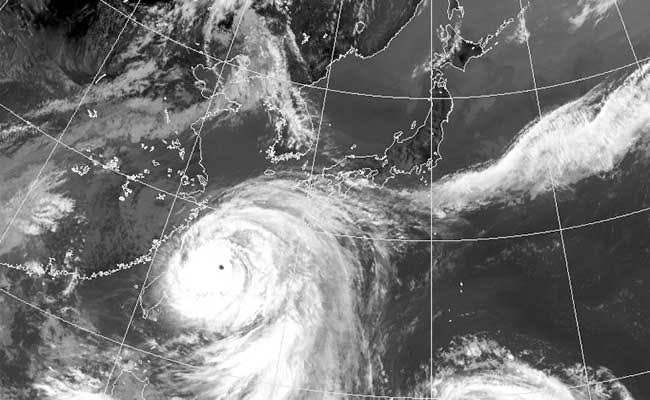
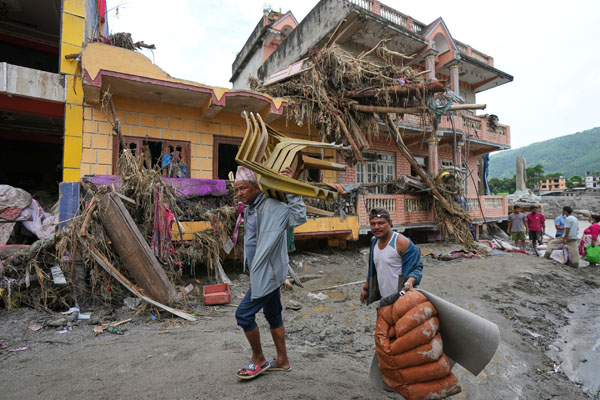
devastating floods that recently struck China and Nepal are a clear example.
The events involved factors such as rockfalls and the collapse or movement of
glaciers, demonstrating how difficult it can be to identify such risks in
advance.