In Afghanistan,
Georgette Gagnon, Acting Head of the United Nations Assistance Mission in
Afghanistan (UNAMA), said that Taliban authorities are restricting the talent
and productive capacity needed for the country’s recovery by depriving women of
opportunities for education, employment, and participation in public life. Briefing the UN Security
Council on the situation in Afghanistan, she said that cuts in financial
support for organizations working for human rights had further worsened the
situation.
Over the past year, funding
for three-quarters of women-led organizations in Afghanistan has declined,
while more than 80 percent of these organizations have reported an increase in
the needs of women and girls. The laws imposed by the Taliban authorities
have not only deprived millions of women and girls of opportunities to progress
in life, but have also weakened efforts to address the humanitarian crisis.
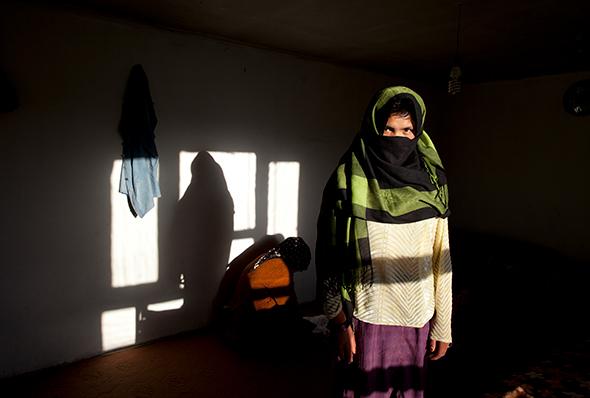
A woman working with the
mission said that being a woman in Afghanistan has effectively become a crime.
Whenever one law is enforced, another is introduced. Women who wear the hijab
are ordered to cover their faces; those who wear the niqab are told to wear the
burqa; burqa-clad women are questioned about why they are not accompanied by a
mahram; and those accompanied by a mahram are asked about the nature of their
relationship with him.
Economic Pressure and Food Insecurity
Georgette Gagnon said that
the mission sees no major armed or political threat to the authorities
currently in power. The main threats to the country’s stability are largely
driven by the authorities’ own policies. Although a degree of economic
stability has been maintained in the country, it cannot be described as an
economic recovery. Per capita income has declined by 5.6 percent, while exports
have also fallen. Food
insecurity and shortages are a major cause for concern in the country.
According to UNICEF, around 3.7 million children are suffering from
malnutrition, including approximately one million facing severe forms of
malnutrition. This year, only 30 percent of the resources required to meet
humanitarian needs have been secured. The decision by Taliban authorities to
ban opium cultivation was a positive step, resulting in a significant reduction
in poppy cultivation. However, there is a risk that this trend could reverse
due to economic pressures.
Georgette Gagnon said that
relations between Afghanistan and Pakistan remain a matter of serious concern.
Referring to the impact of the tensions between the two countries, which have
continued for the past year, and the closure of the borders on civilians, local
communities, and business activities, she stressed that international
engagement and cooperation through the Doha Process are essential. She also
said that the Taliban authorities’ preference for a bilateral approach rather
than multilateral engagement on this issue is a major obstacle to progress.
Solidarity with Afghan Women
Before the meeting, France’s
Ambassador to the United Nations, Nicolas de Rivière, read a joint statement
before journalists alongside the ambassadors of Colombia, Denmark, Greece,
Latvia, Liberia, Panama, and the United Kingdom, as well as representatives of
36 other member states, expressing full solidarity with Afghan women and girls.
De Rivière said that the gender discrimination and systematic and ongoing
repression imposed by the Taliban are condemnable. All restrictions on the
rights of women and girls must be lifted immediately and without
discrimination, and all human rights violations must be brought to an end. He
welcomed the appointment of Rabab Fatima as the Secretary-General’s Special
Representative for Afghanistan and Head of UNAMA in the country, and urged the
Taliban authorities to engage meaningfully with the United Nations and remove
all restrictions imposed on Afghan women working for the organization.