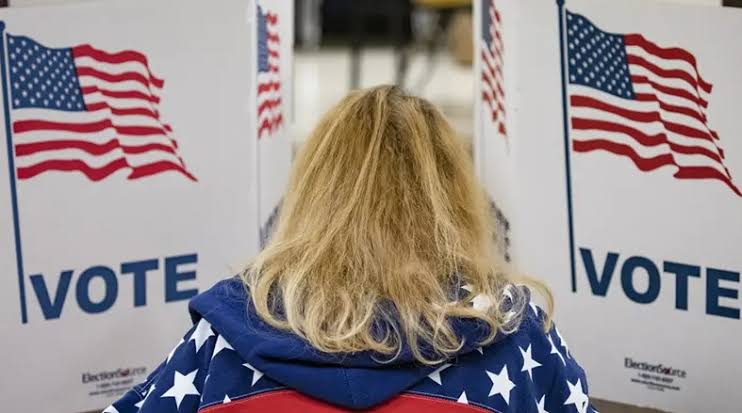
The United States will hold midterm elections on
November 3, 2026, to elect members of the House of Representatives, senators
and governors in 36 states. President Donald Trump’s Republican Party faces the
challenge of retaining its majorities in Congress, while Democrats are seeking
to gain control of both chambers. Early voting has been underway for several
weeks.
The significance of the elections is reflected in
the record $3.8 billion spent on political campaigns by October 12. According
to AdImpact, an organisation that tracks political advertising expenditure,
billionaire technology entrepreneur Elon Musk has also spent approximately $366
million supporting Republican candidates. If voter turnout matches the level
recorded in the 2022 midterm elections, more than 100 million Americans could
cast ballots this year. However, that would be fewer than the more than 155
million votes cast in the 2024 presidential election.
Battle for Control of Congress
Republicans currently hold a narrow advantage in
the House of Representatives, with 218 seats compared with 214 held by
Democrats. Two seats are vacant, while one independent member aligns with
Republicans. Democrats would need a net gain of four seats to take control of
the House. In the Senate, Republicans hold 53 seats to the Democrats’ 47.
Democrats would also need to gain four additional seats to secure a majority.
Approximately 10 competitive Senate races,
including those in Ohio, North Carolina, Iowa and Georgia, could help determine
control of the chamber. If Democrats win the House, New York Congressman Hakeem
Jeffries could become speaker. He would be the first Black American to hold the
position and could play a central role in launching congressional
investigations into the Trump administration.
Inflation and Trump’s Approval Rating Among Key
Campaign Issues
According to a September poll conducted by
Reuters and Ipsos, Trump’s approval rating had fallen to 32 percent. Inflation,
rising prices of essential goods and the administration’s immigration policies
could influence the election results. Some analysts suggest that Latino voters
who supported Trump in 2024 could shift towards Democrats because of economic
pressures and concerns about immigration policies. However, a clear Democratic
advantage is not assured. Republicans could benefit from higher campaign
spending, reservations among some voters about Democrats and political disputes
surrounding the nomination of left-wing candidates.
Historical Trends and Possible Outcomes
In U.S. political history, midterm elections have
often presented challenges for the party controlling the White House. In 2010,
during Barack Obama’s presidency, Republicans gained 63 seats in the House of
Representatives, taking the majority from Democrats. In 2018, during Trump’s
first presidential term, Democrats recorded a net gain of 40 House seats. Voters
will also elect members of state legislatures in contests across nearly all
states. State authorities are responsible for administering elections. However,
Trump’s repeated claims of election fraud have prompted discussion about
potential legal disputes and concerns over possible federal intervention. If
Republicans retain their congressional majorities, Speaker Mike Johnson or
another Republican could remain in the position. The party could continue to
focus on further tax cuts, increased defence spending and reductions in social
welfare programs.
Trump Rally in South Carolina Disrupted by Protesters
and Scuffle
U.S. President Donald Trump was forced to pause
his speech briefly after disorder and a physical altercation broke out during a
campaign rally in Clemson, South Carolina, held in support of Republican
candidates ahead of the midterm elections. According to details of the
incident, Trump was addressing a rally at Clemson University’s T. Ed Garrison
Arena when several protesters in the audience began chanting slogans against
him.
Tensions escalated when an argument broke out
between a Trump supporter and protesters who were being removed by security
personnel. During the confrontation, one supporter punched a protester.
Security officers responded immediately restrained the alleged assailant and
escorted the protesters out of the venue. Trump paused his speech as he watched
the incident unfold from the stage. He praised the supporter who threw the
punch, saying sarcastically, “That was amazing. I loved it.” He also asked
whether those involved were safe and instructed police to remove the protesters
from the venue. The incident occurred amid heightened political activity and
tensions in the run-up to the November midterm elections. Similar
confrontations and exchanges of hostile slogans between protesters and
supporters have also been reported at several previous Trump campaign rallies.