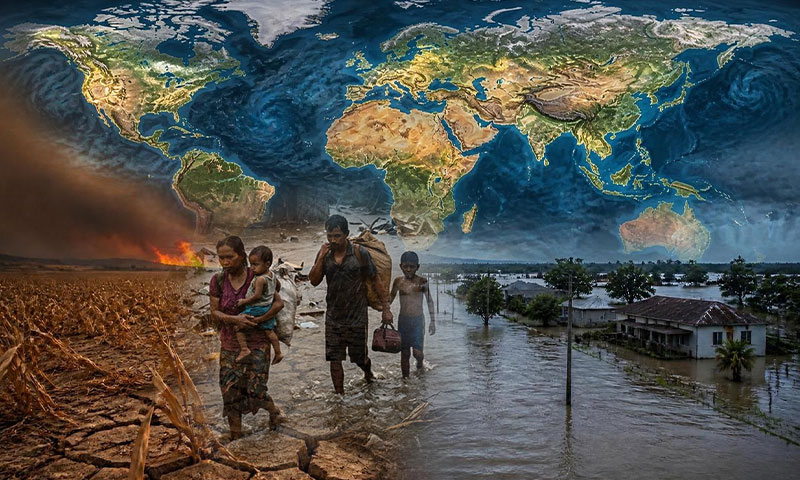
The United Nations has warned that the current El
Niño climate phenomenon is approaching an unusually intense peak, threatening
to trigger devastating consequences around the world. International agencies
have called for immediate emergency measures to address the looming
humanitarian and economic crisis. During
a major press conference in Geneva, World Meteorological Organization (WMO)
Secretary-General Celeste Saulo and UN Emergency Relief Coordinator Tom
Fletcher jointly expressed serious concern over the potential impact of the
phenomenon. Saulo said the current El Niño is so unusual in its intensity that
it has exceeded the range shown in monitoring charts over the past four
decades. It is expected to peak in December, but its human consequences,
including extreme heat, floods and droughts, are likely to persist throughout
2027 and beyond.
Sea Surface Temperatures Set to Reach New
Records
According to the WMO’s latest global climate
report, sea surface temperatures in the equatorial Pacific could rise to 3.8
degrees Celsius above average between November and January. This would be the
highest three-month reading since records began, surpassing the previous record
of 2.6 degrees Celsius set during 2015–2016. This natural climate phenomenon typically
occurs every two to seven years and lasts between nine and 12 months. Its
effects are being compounded by human-induced climate change. The previous El
Niño played a key role in making 2023 the second-hottest year on record and
2024 the hottest year in recorded history.
A “Wrecking Ball” and Threats
to Regions Worldwide
UN Emergency Relief Coordinator Tom Fletcher
described the phenomenon as a “wrecking ball” for economies and humanity,
warning that it would severely affect Latin America, East and Southern Africa,
Asia, and the Pacific region. He cautioned that its long-term consequences
would be felt for months and years. Somalia, Ethiopia and Kenya urgently need
supplies ahead of anticipated heavy rainfall. Southern Africa requires seeds
and livestock support, while Central America needs assistance with livelihoods.
Meanwhile, Asia and the Pacific must prepare for droughts, floods and storms.
In Central America, livestock and crops are already suffering severe losses
because of drought.
50 Million People at Risk as
Emergency Funding Is Mobilized
Fletcher warned that the worsening global crises
involving conflict, displacement and soaring fuel, fertilizer and food prices
could leave an additional 50 million people facing severe hunger worldwide. He
stressed that the next two weeks would be critically important for taking
action, adding that the humanitarian aid system alone lacks the capacity to
manage a threat of this magnitude. To help countries prepare before the worst
impacts materialize, Fletcher has released $50 million to support 11 frontline
countries, including Chad, El Salvador, Ethiopia, Somalia and South Sudan. He
urged governments, development banks and financial institutions to mobilize
financial resources before the damage occur, emphasizing the need for urgent
preventive action to reduce the humanitarian and economic consequences of the
impending crisis.