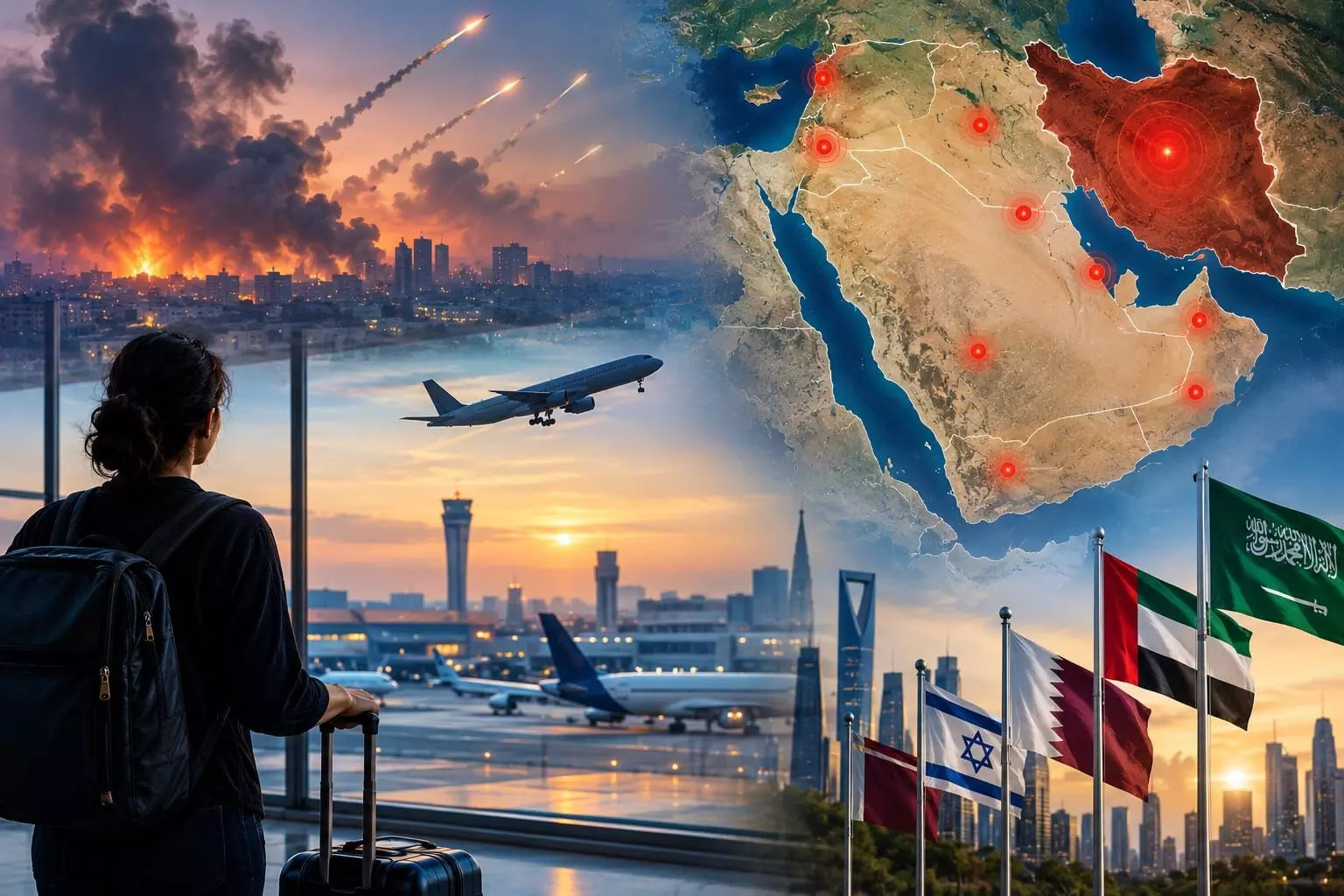
Amid escalating military tensions and growing
threats to regional security in the Middle East, the United States has issued
new security alerts for its citizens in 12 countries, including Saudi Arabia,
the United Arab Emirates (UAE), Qatar and Iran. The warnings caution that the
ongoing military conflict in the region could escalate suddenly, potentially
leading to airspace closures, flight cancellations and unexpected travel
disruptions.
According to security advisories issued by the
U.S. Department of State and American diplomatic missions in various countries,
the security situation across the Middle East remains complex and rapidly
evolving. U.S. citizens have been urged to exercise heightened caution and
remain vigilant. In a report published on October 19, Indian newspaper Hindustan
Times said the latest warnings covered American citizens in Saudi Arabia,
the UAE, Kuwait, Jordan, Bahrain, Oman, Iran, Qatar, Iraq, Lebanon, Yemen and
Israel.
Which 12 Countries Have Received U.S. Security
Alerts?
The latest advisories issued by American diplomatic
missions cover 12 countries across the Gulf and the wider Middle East: Saudi
Arabia, the UAE, Qatar, Oman, Bahrain, Kuwait, Iran, Iraq, Jordan, Lebanon,
Israel and Yemen. U.S. citizens in these countries have been advised to monitor
their surroundings, follow instructions issued by local authorities and remain
prepared for emergencies. American officials have warned that the current
regional situation could lead to a sudden escalation in military tensions,
potentially affecting travel and everyday activities. However, the nature and
severity of the risks vary from country to country, and citizens have been
advised to follow the specific guidance issued for their respective locations.
Risk of Flight Cancellations and Airspace
Closures
The latest security alerts specifically warn of
potential disruptions to air travel. U.S. officials have said that if the
military situation in the region changes suddenly, some countries could
temporarily close their airspace, while international airlines may cancel or delay
flights or alter their routes. American citizens have been advised to confirm
their flight details with their airlines before travelling and to keep checking
for the latest information about airport operations. Some airlines have already
postponed the full restoration of flight schedules affected by the regional
situation, while flights on certain routes have also been cancelled. These
developments could affect passengers travelling from the Middle East to other
destinations, as sudden changes to air routes may disrupt international
connections.
Specific Warnings for the UAE and Saudi Arabia
The U.S. Department of State has identified
terrorism and armed conflict as risks in its current travel advisory for the
UAE. American officials have warned that tensions involving Iran have left the
country exposed to potential drone and missile attacks, while locations
associated with U.S. interests could also face threats. The United States has
advised its citizens to reconsider travel to the UAE. Similarly, travel guidance
issued for Saudi Arabia on October 12 referred to the risk of missile and drone
attacks targeting U.S. interests by Iran and Iran-backed Houthi forces. The
U.S. Department of State has also maintained a Level 3 travel advisory for
Saudi Arabia, which urges American citizens to reconsider travel to the
country.
Threats to U.S. Interests Amid Iranian and
Houthi Attacks
According to the U.S. Department of State,
American interests remain at risk of being targeted by Iran and armed groups it
supports amid continuing tensions in the Middle East. U.S. diplomatic
advisories warn that the consequences of military operations could extend
beyond the borders of the countries directly involved. Referring particularly
to Houthi attacks on Saudi Arabia, American officials have warned that strikes
against civilian airports and critical infrastructure could cause casualties
and severely disrupt air travel. Against this backdrop, U.S. citizens have been
advised to exercise heightened caution around diplomatic facilities, American
institutions and other locations associated with the United States.
Separate Guidance for Iraq, Lebanon, Iran and
Yemen
In Iraq, the U.S. diplomatic mission has advised
American citizens to obtain the latest information concerning operations at the
airports in Baghdad, Erbil, Basra and Sulaymaniyah. According to the U.S.
Embassy, routine American citizen services in Baghdad remain available. In
Lebanon, the U.S. Embassy has advised citizens to monitor the situation at
Beirut's Rafic Hariri International Airport. It has also indicated that routine
consular and visa services remain available. The advisory for Iran reiterates
that U.S. citizens should not travel to the country and that Americans already
there should leave. The situation in Yemen is more severe. The U.S. Department
of State has made clear that security conditions prevent the American
government from providing emergency consular services to its citizens there.
The U.S. Embassy in Sana'a has been suspended since February 2015.
Has the United States Received Intelligence
About a Major Attack?
The simultaneous issuance of security alerts for
multiple countries by American diplomatic missions highlights the seriousness
of the regional situation. However, the advisories do not predict with certainty
that a new attack will occur at a particular time, in a specific location or in
any particular country. The warnings also do not mean that airspace has been
closed across all 12 countries or that international flights have been
suspended throughout the region. Instead, U.S. officials have issued advance
warnings about potential risks and urged American citizens to prepare for
possible emergencies.
What Precautions Have U.S. Citizens Been Advised
to Take?
American diplomatic missions have advised their
citizens to avoid large gatherings and demonstrations, follow local media for
updates and limit unnecessary movement in areas with a heavy security presence.
Citizens have also been urged to keep their mobile phones charged, exercise
caution when travelling and follow instructions issued by local authorities. The
U.S. Department of State has further encouraged American citizens to register
with the Smart Traveler Enrollment Program (STEP), which enables them to
receive security updates and other relevant information from the appropriate
U.S. embassy.
What Does the Situation Mean for Pakistanis
Living in the Gulf?
Millions of Pakistanis live and work in Saudi
Arabia, the UAE, Qatar, Oman, Bahrain and Kuwait. The American security alerts
are primarily intended for U.S. citizens and do not constitute a new travel
directive for Pakistanis living in these countries. Nevertheless, potential
disruptions to regional air travel could also affect Pakistani passengers. This
is particularly relevant for travellers using major Gulf aviation hubs,
including Dubai, Abu Dhabi, Doha and Riyadh, to travel between Pakistan and
other countries. Passengers are advised to confirm their flight schedules with
their airlines before departure and monitor official announcements issued by
the authorities in their respective destinations.
Tensions Remain High Across the Middle East
Military operations by the United States and
Israel against Iran in February this year triggered a sharp escalation in
tensions across the Middle East. Since then, actions by Iran and armed groups
it supports, missile and drone attacks in Gulf countries and threats to major
maritime routes have kept regional security under intense international
scrutiny. In recent weeks, Houthi attacks targeting Saudi Arabia and increased
military activity in Yemen have further heightened concerns about regional
stability. The simultaneous issuance of security alerts for 12 countries
indicates that Washington is taking the possibility of further unpredictable
developments in the region seriously. However, these advisories should not, at
this stage, be interpreted as an official announcement of a new war or a
specific impending military operation.