The possibility of human life expanding beyond
Earth into space is increasingly being discussed, with millions of people
potentially living there in the future. Amazon founder and Blue Origin founder
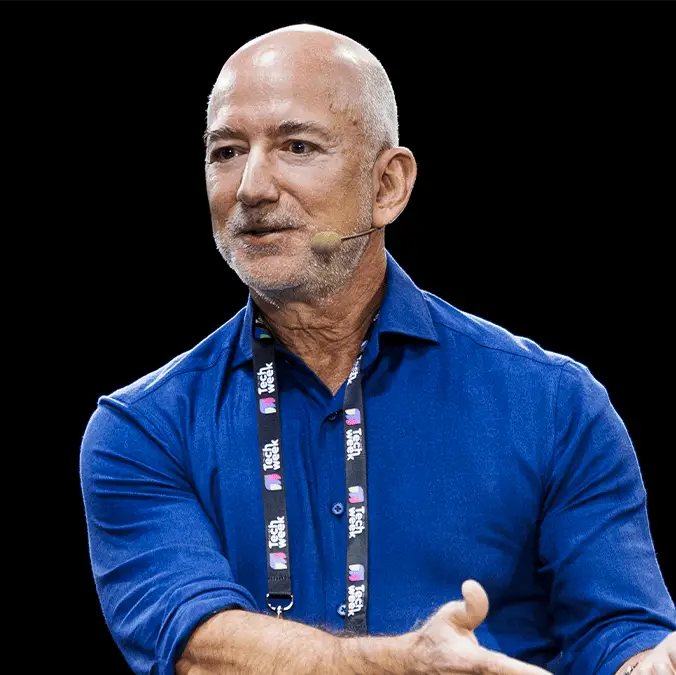
Jeff Bezos has predicted that space could become a new destination for humans
to live and work over the next two decades. Speaking at Italian Tech Week 2025
in Italy, Bezos said rapid advances in space technology could open up new
opportunities for humans to live and work beyond Earth. In his view, people in
the future may choose to settle in space not only out of necessity but also out
of personal interest and desire.
According to Bezos, using robots instead of
humans to perform difficult and dangerous tasks on the Moon and at other
locations in space could prove more efficient and cost-effective. This could
make it possible to carry out work that would otherwise require expensive and
complicated missions to transport people far from Earth. Discussing potential
changes to employment caused by artificial intelligence, Bezos said that new
inventions generally contribute to human prosperity. He noted that, in the
past, innovations such as agricultural machinery had improved people's lives,
and modern technology could similarly create new opportunities for employment
and development.
OpenAI chief executive Sam Altman is also
optimistic about future employment opportunities in the space sector. In his
view, young people graduating from universities over the next decade could have
opportunities to work in space and secure well-paid jobs. Meanwhile, Elon Musk,
the head of Tesla and SpaceX, is pursuing plans to transport humans to Mars and
other destinations beyond Earth. However, the success of these projects will
depend on technological advances and the ability to overcome the challenges
involved.
Experts say that establishing permanent human
settlements in space will require major challenges to be addressed, including
the provision of oxygen, water, food and energy, as well as protecting human
health and managing enormous costs. Although the prospects for people living
and working in space could improve during the 2030s, large-scale settlement
will require several more stages of development. The question now is whether
millions of people will really be able to live in space by 2045. Predictions by
Bezos and other technology leaders offer an intriguing vision of the future.
However, large-scale human settlement beyond Earth remains a possibility rather
than a certainty. The next two decades will show how far humanity can turn its
dream of establishing communities beyond Earth into reality.