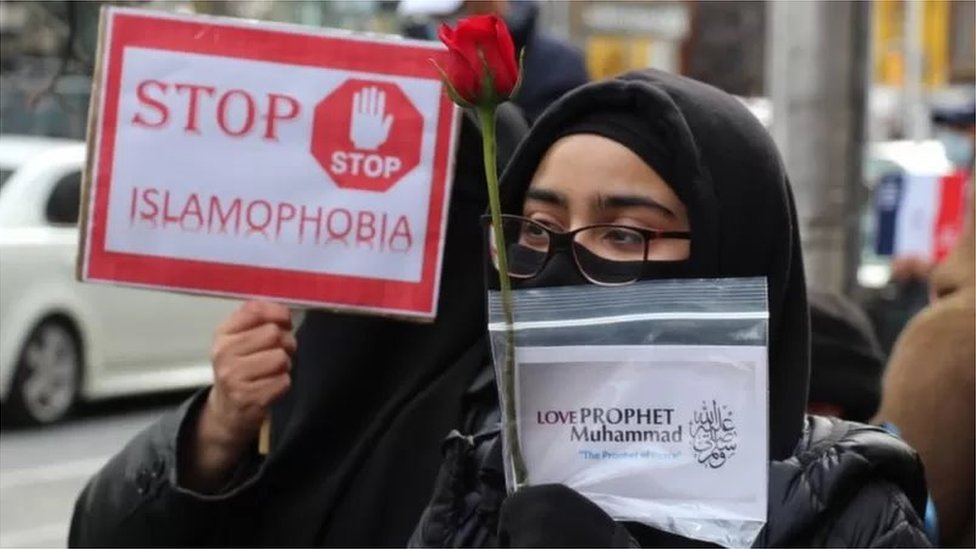
Islamophobia Awareness Month was launched in 2012
by a group of Muslim organisations. It was officially inaugurated at an event
held at the London Muslim Centre in November that year. Initially, it was an
awareness campaign, but over time, schools, universities, hospital organizations,
police forces, business groups and various sections of society began taking
part. The campaign has two main objectives: to raise awareness of prejudice and
hatred against Muslims and to highlight the positive contributions and role of
Muslims in society.
This year’s campaign slogan is “Don’t Let
It Slide”, urging people not to ignore Islamophobia and discrimination
against Muslims. Organizers say that mocking a student’s religion, treating a
woman who wears a hijab differently at work, harassing a Muslim family in the
street or damaging a mosque are all signs of an environment in which prejudice
is increasingly being treated as normal. The campaign’s message is that silence
and inaction can also contribute to the normalization of hatred.
A press release issued for the campaign cites the
British Muslim Trust’s report, A Year of Division, which
states that an average of one mosque is attacked every five days in the UK.
According to the report, the attacks have taken various forms, including arson,
knife attacks, damage to mosque property and intimidation. These incidents do
not merely target buildings or property; they also undermine Muslims’ right to
worship in their places of worship without fear and their sense of security. Figures
released by the UK Home Office on October 8, 2026, also highlight the
seriousness of the situation. In England and Wales, police recorded a total of
146,825 hate crimes in the year ending March 2026, an increase of 7 per cent
compared with the previous year.
The number of religious hate crimes rose from
1,006 to 1,419, an increase of 13 per cent. Meanwhile, recorded religious hate
crimes targeting Muslims increased from 4,479 to 5,132, representing a rise of
15 per cent. These figures relate to official police records in England and
Wales and are not a complete estimate of all such incidents across the United
Kingdom. According to official statistics, Muslims accounted for 46 per cent of
recorded religious hate crime victims in the year ending March 2026, while
incidents targeting Jewish people accounted for 28 per cent. During the same
period, hate crimes motivated by race or ethnicity also increased by 9 per
cent.
However, the Home Office has itself cautioned
that police-recorded incidents cannot be considered a complete measure of the
actual prevalence of hatred in society, as not every victim reports an incident
to the police. Furthermore, changes in police recording systems and methods of
identifying offences over time mean that long-term trends should be compared
with caution. According to the campaign organizers, Islamophobia is not limited
to attacks on mosques or openly abusive language directed at Muslims. It can
also take different forms in educational institutions, workplaces, hospitals,
public transport and everyday social life. Examples include discriminatory
treatment of women who wear the hijab, baseless assumptions about Muslims,
harassment based on religious identity and hateful content on social media.
The campaign also warns that misleading or
one-sided portrayals of Muslims in the media and politics can influence public
attitudes and reinforce prejudice. During Islamophobia Awareness Month,
schools, universities, mosques, workplaces and local communities have been
invited to take part in various activities. These include awareness workshops,
discussions, training programs, distribution of educational materials, social
media campaigns and gatherings where people affected by Islamophobia can share
their experiences.
The campaign’s website also provides separate
information and resources for schools, mosques, higher education institutions
and the healthcare sector. Organizers say that taking practical action against
prejudice requires more than simply condemning incidents. People must also
identify and prevent discriminatory behaviour within their own institutions and
communities. This year, former England cricketer Moeen Ali has also been
featured as a campaign ambassador. His involvement is intended to help extend
the campaign’s reach into sporting circles and other areas of public life. The
central message of Islamophobia Awareness Month is that tackling hatred against
Muslims is not the responsibility of the affected community alone. Every
individual, institution and social organization that witnesses prejudice should
speak out against it.