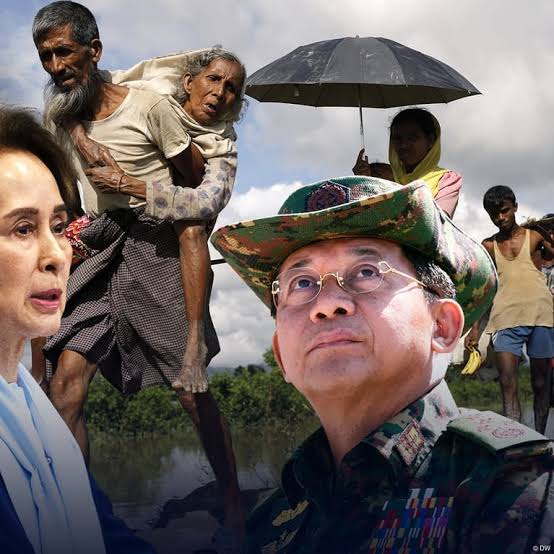
The dispute over the Rohingya genocide in Myanmar
continues to escalate. Just days after the International Court of Justice (ICJ)
ruled that Myanmar was responsible for the 2017 genocide against Rohingya Muslims;
the country has refused to accept the ruling. France's Foreign Ministry is now
preparing to call a meeting of the United Nations Security Council (UNSC).
France is seeking to bring the matter before the Security Council and is
calling for action against Myanmar for refusing to recognize the court's
decision. According to a report by Reuters, France's Foreign Ministry said it
would request a UNSC meeting following Myanmar's rejection of the ICJ ruling.
The ministry emphasized that ICJ judgments are final and binding on the parties
concerned. It also stressed that these rulings must be implemented in
accordance with international law.
France also referred to the United Nations
Charter, which allows the Security Council to take measures to enforce an ICJ
judgment if a party to a dispute fails to comply with it. Under Article 94 of
the UN Charter, all member states are required to comply with ICJ decisions in
cases to which they are parties. Article 94(2) further provides that if a party
fails to fulfil its obligations under a court judgment, the other party may
refer the matter to the UN Security Council. In this case, The Gambia brought
the genocide case against Myanmar. Therefore, if Myanmar fails to comply with
the ruling, The Gambia may request the Security Council's intervention. The
Security Council can then makes recommendations or decide on measures to
enforce the judgment.
A similar situation arose in 1986, when Nicaragua
sought the Security Council's intervention after the United States refused to
accept an ICJ ruling. The court had found that the United States violated
international law through its military activities against Nicaragua. However,
the United States vetoed a draft resolution calling for implementation of the
judgment, preventing any further action.