Efforts to form a new government in Israel have
failed to produce an agreement between the parties of Benjamin Netanyahu and
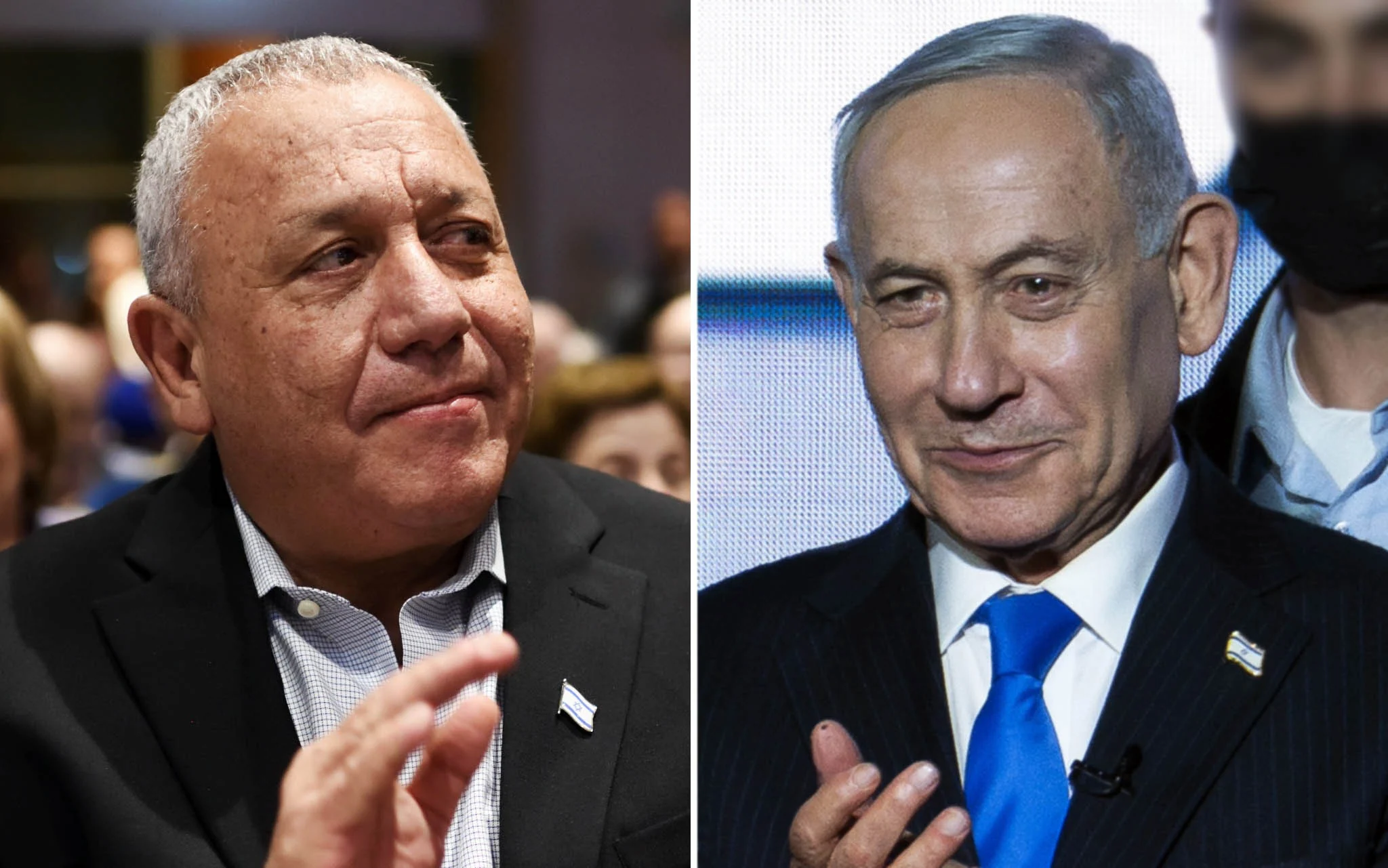
opposition leader Gadi Eisenkot. A round of negotiations held on Sunday to
establish a coalition government ended without a deal. In a joint statement,
the two parties announced that another meeting would be held to continue the
negotiations. The
Israeli president has given Gadi Eisenkot, who emerged ahead of Netanyahu,
until December 6 to form a government, with the possibility of extending the
deadline by another two weeks. It is worth noting that none of the political
alliances secured a clear parliamentary majority in Israel’s October elections. Meanwhile, Naftali
Bennett, chairman of the Yashar Party, has said that he is working to form a
coalition government alongside Netanyahu and Eisenkot. Reports indicate that
despite the deadlock in negotiations, the Israeli Knesset has established new
committees, including panels to examine crimes against Arabs and issues
relating to social and economic equality.
On Sunday, senior representatives of the two
parties held a four-hour meeting, following which they issued a joint statement
saying that they had discussed key issues and would resume talks. However, they
did not specify when the next meeting would take place. Another round of negotiations between
Netanyahu’s Likud Party and its political rival, Gadi Eisenkot’s Yashar Party,
was held on Sunday in Herzliya, near Tel Aviv. The talks aim to resolve the political
deadlock that emerged following last month’s elections and pave the way for the
formation of a new government. Former Israeli military chief Gadi Eisenkot
has been given a mandate to form a government by December 6. His 48-member
alliance needs 61 seats to secure a parliamentary majority. However, his allies
remain divided over whether to form a coalition with religious parties, Arab
parties or Netanyahu’s Likud Party. Netanyahu supports the formation of a national
unity government under which the premiership could rotate between the two
leaders, as has happened in Israel in the past.
Differences Remain Unresolved
However, Eisenkot has already made it clear that
he will not join any cabinet headed by Netanyahu. During the election campaign,
he also focused much of his criticism on Netanyahu. On the other hand, Likud has set several
conditions for joining a coalition government. These include an end to personal
attacks against Netanyahu and his government, as well as the inclusion of
parties that recognize Israel as the nation-state of the Jewish people. Likud
has also insisted that Arab parties be excluded from the coalition. Likud also wants an
agreement on opposing the establishment of a Palestinian state, maintaining
Israeli control over certain areas of Syria, Lebanon and Gaza, and addressing
the issue of military conscription for ultra-Orthodox Jews.
What Is Eisenkot’s Plan?
On Friday, Eisenkot warned that he would not
allow negotiations to continue indefinitely and said that, if necessary, he
would propose the formation of a national emergency government in parliament. According to political
observers, Eisenkot may initially seek to establish a minority government
comprising opposition parties and subsequently attempt to expand it. However, this approach
also faces considerable challenges. Although 19 members of Arab parties could
support such an alliance, Eisenkot’s right-wing ally, Avigdor Lieberman,
opposes cooperation with Arab parties and instead Israel as the national
homeland of the Jewish people, while ruling out the participation of Arab
parties.
What Are Likud’s Specific Demands?
Likud has demanded an end to all personal attacks
and hostile rhetoric targeting the outgoing prime minister and his government. It has also called for a
commitment to forming a coalition government comprising all parties that
recognize the State of favours forming a coalition with religious Jewish
parties.