Israeli President Isaac Herzog has selected Gadi
Eisenkot, one of Prime Minister Benjamin Netanyahu’s strongest political
rivals, to try to form a new government following a closely contested election
in which no leader secured enough support to take power. Netanyahu, Israel’s
longest-serving prime minister, is seeking to remain in office after his
religious-nationalist bloc lost its parliamentary majority in the October 27
election. However, his Likud party still emerged as the largest single party in
parliament. Former
military chief Eisenkot received the highest number of endorsements from
lawmakers, including leaders of Arab parties. A spokesperson for Herzog said,
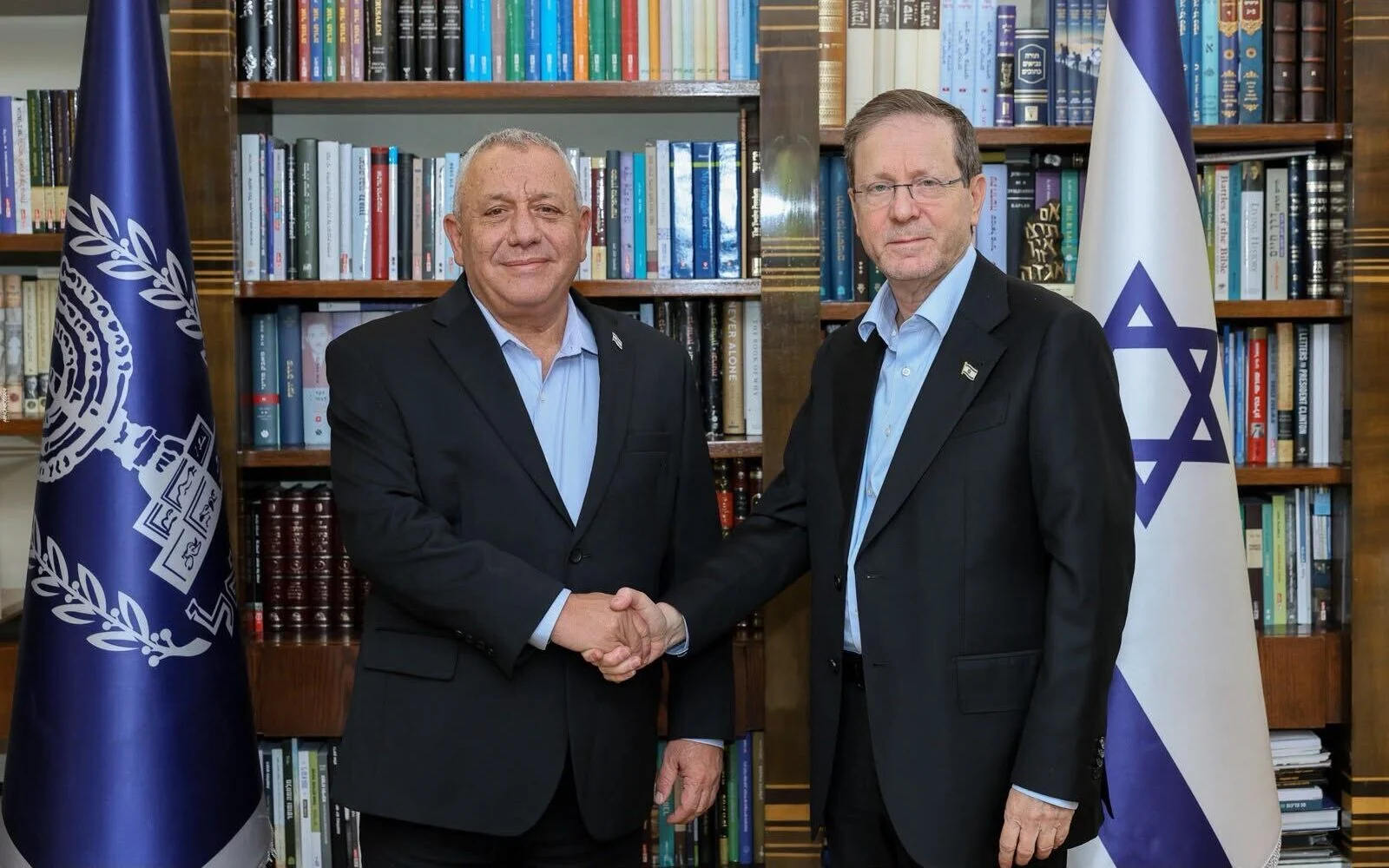
“President Herzog has invited Gadi Eisenkot to the presidential residence,
where he will be formally tasked with forming a government tomorrow.” Although the Israeli
president’s role is largely ceremonial, he is responsible for selecting the
candidate who gets the first opportunity to form a coalition following an
election. Eisenkot also responded
to the announcement in a post on X, writing, “Now is the time to form a
national emergency government. I will do everything possible to ensure that we
are worthy of this responsibility.”
Eisenkot now faces a difficult task as he seeks
to bring together enough parties to form a government. Weeks of political
negotiations are expected before a final decision is reached. He has 28 days to
form a coalition, with the option of receiving an additional 14 days if
necessary. There are several possible ways for him to secure the required
support. One option is to form a minority government and rely on the votes of
Arab parties in parliament on key issues. He could also attempt to bring
ultra-Orthodox parties into his coalition. However, Eisenkot and his political
allies have previously avoided working with these parties. Another possibility
is a unity government with Netanyahu, although Eisenkot has repeatedly opposed
serving under him. Political analysts, however, believe that none of these
three options is likely to succeed. If Eisenkot fails to form a government,
another candidate may be given an opportunity. If that person also fails,
parliament can nominate someone else. The entire process has a deadline of
approximately 100 days. If no candidate succeeds in forming a government within
that period, Israel will have to hold another election.
The election results have left Israel
with a divided parliament.
Netanyahu’s Likud party won 27 seats in the
120-member Knesset, making it the largest single party. However, his broader
religious-nationalist bloc secured only 53 seats, falling short of the 61
required for a majority. Eisenkot’s Yashar party came second with 21 seats. His
broader alliance, comprising four Jewish-led parties ranging from the
centre-left to the right, won 48 seats. Meanwhile, two parties representing
Israel’s Arab minority secured a combined 19 seats, marking an unprecedented
result for the community. Their support has subsequently become important in
efforts to form the next government, although Eisenkot has ruled out formally
joining forces with them. It is worth noting that 66-year-old Gadi Eisenkot is
a former military chief and the son of Moroccan immigrants. If he becomes prime
minister, he would be the first leader from Israel’s Mizrahi Jewish community,
whose members have roots in the Middle East and North Africa. Eisenkot entered politics only in 2022.
Following Hamas’s October 7, 2023, attack on Israel, he briefly joined
Netanyahu’s war cabinet. However, he later left the government and returned to
the opposition. Since
then, he has openly criticised Netanyahu’s leadership, particularly his
handling of Israel’s military campaign in Gaza. He has also pledged not to
serve in a government led by Netanyahu. Eisenkot has additionally criticised
violence by Israeli settlers against Palestinians, which has escalated since
2023. The violence has contributed to growing tensions between Israel and
several Western countries.