The Iranian government said last week that
although the country has experienced gas shortages in the past, damage to gas
processing plants during the war is expected to make the crisis significantly
worse this winter, affecting most parts of the country. The effects of the war
have already sent inflation soaring in Iran, while millions of people have lost
their jobs.
Under these circumstances, the difficulties
facing ordinary Iranians continue to intensify.
Senior figures within the government fear that
the situation could deepen existing divisions in society, particularly as
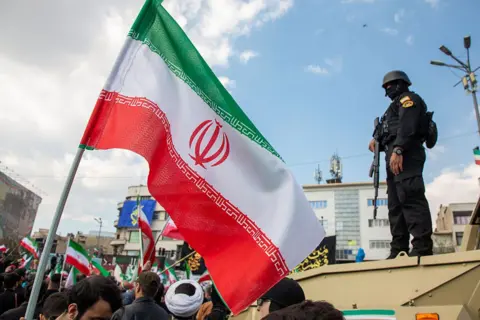
tensions remain high following the harsh suppression of widespread protests
last winter. Seyed Ahmad Sidi, a street
vendor, said, “The reality is that if our gas supply is cut off, we will have
to stop working and go home.” Meanwhile, 65-year-old Mina Lehrasabi, who works
at a rice factory near the Caspian Sea, said, “This war must end so that we can
return to normal life and all these problems and rising prices can come to an
end. It is difficult to carry on living under these circumstances.”
‘A Fire Smouldering Beneath the Ashes’
A senior Iranian official and a member of the
country's security establishment told Reuters that the country's top leadership
is becoming increasingly concerned about the situation. According to them,
domestic fuel shortages have further heightened public discontent and fears of
possible protests. The security official
said there had been no significant protests against the ruling system since the
United States and Israel launched their attacks on February 28. However,
domestic intelligence agencies remain on high alert. The official added that
intelligence agencies are closely monitoring any opposition activity and fear
that the United States could attempt to incite street demonstrations. The
senior Iranian official warned that living conditions for ordinary Iranians are
becoming increasingly difficult, and enduring these hardships is now becoming
more challenging. He described the situation as “a fire smouldering beneath the
ashes.”
Gas Shortages Expected to Worsen
Amin Shabani, a salesman at a heater company in
Tehran, said the prospect of an extremely cold winter was a source of concern.
According to him, consumers are considering buying electric heaters instead of
gas-powered ones. However, products that run on both electricity and gas are
increasingly becoming unaffordable for many customers. “Considering everything that has happened
over the past nine months and the attacks on power plants, it is natural for
people to be concerned about the possibility of even colder weather,” he said. Iran is one of the world's major natural gas
producers and controls a share of one of the largest gas reserves globally. Despite
this, the country sometimes struggles to meet its domestic demand. One reason
is its ageing and outdated infrastructure, while international sanctions have
further aggravated the problem.
Iranian government spokesperson Fatemeh
Mohajerani said last week that the potential gas shortage could reach 430
million cubic meters this winter, compared with 300 million cubic meters last
year. The National Iranian Gas Company has also attributed the worsening
shortage to damage sustained by four gas processing plants during the early
days of the war. The company said repair work on the facilities was under way. However, the senior Iranian official told
Reuters that measures being taken to address the problem were merely temporary.
He added that several meetings had already been held to prepare for the
potential crisis during the winter months.
Iranian Citizens Relatively Unconcerned
Reuters contacted several Iranian citizens inside
the country through a messaging application, many of whom appeared relatively
unconcerned about the issue. Reza, 45, a
resident of Urmia in northwestern Iran, said people in his circle were not
particularly worried about a possible gas shortage. He said his family had
purchased three electric heaters as a precaution.
Urmia experiences heavy snowfall during the
winter.
Zahra Hosseini, 44, who works for a food company
in Tabriz, said, “The reality is that I do not want to start worrying and
complaining in advance about something that has not even happened yet. We
already have so many problems, including inflation, high prices and other
difficulties, that a potential fuel shortage seems relatively minor in
comparison.” Iranian affairs expert
Saeed Leilaz said, “This could become a serious problem, but measures have been
taken to address it, and we will get through this situation. In the worst-case
scenario, we may have to suspend gas supplies to industrial sectors for some
time, but we have not reached that stage yet.” A senior Iranian source said
that Iran is holding negotiations with Russia to import natural gas.