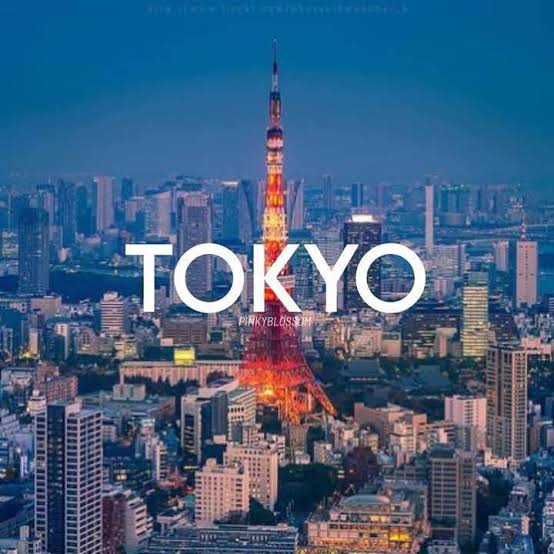
1. Population and Administrative Divisions of
Japan
- ·
Japan’s population was
approximately 125–126 million (125–126 million people, or 12.5–12.6
crore), although it has been declining in recent years. In recent
years, Japan has experienced a gradual decline in its Japanese citizen population.
- ·
Instead of traditional provinces, Japan uses a
system of 47 prefectures, officially known collectively as Todōfuken.
These are divided into the following categories:
- o 1 Metropolis: Tokyo (Tokyo-to)
- o 1 Circuit or Region: Hokkaido (Hokkaido-do)
- o 2 Urban Prefectures: Osaka and Kyoto (Osaka-fu
and Kyoto-fu)
- o 43 Ordinary Prefectures: The remaining
prefectures, designated -ken.
Geographically, these 47 prefectures are commonly
grouped into eight major regions:
- 1.
Hokkaido
- 2.
Tohoku
- 3.
Kanto
- 4.
Chubu
- 5.
Kansai (also known as Kinki)
- 6.
Chugoku
- 7.
Shikoku
- 8.
Kyushu, including Okinawa
2. Japanese Culture
Japanese culture is a distinctive blend of ancient
traditions and modern technology.
Traditional Arts
- ·
Tea Ceremony
(Chanoyu): A traditional practice that emphasizes hospitality,
mindfulness and tranquility.
- ·
Ikebana:
The Japanese art of flower arrangement.
- ·
Kabuki and Noh
Theatre: Traditional forms of Japanese drama and theatrical
performance.
Religion and Beliefs
Shinto and Buddhism are the two major religious
traditions in Japan. Their influence can be seen in many aspects of everyday
life, cultural practices and ceremonies.
Festivals
- ·
Cherry Blossom Festival
(Sakura): A springtime celebration of cherry blossoms, during which
people gather in parks to enjoy the flowers.
- ·
Obon: A
traditional festival held to honor and remember the spirits of deceased
ancestors.
Clothing and Food
The kimono, Japan’s traditional
garment, is worn on special occasions. Japanese cuisine is internationally
renowned, particularly sushi, sashimi and ramen.
Literature and Architecture
Japanese temples, castles—such as Hirosaki
Castle—calligraphy and pottery represent a cultural heritage that has
developed over many centuries.
3. Geography and Natural Environment
Japan is an island nation in East Asia, located
in the northwestern Pacific Ocean, approximately 150 kilometers from the Korean
Peninsula at its nearest point. It consists of more than 6,500 islands, of
which the four largest are Honshu, Hokkaido, Shikoku and Kyushu.
Honshu is the largest and most central of these islands. It contains major
Japanese cities, including modern-day Tokyo and Kyoto, which served as the
imperial capital for much of Japan’s history. Japan’s famous and sacred
mountain, Mount Fuji (Fujisan), is also located on Honshu.
Many of Japan’s smaller islands are sparsely
populated or uninhabited. Much of the country is mountainous, which means that
a large proportion of the population lives in coastal plains and urban areas,
particularly around Tokyo and Osaka. Only a relatively small share of Japan’s
land is suitable for cultivation. Japan has limited mineral resources and is
frequently affected by earthquakes, typhoons and other natural disasters.
Despite these challenges and its limited natural resources, Japanese society
has developed a strong appreciation for aesthetics, traditional arts and
craftsmanship.
4. The Origins of the Japanese People
Reliable information about Japan’s earliest
history is limited. Written historical records began to emerge in the eighth
century CE, when Japan adopted and adapted Chinese writing through cultural
contacts with the Asian mainland, including the Korean Peninsula. Consequently,
the precise dates when the ancestors of modern Japanese people arrived on the
islands and developed a distinct culture cannot be established with complete
certainty. One of the earliest important written references to Japan appears in
Chinese historical records dating to the third century CE, including accounts
of the people and political communities of the Japanese archipelago.
According to traditional Japanese mythology, the
country’s first emperor, Emperor Jimmu (Jimmu Tennō), was
descended from the Sun Goddess. Traditional accounts place his accession to the
throne in 660 BCE. However, this date belongs to legend rather
than established historical fact, and Emperor Jimmu’s historicity has not been
confirmed. Archaeological evidence indicates that people inhabited the Japanese
islands as early as approximately 30,000 BCE. Japan
subsequently passed through various prehistoric periods, including the
Paleolithic period, followed by the Jomon period, which is associated with
early pottery-making communities.
The population of the Japanese archipelago
developed through complex waves of migration and interaction among different
communities. These included populations associated with the Korean Peninsula
and other parts of East and Southeast Asia. Over time, incoming groups
interacted with earlier inhabitants, sometimes displacing them and sometimes
assimilating with them. The Ainu are among the Indigenous
peoples of Japan. They have a distinct cultural and linguistic heritage and
historically inhabited Hokkaido and other northern areas. Their population
figures vary depending on the definition and method of counting used, and their
cultural traditions remain an important part of Japan’s heritage.
Japan’s History: From Prehistoric Times to the
Heian Period
The Ainu are one of Japan’s Indigenous peoples,
most of whom have traditionally lived on the island of Hokkaido in the
country’s far north. The period from prehistoric times to the emergence of
written records in Japan has been divided by historians and archaeologists into
the following eras.
1. Jōmon Period (縄文時代) — Approximately 13,000–1,000 BCE
The Jōmon Period was named after the distinctive
cord-marked pottery discovered at archaeological sites from this era. The word Jōmon
refers to the rope-like patterns found on these vessels. The people of this
period primarily relied on hunting, fishing, and gathering for their
livelihood. They used stone tools and lived in close association with their
natural environment.
2. Yayoi Period (弥生時代) — Approximately 1,000 BCE–250 CE
The Yayoi Period followed the Jōmon Period.
According to some historical accounts, people from mainland Asia migrated to
Japan between approximately 1,000 and 800 BCE, bringing new technologies,
agricultural practices, and cultural traditions. Many modern Japanese people
are considered descendants of both the Jōmon populations, who inhabited the
Japanese archipelago earlier, and later migrants associated with the Yayoi
culture. These populations arrived through different routes and at different
times, and their interaction contributed to the formation of Japanese society.
The Yayoi people introduced or helped expand the
use of iron tools, agriculture, silk production, glassmaking, and new
architectural techniques. Over time, agricultural communities grew in
population and became more numerous than many of the earlier hunter-gatherer
communities. Yayoi communities gradually developed political authorities and
regional states. According to accounts preserved in early Chinese historical
records, including the Book of Han, Japan—then known in Chinese
sources as Wa—was divided into numerous local political entities. A
later Chinese historical account indicates that by around 240 CE, the polity
known as Yamatai had emerged as a
prominent political power.
3. Kofun Period (古墳時代) — Approximately 250–538 CE
The term Kofun refers to the large
burial mounds constructed in Japan from around the middle of the third century
to the early seventh century. These tombs gave the period its name. During this
era, Japan gradually moved towards greater territorial and political unity
under the leadership of the Yamato polity (大和).
For this reason, the period is sometimes also referred to as the Yamato Period.
The Yamato polity developed into a powerful political federation, with its
centre in the Kinai region of central Japan. The rulers of Yamato are
associated with the emergence of the imperial dynasty, which continues to this
day. Japanese emperors traditionally trace their lineage to this imperial
house.
The Yamato rulers expanded their authority not
only through military campaigns but also through negotiations and agreements
with local chieftains. As their influence grew, they strengthened political
unity across larger parts of the Japanese archipelago. China eventually
recognised the status of some Yamato rulers and established formal diplomatic
contacts with them. Chinese historical records mention five rulers of Wa, often
referred to by historians as the Five Kings of Wa.
Increasing contact with
China exposed the Japanese to Chinese ideas, customs, traditions, and political
institutions.
During the sixth century, craftsmen and
specialists in knowledge and the arts from China and, particularly, the Korean
Peninsula played an important role in introducing continental technologies and
administrative expertise to Japan. According to historians, the Yamato polity
also experienced prolonged and intense competition with rival political groups.
One of these was associated with Izumo (出雲), a
region and political centre in western Japan.
The Classical Period of Japan
The period from approximately 538 to 1185 CE is
commonly described as Japan’s classical period. It is generally divided into
three major eras.
1. Asuka Period (飛鳥時代) — 538–710 CE
The Asuka Period is traditionally dated from
around 538 CE, when Buddhism was introduced to Japan from the Korean Peninsula.
From that time onward, Buddhism developed alongside Shinto
(神道),
Japan’s indigenous religious tradition.
Shinto: Japan’s Indigenous Religion
Shinto, whose name is commonly translated as “the
way of the kami,” is Japan’s indigenous religious tradition. A central feature
of Shinto is reverence for nature and the spiritual forces believed to inhabit
it. Shinto traditions include the worship of numerous kami, or sacred beings
and spiritual powers, associated with natural phenomena, places, ancestors, and
other aspects of existence. Amaterasu, the sun goddess, occupies a particularly
important position in Japanese mythology and the traditional beliefs
surrounding the imperial family.
The Rise of Asuka as a Political Centre
The period takes its name from Asuka,
an area in present-day Nara Prefecture where the imperial court was based
during much of this era. In the 580s, the Buddhist-supporting Soga
clan (蘇我氏) gained considerable political influence and dominated
the government for several decades. One of the most prominent advocates of
Buddhism was Prince Shōtoku (聖徳太子),
who exercised considerable political influence from the late sixth century into
the early seventh century. In 607 CE, Japanese diplomatic missions were sent to
China to study its culture, institutions, and civilisation.
Prince Shōtoku is traditionally associated with
the adoption of governing principles influenced by Chinese political
philosophy, particularly the teachings of Confucius. He is also associated with
the Seventeen-Article Constitution, a set of principles intended to guide
government officials and members of the political elite.
In 645 CE, the Soga clan lost power, and
political reforms were initiated by the group associated with the future
Fujiwara family and other court leaders. These changes became known as the Taika
Reforms (大化の改新). Under the reforms, land and taxation arrangements
were reorganised, with the state seeking greater control over land distribution
and agricultural production. The principal objective was to strengthen the
central government and establish a more centralised system of administration
influenced by Chinese models. Because of these reforms, the Asuka Period is
also closely associated with the Taika Reform era.
During this period, Japanese leaders continued
sending diplomatic and scholarly missions to China to learn about Chinese
writing, politics, art, and religion. In 672 CE, a dispute over imperial
succession led to a civil conflict. Subsequent administrative and legal
reforms, including the Taihō Code of 701, helped consolidate the legal
framework and establish a more structured system of central and provincial
government. These reforms drew considerable inspiration from Chinese
administrative practices. One of the most remarkable architectural achievements
associated with the Asuka Period is Hōryū-ji Temple
(法隆寺).
Its surviving wooden structures are widely recognised among the oldest extant
wooden buildings in the world.
2. Nara Period (奈良時代) — 710–794 CE
In 710 CE, Japan established its first permanent
capital at Heijō-kyō (平城京),
in present-day Nara. The city was designed with considerable influence from
Chang’an, the capital of China’s Tang Dynasty, located in present-day Xi’an. The
establishment of the capital gave the period its name: the Nara Period. During
this era, Japan continued to draw knowledge and inspiration from Chinese
civilisation. Confucianism (儒教), which had already influenced Japanese thought, also
played a role in the development of political and social institutions.
Parks, Buddhist temples, and pagodas were
constructed, while art, literature, and scholarship flourished. Japanese
poetry, particularly waka (和歌),
developed as an important literary form, and the production of written
historical and literary works expanded. The Nara Period also witnessed efforts
to reconcile Buddhist traditions with Shinto beliefs and practices. Rather than
remaining entirely separate, the two traditions increasingly interacted within
Japanese religious life. This was an important period in the development of
Japan’s government, religion, and culture. However, towards its end, epidemics
and famines severely affected the population and created significant social and
economic difficulties.
3. Heian Period (平安時代) — 794–1185 CE
In 784 CE, the capital was moved from Nara to Nagaoka-kyō.
However, after only eleven years, the capital was relocated again.
In 794 CE, Emperor Kanmu established a new
capital at Heian-kyō, in present-day
Kyoto, approximately 28 miles north of the former capital at Nara. The move
gave the period its name: the Heian Period. Kyoto remained Japan’s imperial
capital for more than a thousand years, until the imperial court moved to Tokyo
in the modern era. The Heian Period is widely regarded as a golden age of
Japanese court culture and literature.
With the support and influence of the powerful Fujiwara
aristocratic family, Japanese culture increasingly developed
its own distinctive character. Rather than simply reproducing Chinese models,
Japanese court society adapted or abandoned certain continental practices and
placed greater emphasis on local traditions. The Japanese writing system also
evolved. Alongside the continued use of Chinese characters, Japanese syllabic
scripts—particularly hiragana and katakana—developed and became important tools
for expressing the Japanese language in writing. This development contributed
significantly to the growth of vernacular literature.
Many aspects of Chinese-style administration were
gradually modified or abandoned. Political power increasingly came to be
exercised by the Fujiwara aristocracy, their appointed representatives, and
hereditary court officials, while the emperor and imperial court remained
central to the political order. The Heian Period is especially famous for its
aristocratic lifestyle, refined court etiquette, literature, poetry, painting,
and other arts. Among the upper classes, an appreciation of literature and the
fine arts was regarded as an important mark of education, sophistication, and
social standing.
The Heian Period and the Rise of Feudal Japan
An Important Literary Work of the Era
One of the important literary works of this
period was The Tale of Genji, written around 978 by a woman named Murasaki
Shikibu. It is regarded as the world’s first psychological novel.
The Feudal Era
After 1000 CE, a feudal system similar to that of
medieval Europe emerged in Japan over the following one and a half centuries.
Under this system, feudal lords controlled local territories, while samurai
served as warriors and protectors. Local rulers collected taxes from the people
living in their domains.
The Minamoto and Kamakura Shogunate (1185–1333)
A major struggle for power took place between the
Minamoto and Taira clans. After defeating the Taira, Minamoto no Yoritomo
established his authority and was appointed shogun in 1192. Although the
emperor remained the symbolic head of Japan, real political and military power
increasingly rested with the shogun. Yoritomo established his headquarters in
Kamakura, which became the centre of military government.
After Yoritomo’s death, the Hōjō clan gradually
assumed control of the shogunate and exercised power behind the scenes. During
this period, Japan faced two major Mongol invasions, in 1274 and 1281, under
the leadership of Kublai Khan. The Japanese successfully resisted both
invasions. However, the cost of defending the country placed considerable
financial pressure on the government. These difficulties, combined with the
weakening of central authority, contributed to the growing influence of
powerful regional lords known as daimyo.
The Ashikaga and Muromachi Shogunate (1333–1568)
In 1333, Emperor Go-Daigo led a revolt against
the Kamakura shogunate. Ashikaga Takauji later emerged as a powerful figure and
established the Ashikaga shogunate. Japan subsequently experienced a period of
political division known as the Northern and Southern Courts. The country was
eventually reunified in 1392 under Ashikaga Yoshimitsu. However, the shogunate
gradually weakened as regional lords gained greater independence. In 1467, the
Ōnin War broke out, plunging Japan into prolonged civil conflict. This marked
the beginning of the Sengoku period, which lasted from 1467 to 1568 and was
characterised by warfare among rival feudal lords.
During this turbulent era, piracy also became a
problem in Japanese coastal waters. In 1543, Portuguese traders arrived in
Japan, introducing firearms to the country. The Japanese soon began
manufacturing firearms locally. Christian missionaries subsequently arrived and
began spreading Catholicism, leading some Japanese people to convert to
Christianity.
The Unification of Japan
Oda Nobunaga
One of the most influential figures in Japan’s
unification was Oda Nobunaga. In 1568, he entered Kyoto and established his
influence over the imperial capital. He worked to weaken rival military powers,
including Buddhist institutions that maintained their own armed forces.
Nobunaga made significant progress towards unifying Japan, but he died in 1582
before completing the task.
Toyotomi Hideyoshi
Following Nobunaga’s death, Toyotomi Hideyoshi
continued the campaign to unify the country. He consolidated political
authority and introduced measures to strengthen control over the population.
Hideyoshi ordered the disarmament of peasants and other commoners, restricting
their possession of weapons. In 1587, he also issued an order banning Christian
missionaries from Japan, although Christianity did not disappear immediately.
By 1590, Hideyoshi had brought most of Japan
under his control.
In 1592, he launched a military invasion of
Korea, intending to use it as a route towards conquering China. The campaign
encountered strong resistance and failed to achieve its ultimate objective.
Following Hideyoshi’s death in 1598, Japanese forces withdrew from Korea.
The Azuchi-Momoyama Period (1568–1600)
The era associated with the unification efforts
of Oda Nobunaga and Toyotomi Hideyoshi is known as the Azuchi-Momoyama period.
It was a crucial transitional phase in Japanese history, marking the decline of
prolonged feudal warfare and the emergence of a more unified political order.
The Tokugawa Shogunate, Based in Edo
(Present-Day Tokyo), 1603–1868
Following Hideyoshi’s death, a succession
struggle broke out. Tokugawa Ieyasu, a warrior who had previously been one of
Hideyoshi’s allies, defeated the remaining opponents at the Battle of
Sekigahara in 1600 and established control over a unified Japan. In 1603, he
received the title of shogun, became the country’s ruler, and founded the
Tokugawa shogunate. He moved the administrative centre eastward to the small
town of Edo, present-day Tokyo.
Although local lords retained administrative
authority in their respective territories after Japan’s unification, Ieyasu
introduced rules and regulations to ensure their obedience. This proved to be
an important step towards restoring central government authority in Japan. It
also helped establish the rule of law in place of rule by the sword.
One of Ieyasu’s important policies concerned
Western traders, particularly Christian missionaries. Their growing influence,
criticism of traditional Japanese beliefs, and occasional interference in local
politics caused concern among the authorities. In 1612, fearing a possible
religious uprising by Christians, Ieyasu banned Christianity in Japan. Ieyasu
died in 1616, but the Tokugawa shogunate he established remained in power until
1867, ruling Japan for the next 268 years. This period brought a prolonged era
of relative peace and stability, during which trade and culture flourished.
After Ieyasu’s death, his successors continued to
persecute Christians intermittently over the following two decades. In 1637, a
rebellion broke out in southern China involving peasants, many of whom were
Christians. The Japanese government responded by deciding to take severe
measures against Christians. Many were brutally killed or expelled from the
country, and all Japanese people were required to follow Buddhism. These
policies eventually led to the suppression of Christianity in Japan.
The suppression of Christianity was part of a
broader policy aimed at preventing the influence of foreign ideas and customs.
Although European trade had been profitable for Japan, the Tokugawa shogunate
eventually decided that European traders, along with Christian missionaries,
should also be expelled. In 1639, Shogun Tokugawa Iemitsu closed Japan’s
borders to most foreigners and adopted a policy of isolation from the outside
world. Trade with Western countries was terminated, and only the Chinese and
the Dutch among the Europeans were permitted to conduct trade through the port
of Nagasaki.
Under this policy, Japan remained largely closed
to Europe for the next two centuries. On the one hand, the country fell behind
Europe in science, technology, and military development. On the other hand, the
policy helped Japan maintain peace and stability for an extended period. The
policy also benefited Japanese merchants. Domestic peace, educational reforms,
and the growth of the internal economy enabled cities to develop more rapidly
than rural areas. Japanese culture became particularly rich and creative during
this era, producing outstanding works of art, literature, and architecture.
Buddhist monks developed a distinctive religious
school known as Zen, which had a profound influence on Japanese culture
compared with other forms of Buddhism. The Japanese word “Zen” is associated
with meditation, through which practitioners seek to attain mental clarity and
spiritual insight. For more than 200 years, attempts by other countries to
establish trade with Japan were largely unsuccessful. However, in 1853, a small
American naval fleet arrived at a Japanese port and demanded that the country
open its ports to American merchants. In 1854, Japanese leaders signed an
agreement granting the United States the requested trading rights. Similar
agreements were subsequently concluded with Britain, France, Russia, and the
Netherlands. These developments brought Japan’s policy of isolation and its
long period of seclusion to an end.
The Meiji Restoration and Japan’s Path to
Modernisation
Following the establishment of trade with Western
countries, the Japanese came to recognise the need for certain changes.
The Meiji era (1868–1912) was a revolutionary
period in Japanese history. The feudal system was abolished, and in 1890, Japan
adopted a new constitution modelled on Western systems. Under the constitution,
a parliament, known as the Diet, was established and given authority over
important decisions.
Unlike China, Japan focused on modernising itself
along Western lines. To organise and train its citizens, Japan hired thousands
of engineers, technicians, and experts in the army and navy from Western
countries. In addition to developing military equipment, the government
promoted industries producing chemicals, cement, iron, steel, silk, and cotton
goods. These industries generated revenue that was used to modernise the
country.
By 1890, Japan’s major cities and towns had been
connected by telegraph and railway networks. Agricultural production doubled,
education was made compulsory, and old feudal laws were revised to meet the
requirements of the industrial age. The government also organised study tours
to Europe to help Japanese officials and intellectuals understand Western
democratic systems. Alongside economic development, Japan focused on
modernising its army and navy. As a result, it became strong enough to reclaim
certain privileges that Western powers had secured in Japan through unequal
treaties during the 1850s.
Japan became the most developed country in Asia
and emerged as an industrial power seeking to expand its sphere of influence.
As its strength grew, Japan increasingly adopted an imperialist policy. Its
motives included not only economic needs but also the desire to demonstrate
national superiority and military power.
Japan’s Wars of Expansion
China became Japan’s first major target for
expansion. Following the war between China and Japan in 1894, Japan established
control over Korea, which had traditionally been allied with China. Japan then
turned its attention towards Manchuria, a northeastern region of China. Russia
also sought influence over Manchuria, leading to war between Russia and Japan
in 1904. Contrary to expectations, Japan inflicted a series of defeats on
Russia. As a result, Japan gained control over Russia’s commercial interests in
southern Manchuria, bringing the region increasingly under Japanese influence.
Under the peace settlement, Port Arthur and the
southern half of Sakhalin Island came under Japanese control. Korea was turned
into a Japanese protectorate and effectively became a state under Japanese
domination. Most importantly, Japan secured recognition as a major world power.
The Taishō Era and the First World War
(1912–1926)
Following the death of Emperor Meiji, Emperor
Taishō ascended the throne as Japan’s 123rd emperor. His reign lasted from 1912
to 1926. During this period, the First World War broke out in 1914. Japan joined
the Allied powers and declared war on Germany. Japanese forces occupied German
possessions and colonies in China and the Pacific. After the war, the Treaty of
Versailles recognised Japan’s control over former German possessions in the
region, while Japan also maintained its influence in Manchuria and southern
Sakhalin.
The First World War disrupted international trade
among European countries, leaving them unable to export textiles, machinery,
chemicals, and other goods to the rest of the world as before. Under these
circumstances, demand for Japanese products increased. Japanese merchants and
investors became wealthier and rapidly expanded their investments. Thousands of
factories were built, and Japanese textile exports grew substantially.
Investors and industrialists acquired modern machinery and advanced techniques
from abroad to improve production quality. As a result, several major companies
emerged and came to control a significant share of the country’s wealth.
Taishō Democracy and the Rise of Militarism
During the 1920s, Japan introduced several
democratic reforms, a period commonly known as Taishō Democracy. However, these
democratic developments were increasingly overshadowed by growing militarism
and expansionism. Japan experienced considerable domestic unrest after 1920.
Poor economic conditions intensified political instability, and several
politicians, including a prime minister, were assassinated.
Neither parliament nor the civilian government
had effective control over the military. Even the emperor was unable to
exercise decisive control over it. In practice, the military increasingly held
the reins of government rather than elected civilian leaders. When the global
economic crisis deepened following the Great Depression of 1929, Japan’s
military leadership believed that establishing a colonial empire across the
Pacific was the solution. The military leadership was accountable to the
emperor rather than to elected political leaders and favoured an aggressive
policy similar to those pursued by Germany and Italy.
Following this approach, the Japanese army
occupied Manchuria, a northeastern region of China, in 1931, despite an
existing peace agreement with China. Japan subsequently established a puppet
government there. In 1937, Japan launched a major offensive in China, occupying
Beijing and other northern cities before capturing Nanjing, the Chinese capital
at the time. Over the following six months, Japanese forces killed
approximately 200,000 Chinese people. Despite these atrocities, Chinese
resistance continued.
Japan in the Second World War
During the Second World War, Japan was allied
with Germany and Italy. In December 1941, Japan attacked the American naval
fleet at Pearl Harbor, bringing the United States directly into the war. By the
middle of 1942, Japanese forces had occupied colonies belonging to the
Netherlands, Britain, France, and the United States across the western Pacific
and Southeast Asia. However, in 1945, Japan lost these occupied territories,
and the United States dropped atomic bombs on Hiroshima and Nagasaki, forcing
Japan to surrender. Following its defeat, Japan remained under direct American
occupation for seven years.
During this period, a new democratic constitution
was drafted for Japan. A parliamentary system of government was established,
featuring a bicameral legislature. Although the emperor’s position was
retained, his role was restricted to that of a constitutional and largely
ceremonial head of state. One of the constitution’s most important provisions
was Article 9, under which Japan renounced war as a sovereign right and
committed itself to the principles of peace. The provision also restricted the
country’s use of military force, although its interpretation and application evolved
over time. After these arrangements were established, the United States and 47
other countries signed a formal peace treaty with Japan, officially restoring
its sovereignty.
Japan’s Postwar Economic Miracle
The United States and Japan, once bitter enemies,
became allies. Japan’s economy subsequently began to grow rapidly. Through the
development of industries such as steelmaking, shipbuilding, automobiles, and
electronics, along with agricultural reforms and the tireless efforts of its
people, Japan achieved remarkable economic progress within a relatively short
period. Despite being surrounded by water and facing frequent earthquakes, as
well as the devastation caused by atomic bombing during the Second World War,
Japan rebuilt itself into one of the world’s leading economic powers.