Senior officials from Pakistan, Saudi Arabia and
Türkiye began a high-level four-way meeting with Iranian leaders in Tehran on
Monday, seeking to reduce escalating military tensions in the Gulf region and
restore diplomatic contacts. Representatives from Iran, Pakistan, Saudi Arabia
and Türkiye are attending the meeting, where they are discussing regional
security, the impact of U.S. and Israeli attacks on Iran, Houthi attacks on
Saudi Arabia, and efforts to revive negotiations between Iran and the United
States.
According to Iranian state television, the
meeting’s primary objective is to promote regional cooperation, security and
stability. Saudi Arabia’s Foreign Ministry also described the visit as part of
efforts to ease tensions and encourage negotiations and diplomatic solutions,
saying that reopening channels for dialogue is essential to preventing renewed
military confrontation in the region. The meeting marks the first high-level
joint engagement between Iran and the three members of the Mecca Joint Defense
Agreement—Pakistan, Saudi Arabia and Türkiye—since the agreement was signed in
August 2026. The development comes as tensions between Iran and the United
States have intensified again, while operations by Yemen’s Houthi movement
against Saudi Arabia have further widened the conflict.
Field Marshal Asim Munir, Khalid bin Salman and
Ibrahim Kalin Attend Meeting
Pakistan is represented by Chief of Defence
Forces and Chief of Army Staff Field Marshal Syed Asim Munir, while Saudi
Arabia’s delegation is led by Defence Minister Prince Khalid bin Salman.
Türkiye is represented by intelligence Chief Ibrahim Kalin. Pakistan’s Inter-Services
Public Relations (ISPR) confirmed Field Marshal Asim Munir’s official visit to
Iran in a statement issued from Rawalpindi on Monday. According to Saudi and
Iranian officials, meetings with officials of Iran’s Supreme National Security
Council were also scheduled following high-level consultations at the four-way
meeting.
Field Marshal Asim Munir had also visited Tehran
last week, where he met Iranian President Masoud Pezeshkian and other senior
officials. According to Iranian media, Iranian officials told him during that
visit that negotiations with the United States would not take place until
Tehran’s demands were met. A video released by Iran’s state broadcaster, IRIB,
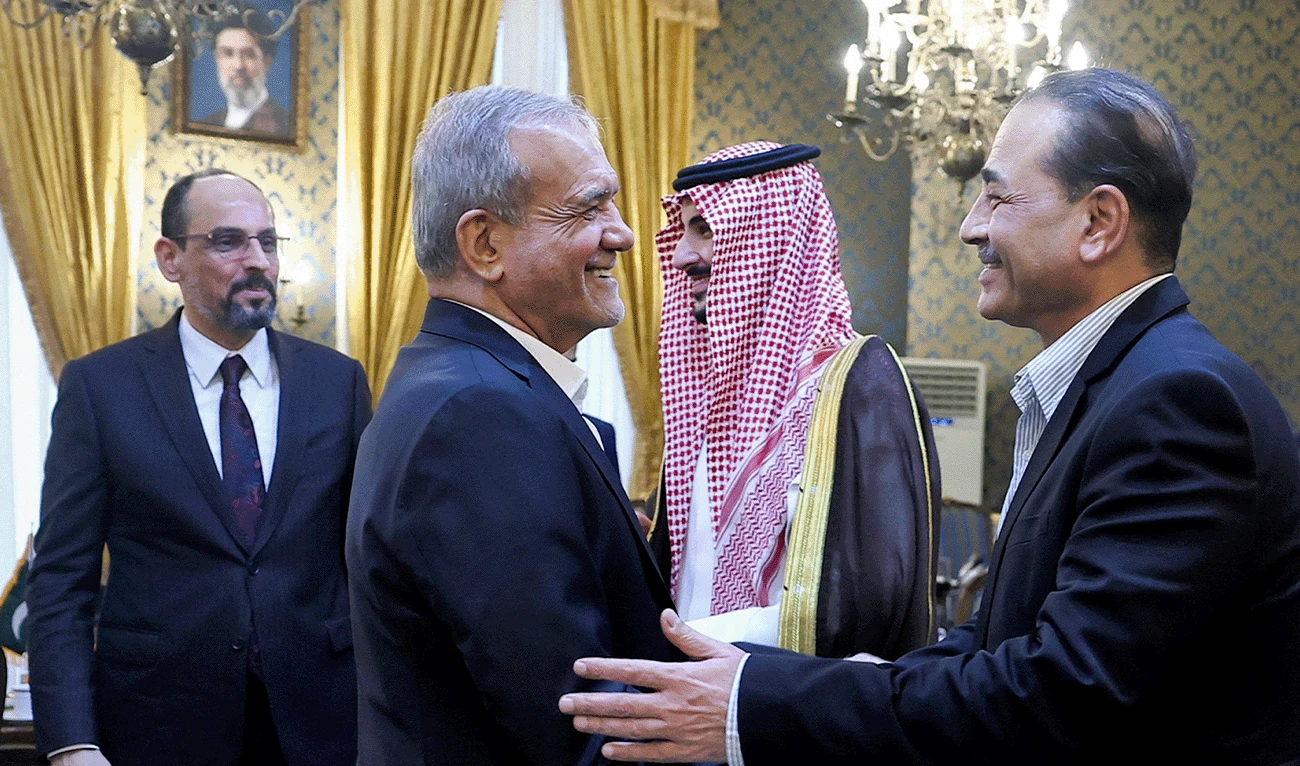
showed the opening of the meeting, with Field Marshal Asim Munir and Pakistan’s
Interior Minister Mohsin Naqvi alongside Iranian President Masoud Pezeshkian,
Foreign Minister Abbas Araghchi and security officials.
Ali Bagheri Kani, deputy secretary of Iran’s
Supreme National Security Council, told state television that the delegations
would hold consultations with the council. Meanwhile, Saudi Arabia’s Deputy
Minister for Public Diplomacy said in a post on X that the defence minister
would lead the Saudi delegation for meetings with Iranian officials in Tehran
involving members of the Mecca Joint Defense Agreement. According to the
official, Field Marshal Asim Munir and the director of Türkiye’s National
Intelligence Organization would also participate.
Proposal for a Regional Non-Aggression Framework
According to Pakistani security officials, one of
the meeting’s main objectives is to explore the possibility of establishing a
regional non-aggression framework under which countries would refrain from
military action against one another and adopt a joint mechanism for resolving
disputes through diplomatic means. Iranian Foreign Ministry spokesperson
Esmaeil Baghaei said on Monday that discussions would cover Israel’s
expansionist policies, the situation in Palestinian territories and Lebanon,
and the consequences of U.S. and Israeli military operations against Iran.
Baghaei said the proposal for the meeting emerged
during Field Marshal Asim Munir’s visit to Tehran last week. He described the
engagement as a possible first step towards establishing a regional collective
security framework. According to a Pakistani security official, the agenda also
includes Iran-U.S. negotiations, Houthi attacks on Saudi Arabia, the Strait of
Hormuz and the U.S. blockade of Iranian ports.
Pakistan and Qatar’s Mediation Efforts
Pakistan and Qatar are playing important roles in
efforts to mediate the ongoing dispute between Iran and the United States. According
to Reuters, Qatari mediators were also in Tehran on Sunday, seeking to reduce
tensions through diplomatic contacts. Earlier diplomatic efforts in June
resulted in a temporary peace agreement. However, the arrangement did not hold
after fighting between Iran and the United States resumed. Tensions
subsequently increased between the Iran-backed Houthis and Saudi Arabia,
opening another front in the conflict. Saudi Arabia’s Foreign Ministry said the
current visit was intended to support efforts to de-escalate the crisis and
pursue a diplomatic solution. The ministry also described the mediation efforts
of Pakistan and Qatar as important.
Deadlock Persists Over Iran-U.S. Negotiations
The Tehran meeting is taking place amid renewed
tensions between Washington and Tehran. U.S. President Donald Trump said on
Friday that the United States could launch another military operation against
Iran. Meanwhile, Iranian security officials told Reuters that Tehran had
prepared detailed plans to target undersea communications cables in the Gulf
region if the United States and Israel launched further attacks. The claim has
not been independently verified.
According to Iranian media, Tehran also made
clear during Field Marshal Asim Munir’s previous visit that it would not
negotiate with Washington until its demands were met. These demands include an
end to the U.S. blockade and the lifting of restrictions on Iranian oil exports.
The ongoing conflict has disrupted energy shipments through the Strait of
Hormuz, pushed up global oil and gas prices and exposed Gulf countries to the
threat of missile and drone attacks. Continued fighting in Yemen has also
raised concerns that the humanitarian crisis there could worsen.
Houthis Claim Attacks on Saudi Airport and Oil
Facilities
As diplomatic activity continued in Tehran,
Yemen’s Houthi movement claimed further attacks against Saudi Arabia. According
to Reuters, the Houthis said on Monday that they had targeted pumping stations
used to transport crude oil from eastern to western Saudi Arabia, as well as
Riyadh’s airport. Riyadh’s airport had announced the resumption of operations
at two terminals a day earlier. However, Saudi authorities had not immediately
confirmed the latest attacks claimed by the Houthis on Monday.
Reuters reported that Saudi Arabia intensified
its attacks against the Houthis last month after the group seized key locations
along Yemen’s Red Sea coast and advanced against forces supporting the
Saudi-backed government. The Houthis have claimed attacks targeting Saudi
airports, ports and oil facilities. These operations have further highlighted
concerns about Saudi Arabia’s security and the protection of regional energy supplies.
Any major disruption to commercial routes through the Strait of Hormuz and the
Red Sea could have serious consequences for the global economy.
What Is the Mecca Joint Defense Agreement?
Pakistan, Saudi Arabia and Türkiye signed the
Mecca Joint Defense Agreement in August 2026. According to Reuters, the
agreement includes a provision allowing all necessary means to be used to
address threats to the territorial integrity, sovereignty or internationally
recognized borders of any member state. Earlier this month, member countries
held an emergency meeting in Riyadh, where they agreed to ensure the rapid
deployment of troops and defensive capabilities in Saudi Arabia. Pakistan
approved the agreement last week, while the ratification process has also begun
in the Turkish parliament. Iran is not a member of the agreement. However, the
four-way meeting in Tehran is providing a direct opportunity to discuss
regional security and de-escalation with Iranian leaders.
Global Attention Focuses on the Meeting’s Outcome
The Tehran meeting has gained significance as
Saudi Arabia faces Houthi attacks while the risk of renewed fighting between
Iran and the United States remains. Against this backdrop, the participation of
senior officials from Pakistan, Saudi Arabia and Türkiye in talks with Iranian
leaders represents an important diplomatic development. However, no details
have yet emerged regarding a joint statement, ceasefire, non-aggression
agreement or a final decision on resuming Iran-U.S. negotiations. The key question
is whether the four-way consultations can produce a workable plan to reduce
military tensions in the region, halt Houthi attacks on Saudi Arabia and revive
negotiations between Iran and the United States.
The meeting between Iranian leaders and members
of the Mecca agreement comes as the region faces the prospect of a wider war.
These developments are also being linked to what the report describes as the
political calculations of U.S. President Donald Trump and Israeli Prime
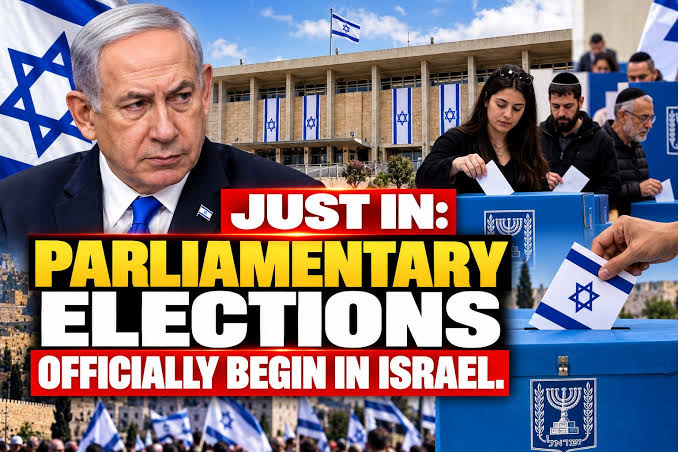
Minister Benjamin Netanyahu ahead of upcoming elections. The U.S. midterm
elections are scheduled for November 3, while Israel’s general election is due
to take place on October 27. Before these votes, both leaders are reportedly
seeking a major breakthrough in the war involving Iran.
According to Reuters, Iran is deliberately
prolonging the diplomatic deadlock in an effort to weaken Trump politically
before the U.S. midterm elections. However, a major reason for Tehran’s
reluctance to negotiate is its concern that military action could resume even
after an agreement, as well as its deep distrust of Washington. That distrust
is rooted in U.S. conduct following the Islamabad peace agreement, which was
reached in June through Pakistan’s mediation and diplomatic efforts. The
agreement failed to hold after fighting between Iran and the United States
resumed a few weeks later. The United States and Israel are now threatening
further attacks on Iran, while Tehran says it is prepared to deal with any
eventuality but that the door to diplomacy remains open.