In most parts of the world,
day and night will be nearly equal in duration between September 21 and 23,
with each lasting approximately 12 hours. This occurs around the autumnal
equinox because the Sun is positioned directly above the equator, causing
sunlight to be distributed almost equally across the Earth. As a result, the
length of day and night is also nearly equal. The same phenomenon occurs in
March, when the spring equinox begins.
According to an astronomical
journal, autumn begins in the Northern Hemisphere while spring begins in the
Southern Hemisphere between September 21 and 24 each year. Although the
duration of autumn has shortened in recent years, the autumnal equinox still
occurs every year between September 21 and 24. This is the time when the Sun
crosses the equator while moving from the Northern Hemisphere toward the
Southern Hemisphere. As a result, day and night will be approximately 12 hours
long in most parts of the world, including Pakistan.
It should be noted that the
equator is an imaginary line drawn around the middle of the Earth that divides
the planet into two equal halves, the Northern and Southern Hemispheres. During
the autumnal equinox, the Sun rises due east and sets due west, making it an
important astronomical event. Before the autumnal equinox, the Sun rises in the
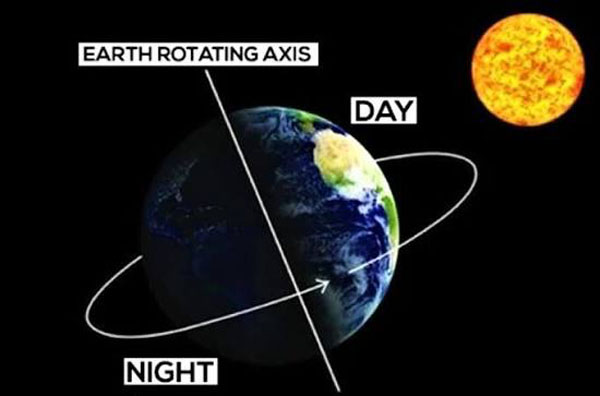
northeast, while after the equinox, it rises in the southeast. The Earth is tilted on its axis as it orbits
the Sun. As a result, at different times of the year, varying amounts of
sunlight and heat reach our planet directly. During the autumnal equinox, the
Sun is positioned over the equator, so nearly equal amounts of sunlight reach
different parts of the world. At this time, the lengths of day and night are
also nearly equal, at approximately 12 hours each.
The same phenomenon occurs in
March, when the spring equinox begins and the Sun crosses the equator while
moving northward. The Tropic of Cancer period begins in June, while the Tropic
of Capricorn period begins in December. The Tropic of Cancer marks the longest
day of the year, after which the length of daylight begins to decrease. The
Tropic of Capricorn marks the shortest day of the year, after which daylight
begins to increase. Day
and night become nearly equal in duration in March and September, although this
does not occur exactly in some regions. The word “equinox” it means “equal
night.”
In ancient times, the seasons were determined by
the spring equinox, autumnal equinox, Tropic of Cancer and Tropic of Capricorn.
This year, the autumnal equinox will begin on September 23. After that,
daylight will gradually decrease and nighttime will increase in the Northern
Hemisphere, while the opposite will occur in the Southern Hemisphere.