As part of efforts to form Israel's next
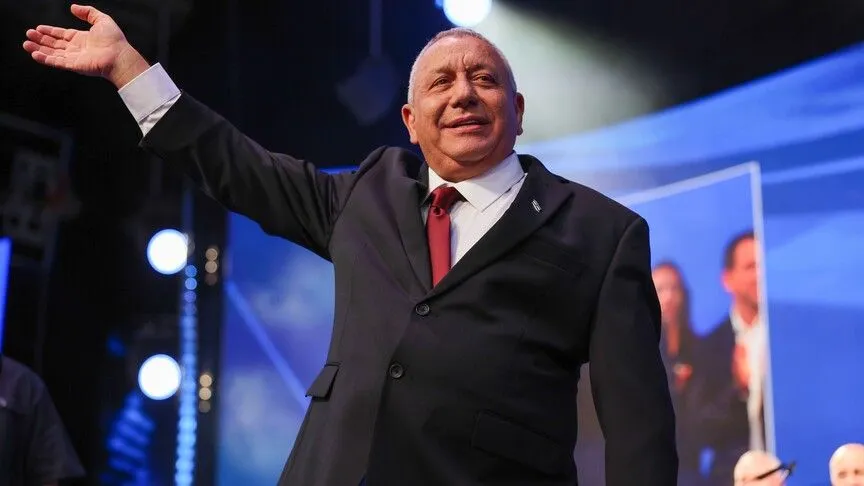
government following the October elections, Gadi Eisenkot's Yashar party has
announced an alliance with a right-wing opposition party. Yashar said on Tuesday that, following a
meeting with Avigdor Lieberman's Yisrael Beiteinu party, the two sides had
agreed to sign a coalition agreement. This is the first political alliance of
its kind since the recent elections. It is worth noting that, after no party
secured the 61 seats required for a simple majority, the Israeli parliament
(Knesset) was sworn in on November 10 without a new government being formed. President Isaac Herzog had invited Eisenkot to form a
government, while Benjamin Netanyahu continues to serve as caretaker prime
minister despite losing his parliamentary majority in the October 27 elections. Under the constitutional
28-day deadline, Eisenkot has until December 6 to form a government, although
he can request a 14-day extension. If he fails to form a government, Netanyahu
will be given another opportunity. If neither leader manages to secure a
majority, Israel will hold fresh elections next year.
The Role of Arab Parties and the Political
Balance
The agreement between Eisenkot, whose party won
21 parliamentary seats, and Lieberman, whose party secured seven seats, is
being viewed as unexpected. Lieberman has previously been a vocal opponent of
forming a government with the support of Arab parties or joining a national
unity government with Netanyahu. Lieberman previously served as foreign
minister in Netanyahu's government but has since become one of his strongest
critics. In the elections, Netanyahu's right-wing Likud party, along with
far-right and ultra-Orthodox religious parties, performed better than expected.
Nevertheless, the bloc failed to secure a majority, winning only 53 seats in
the 120-member Knesset.
On the other hand, Eisenkot's centre-right Yashar
party and his various allies, including Lieberman, collectively hold just 48
seats. However, they could potentially secure the support of parties
representing Israel's Arab minority, which hold 19 seats and share Eisenkot's
opposition to Netanyahu. Meanwhile,
negotiations are also continuing between Eisenkot, some of his Change Bloc
allies and Netanyahu's Likud party over the formation of a national unity
government. In
response to this development, the left-wing Democrats party, which won eight
seats in parliament, has announced the suspension of talks with Eisenkot. Its
leader, Yair Golan, said he preferred the formation of a government without
Netanyahu but with the participation of Arab parties.