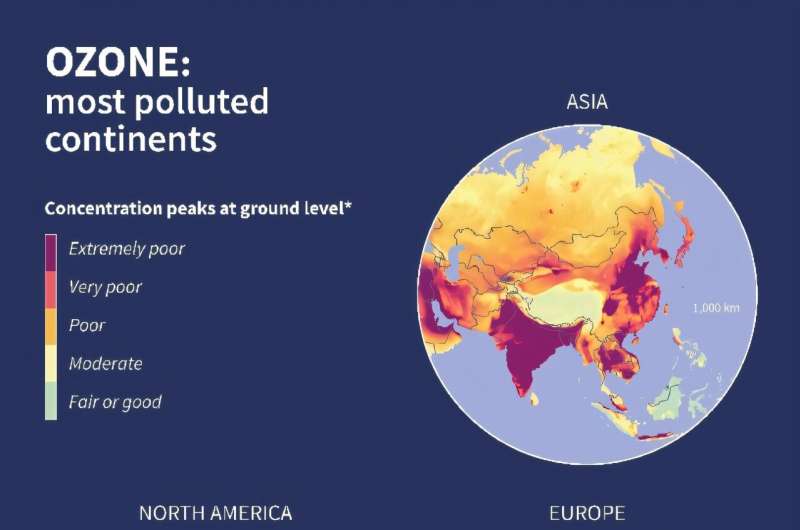
Due to prolonged heat waves
and air pollution caused by human activities, around 40 percent of the world’s
population was exposed to dangerous levels of ground-level ozone pollution in
2026, while ozone pollution exceeded the levels recommended by the World Health
Organization across much of the Northern Hemisphere. According to a report by
the Copernicus Atmosphere Monitoring Service, the combination of extreme heat
and human-generated air pollution contributed to an increase in toxic levels of
ground-level ozone worldwide this year.
The report said ground-level
ozone can appear as brownish haze and is formed through chemical reactions
involving sunlight and pollutants in the atmosphere. This pollution can harm
human health as well as ecosystems and agricultural production. Laurence Rouil,
director of the Copernicus Atmosphere Monitoring Service, said ozone pollution
is a clear reminder of how closely interconnected the atmosphere, climate,
health and human livelihoods are. Pollution and a changing climate affect the
chemical composition of the air people breathe, influence the health of
ecosystems and also affect the ability to grow food.
According to the report, the
population exposed to ozone pollution this year was higher than in the previous
five years. In the United States, more than four in 10 people live in areas
affected by air pollution. The report also noted that smoke from wildfires and
other pollutants can travel thousands of miles, reaching distant regions.
Although pollution caused by the burning of biological material has declined
globally over recent decades, the number of people exposed to wildfire smoke
has increased. According to the study, the main reason for this increase is the
recent occurrence of severe wildfires near densely populated areas, exposing
large numbers of people to smoke and air pollution.