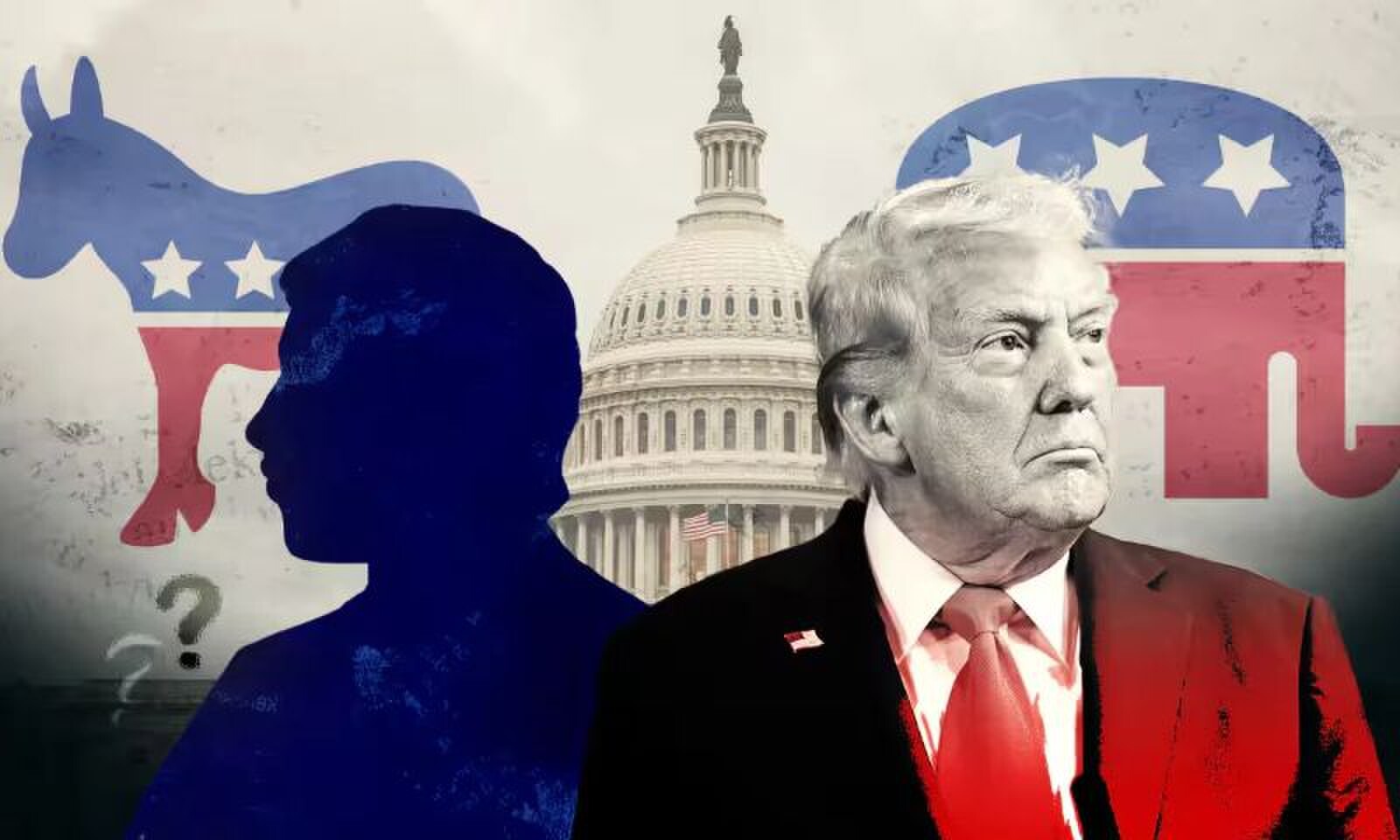
Democrats are considered to have a strong
chance of winning the House of Representatives and possibly the Senate in the
U.S. midterm elections scheduled for November 3. According to nonpartisan
analysts, a Democratic victory could give the party a greater role in
policymaking in Washington after two years of Republican control, increasing
the likelihood of changes to many of President Donald Trump’s policies.
Under the U.S. Constitution, powers over foreign
policy and defense are divided in a way that allows both the president and
Congress—the House of Representatives and the Senate—to influence one another.
Major U.S. foreign policy decisions generally fall within the president’s
authority, but Congress also plays a crucial role in implementing them. From
continuing wars to approving defense spending and providing financial or
military assistance to other countries, congressional approval is essential for
many key decisions. Consequently, when the president belongs to one party while
the opposing party controls Congress, intense disputes over foreign policy
often emerge, making it difficult for the president to secure support for his
decisions.
Republicans currently control both chambers of
Congress, although their advantage in the House is extremely narrow. A party
needs 218 seats to hold a majority in the House of Representatives. Democrats
hold 214 seats, while Republicans have a slim advantage with 218 seats. In the
Senate, Republicans hold 53 seats, giving them a more substantial majority,
while Democrats have 47 seats. Two independent senators also generally vote
with the Democrats.
According to a report by The Guardian,
political observers believe that rising inflation linked to the war with Iran,
along with several other decisions by the Trump administration, could fuel an
anti-incumbent mood and benefit the opposition Democrats in the midterm
elections. A detailed report by Reuters says that if Democrats win a majority
in either or both chambers of Congress, they could take four major steps to
constrain Trump’s foreign policy.
The War with Iran
President Trump did not seek congressional
approval before launching the war against Iran on February 28. Since then,
Democrats have repeatedly voted in favor of resolutions opposing the
continuation of military action without congressional authorization. One such
resolution also received support from several Republican lawmakers, but the
Trump administration disregarded it. Under the U.S. Constitution, Congress also
holds significant powers over war-related decisions and government spending. On
this basis, Democrats argue that the president should not make decisions about
military operations and their costs unilaterally while bypassing Congress.
If Democrats gain control of the House of
Representatives or the Senate, they could pressure Trump by seeking cuts to
defense spending. They could also require senior U.S. officials to explain war
plans and future strategy during public congressional hearings. A Democratic
majority in Congress would not guarantee an end to the war, but it could make
it more difficult for President Trump to make decisions concerning the
conflict.
Reducing Military Aid to Israel
The deaths of thousands of Palestinians during
Israel’s military offensive in Gaza have contributed to declining support for
Israel among Democrats. This has led to growing divisions within the party over
U.S. military assistance to Israel and a noticeable shift in policy positions. Israel’s
continued violence in the occupied West Bank, the expansion of settlements, and
Israeli Prime Minister Benjamin Netanyahu’s close relationship with Republican
leaders have also contributed to changing attitudes toward Israel.
During the last fiscal year, the United States
provided Israel with $3.8 billion in military assistance, more than it gave to
any other country. Democrats could seek to limit or completely suspend military
aid to Israel. Earlier this summer, nearly half of the Democratic members of
the House of Representatives voted in favor of ending assistance to Israel.
Some lawmakers who opposed that proposal, including Gregory Meeks, have
nevertheless supported restrictions on supplying Israel with certain weapons,
such as heavy bombs.
Restoring Aid to Ukraine
President Trump has largely halted U.S. financial
and military assistance to Ukraine, despite clear support for continued aid in
Congress from Democrats and a number of Republicans. In recent days, several
members of Congress have also expressed concerns about lifting restrictions on
Russian oil. These disagreements have become more pronounced because the Trump
administration had signed legislation imposing sanctions on Russian oil just
weeks earlier.
If Democrats win majorities in both chambers of
Congress in November, they would gain greater control over which issues are
brought to a vote and when. They could use that authority to push for approval
of new assistance to Ukraine, potentially securing support from Republican lawmakers
as well.
Cutting Defense Spending
Democrats are generally more supportive of
limiting defense spending than Trump’s Republican allies. This year, Trump
requested a 67% increase in the U.S. military budget, proposing to raise it to
a record $1.5 trillion. Democrats opposed the proposal in the Senate. They
argued that Trump had failed to consult Congress over the war with Iran while
also making sweeping cuts to social welfare programs.
In addition, the Trump administration has
withheld or canceled billions of dollars in foreign assistance previously
approved by Congress. Democrats have expressed opposition to these cuts and
said they would try to restore the funding. A Democratic victory in November
could therefore give the party an opportunity not only to put pressure on
Trump’s war policy and defense spending, but also to influence U.S. policy
toward Ukraine and Israel and decisions concerning foreign aid.