United Nations Secretary-General António Guterres
has proposed a new agreement on climate justice, urging governments to impose
taxes on fossil fuel companies to help poor countries that have contributed
very little to causing the climate crisis but are suffering disproportionately
from its consequences. Guterres made the appeal while addressing a session on
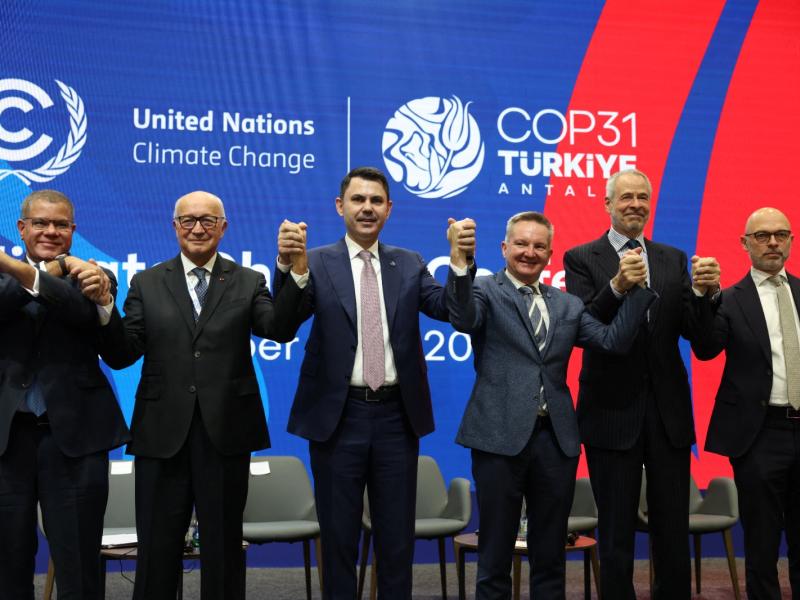
the third day of the 31st United Nations Climate Change Conference (COP31),
currently underway in Antalya, Türkiye. Disagreements over the scale of
financial assistance needed to help countries adapt to climate change remain
unresolved, while delegates are placing particular emphasis on reducing methane
emissions and exploring innovative solutions to climate challenges. The UN
chief warned that global temperatures are rising far more rapidly than
international efforts to tackle the climate crisis.
Time is running out, and the moment for decisive
action is now.
He reminded world leaders that even if all
countries fully implement their existing climate plans, it will still be
impossible to limit global warming to below 2.5 degrees Celsius by the end of
this century. However, he stressed that crossing the 1.5-degree Celsius
threshold does not mean abandoning efforts to combat climate change.
Science is not telling us to surrender; it is
telling us to fight harder.
Four Priorities of the Proposed Agreement
António Guterres proposed a new agreement on
climate justice aimed at helping developing countries reduce their dependence
on fossil fuels and protecting populations already suffering the devastating
consequences of climate change. He said national plans should accelerate the
transition away from oil, gas and coal while promoting renewable energy and
safeguarding the rights of workers and local communities.
He outlined four key priorities:
- Accelerating the transition to clean energy:
National plans should speed up the phase-out of dependence on oil, gas and
coal, expand renewable energy and protect workers and local communities during
the transition.
- Strengthening climate preparedness: Early
warning systems for climate-related risks should be improved, adaptation measures
strengthened and emergency assistance provided promptly in the aftermath of
natural disasters.
- Fulfilling financial commitments: Wealthy
countries must honour their financial pledges and ensure that developing
nations receive greater investment and support.
- Enhancing international cooperation: Global
cooperation must be strengthened to overcome trade barriers, technological
disparities and geopolitical tensions.
Call for Taxes on Fossil Fuels
The UN Secretary-General strongly criticised the
fossil fuel industry, accusing it of distorting scientific facts and delaying
climate action. He said the industry should face the same fate as the
dinosaurs. "The only difference is that the dinosaurs had no lobby group
defending them, whereas this industry does," he remarked.
Guterres compared the $95 billion in quarterly
profits earned by nine of the world's largest oil companies with the global
fund established to help vulnerable countries recover from climate-related
losses and damage. The fund has received only approximately $600 million so
far. He said this amount was equivalent to just 14 hours of profits earned by
major oil companies. The Secretary-General urged governments to impose taxes on
the industry's extraordinary profits.
Three Decades of Inaction
Addressing the conference on its third day,
Turkish President Recep Tayyip Erdoğan acknowledged that three decades of
negotiations on climate change had failed to produce meaningful results.
Achievements at the level of concepts and principles had not translated into
practical action. The Turkish president emphasised the need for increased
financial assistance to developing countries. Meanwhile, Brazilian President
Luiz Inácio Lula da Silva warned that wars and trade disputes were pushing
climate change into the background of the global agenda. Instead of focusing on
the survival of future generations, world leaders were increasingly discussing
weapons and trade tariffs. He announced that Brazil would develop a national
strategy to reduce dependence on fossil fuels and halt deforestation. These
measures would build on the work undertaken at COP30, held last year in the
Amazon region.
An Immediate Path to Tackling the Crisis
On Wednesday, activities organized at the
conference under the theme of 'Zero Waste' also placed significant emphasis on
reducing methane emissions. The UN Secretary-General urged the United Nations
Environment Programme (UNEP) to establish global standards aimed at bringing
methane emissions from the oil and gas sector close to zero. Julia Ferrini,
head of the International Methane Emissions Observatory, which operates under
UNEP, told UN News that the monitoring system had helped secure reductions in
45 methane-emission incidents across 13 countries. She explained that cutting
methane emissions could slow the pace of global warming within a relatively
short period, providing additional time to reduce carbon dioxide emissions. However,
António Guterres pointed out that more than 5,000 alerts concerning methane
emissions had been issued since 2023, but action had been taken on only one in
every eight alerts.