The
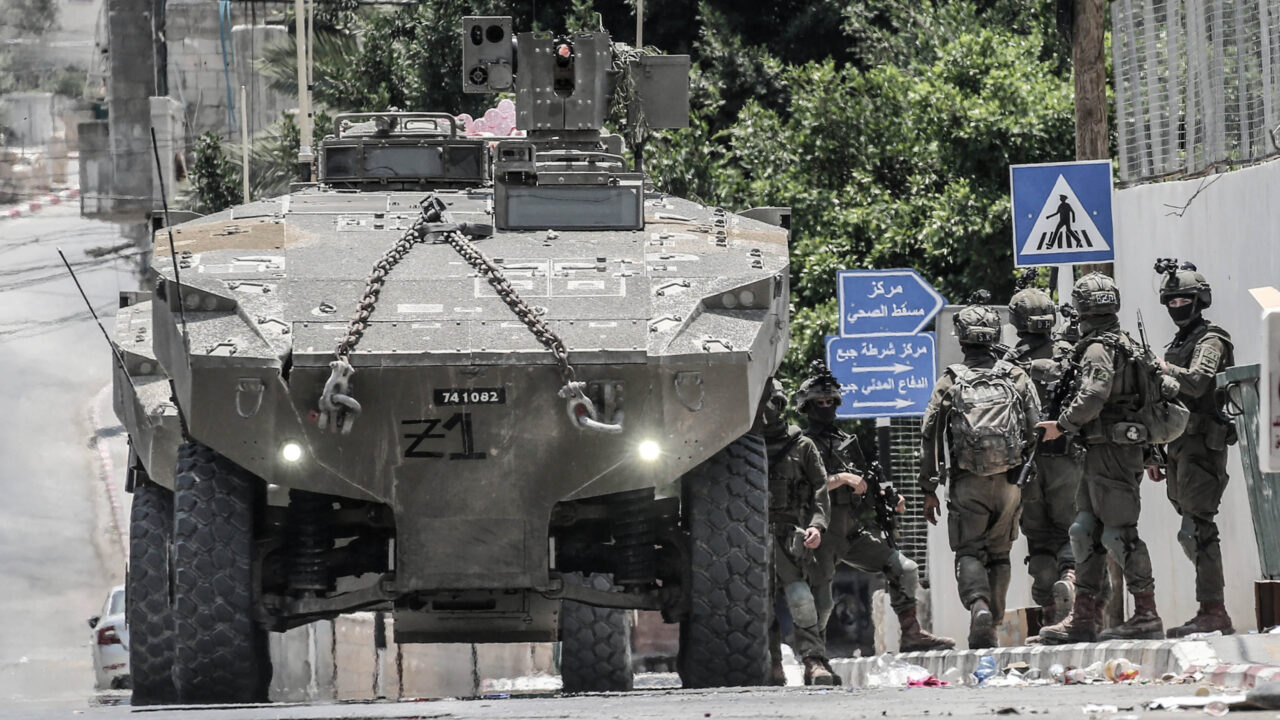
occupied West Bank and East Jerusalem witnessed a significant escalation in
violations by Israeli occupation forces and Jewish settlers throughout October.
The developments reflected an expanding scope of Israeli violations and
increasingly varied methods of targeting Palestinians. These abuses were not
limited to direct attacks on civilians and their property but extended to
agricultural land, the uprooting of trees, the demolition of homes, settlement
expansion, and intensified incursions and violations of the sanctity of Al-Aqsa
Mosque.
The
overall figures released by the Wall and Settlement Resistance Commission and
the Jerusalem Governorate reveal the extent of pressure on Palestinians and the
expansion of settlement activities. The commission recorded 3,133 violations by
Israeli occupation forces and Jewish settlers across various governorates of
the West Bank, marking a 52.8 percent increase compared with September.
Meanwhile, the Jerusalem Governorate documented the killing of one Palestinian,
incursions into Al-Aqsa Mosque by 6,176 Jewish settlers, and 44 demolition and
bulldozing operations during the same month.
An Unprecedented Increase in Violations
The
Wall and Settlement Resistance Commission reported that the 3,133 violations
comprised 1,764 incidents committed by Israeli occupation forces and 1,369 by
Jewish settlers. The total number of violations in September stood at 2,051,
clearly indicating that the pace and geographical scope of attacks had
intensified. The most alarming aspect of these figures was the 111.6 percent
increase in violations committed by Jewish settlers alone, rising from 647 in
September to 1,369 in October. This sharp increase reflects growing attacks
targeting civilians, residential communities, agricultural land and sources of
livelihood.
In
terms of the overall number of violations, Ramallah and Al-Bireh Governorate
ranked first with 704 incidents, followed by Nablus with 636, Hebron with 568,
Jenin with 224, Jerusalem with 219, Salfit with 217, and Bethlehem with 198.
Ramallah and Al-Bireh, Nablus and Hebron together accounted for 61 percent of
all recorded violations, highlighting the intense pressure on these areas,
where settlement activities are extensive and tensions between Palestinian
residents and Jewish settlers remain persistent.
Olive Harvest Season under Attack
The
escalating violations coincided with the olive harvest season, which became a
period of repeated attacks against Palestinian farmers, their land and crops
throughout October. Trees were targeted, farmers were prevented from accessing
their land, and olives and agricultural property were stolen. According to the
commission's data, a total of 5,890 trees were damaged, including 4,498 olive
trees. Authorities also recorded 165 incidents of olive crop theft. In
addition, 384 livestock animals, 45 vehicles, nine agricultural tractors, four
bulldozers and other personal belongings and equipment were seized.
These
settler attacks directly affected at least 356 Palestinians, including 22
children and 22 women. Nablus recorded the highest number of affected
civilians, with 120 people, followed by Ramallah and Al-Bireh with 88 and
Hebron with 49. The significance of these figures extends beyond the scale of
material damage. Targeting trees, crops, livestock and agricultural equipment
directly undermines Palestinian families' sources of income, particularly in
rural and pastoral communities that are already facing continuous pressure.
Attacks on farmers therefore become more than isolated incidents; they form
part of a harsh reality in which landowners face persistent threats simply for
trying to access their land and earn a living.
Settler Outposts and Land Seizures: Attempts to Impose New
Realities
Alongside
direct attacks, the Wall and Settlement Resistance Commission documented
attempts to establish 28 new settlement outposts during October. Nine such
attempts were recorded in Hebron, eight in Nablus and five in Ramallah and
Al-Bireh. Other attempts were reported in Jericho and the Jordan Valley,
Bethlehem, Jenin, Salfit and Tubas. The danger of these initiatives lies in the
fact that they do not end with the establishment of tents or preliminary
structures. Instead, they mark the beginning of a process aimed at taking
control of agricultural and pastoral land, restricting owners' access to their
property, and subsequently connecting the outposts to infrastructure and
services through the construction of roads. Ultimately, these steps are
intended to consolidate their presence through official Israeli institutions.
In
the same context, the commission documented five orders and declarations
targeting 229.561 dunams of Palestinian land. These included a declaration
designating 182.81 dunams as state property, orders to remove trees and
vegetation from 46.01 dunams, and a military seizure order covering 0.741 dunams
in Jenin Governorate. These developments coincided with Israeli authorities
advancing ten settlement structural plans in the West Bank and East Jerusalem
and issuing five tenders for the construction of 1,629 settlement units. The
figures demonstrate that settlement expansion is not limited to the
construction of buildings. Rather, it is driven by an interconnected series of
field-level violations, military measures, administrative decisions and
planning initiatives that alter land use and reduce the territory available to
the Palestinian population.
Demolitions and Restrictions on Residential Presence
Regarding
demolitions, the commission recorded 62 demolition operations during October,
in which 129 Palestinian structures were reportedly demolished. These included
62 occupied homes, two unoccupied homes, 129 structures used for livelihoods,
46 agricultural buildings and five other structures. In terms of the number of
demolished structures, the occupied Jerusalem Governorate was the most
affected, with 46 buildings, followed by Hebron with 37, Jericho with 11, Jenin
with 10 and Nablus with eight. Seven buildings each were demolished in
Bethlehem and Salfit.
The
demolition operations directly affected at least 220 Palestinians, including
125 children and 45 women, according to the commission. Israeli authorities
also issued 11 notices targeting Palestinian buildings and property. The impact
of this policy extends beyond the loss of homes and buildings. It undermines
families' social and economic stability and imposes additional burdens on
civilians, particularly as numerous Palestinian communities continue to face
planning restrictions and ongoing settlement expansion.
Occupied Jerusalem and Al-Aqsa Mosque: Escalating Tensions
beyond Incursions
In
occupied Jerusalem, violations have taken on additional dimensions linked to
Al-Aqsa Mosque and the Palestinian presence in the city, as reflected in the
Jerusalem Governorate's October report. The governorate confirmed that 6,176
Jewish settlers entered Al-Aqsa Mosque during the month. In addition, 8,885
other individuals entered under the pretext of tourism, accompanied by Israeli
occupation forces. These incursions were not limited to entering the mosque's
courtyards. During October, there was an intensification of attempts to impose
overt Talmudic rituals, including collective prayers, chants, singing and
dancing, the so-called Great Prostration, the introduction of the Four Species,
and the raising of the Israeli flag in front of the Dome of the Rock. Violations
also extended to areas surrounding the mosque, including the performance of
Talmudic rituals in front of Bab al-Rahma, targeting the eastern section of the
compound and incitement to further incursions.
Other
measures included the arrest of Al-Aqsa Mosque preacher Sheikh Khaled Abu Juma
and an order barring him from the mosque for one week, as well as targeting
employees of the Jordanian Islamic Waqf. During the same month, far-right
Israeli National Security Minister Itamar Ben-Gvir entered Al-Aqsa Mosque on
October 26 alongside Knesset member Moshe Feiglin. His visit was part of a
series of incursions accompanied by attempts to impose new rituals and
practices inside the mosque. These developments demonstrate that targeting
Al-Aqsa Mosque is not limited to the number of people entering the compound. It
also involves the nature of activities conducted within its courtyards and
increasing restrictions on its employees, worshippers maintaining a presence at
the site, and religious institutions responsible for its administration. This
has made the mosque a central focal point of tensions in the occupied city.
One Palestinian Killed, Arrests and Home Demolitions in
Jerusalem
Regarding
attacks on civilians, the Jerusalem Governorate documented the killing of 19-year-old
Baha Sami Amin al-Natsheh, a resident of Kafr Aqab. He was shot by Jewish
settlers on October 2 while staying at his family's farm in the town of Kobar,
north of Ramallah. The governorate also recorded 19 injuries among civilians
resulting from attacks by Israeli occupation forces and settlers. These
included injuries caused by live and rubber-coated bullets, beatings, tear gas
canisters and falls from the separation wall.
A
total of 56 violations by Jewish settlers were documented in Jerusalem Governorate
and its surrounding areas. Five of these involved physical attacks. Other
incidents included setting homes, mosques and trees on fire, stealing livestock
and crops, uprooting olive trees, seizing land, blocking roads and isolating
residential neighbourhoods. In terms of arrests, Israeli occupation forces
detained 102 Palestinians during the month, including six women and three
children. The campaign targeted towns and villages across the governorate, the
Qalandiya and Shuafat refugee camps, the Old City, areas surrounding Al-Aqsa
Mosque and military checkpoints.
The
governorate also recorded 20 decisions and orders against Palestinian prisoners
from Jerusalem, including three final imprisonment orders and 17 administrative
detention orders. In addition, four house-arrest orders and 12 exclusion orders
were issued, ten of which barred Palestinians from entering Al-Aqsa Mosque.
Regarding demolitions and bulldozing, 44 operations were recorded during the
month. These included 13 cases of self-demolition, in which residents were
forced to demolish their own homes, and 29 demolitions carried out by Israeli
occupation machinery, along with two incidents of land bulldozing. The
operations targeted multi-storey homes, apartments and buildings in Sur Baher,
Silwan, At-Tur, Beit Hanina, Biddu, Wadi Qaddum and Qalandiya, leaving dozens
of Palestinians, including children, homeless. Israeli authorities also
issued 41 notices and orders targeting Palestinian homes and buildings.
These included 40 demolition and stop-work notices and one eviction order. The
measures targeted a 15-storey residential building in At-Tur, three residential
towers in Anata, and homes and buildings in Silwan, Hizma and Al-Issawiya.
One Pattern of Violations, Multiple Methods
A
comparison of data released by the Wall and Settlement Resistance Commission
and the Jerusalem Governorate indicates that the escalation during October was
not confined to a single area. Instead, it extended from attacks on civilians
and their property to the destruction of their sources of livelihood,
restrictions on access to their land, the expansion of settlement plans and
intensified incursions into Al-Aqsa Mosque. While farmers were attacked, their
crops stolen and their trees uprooted, Palestinian communities faced demolition
orders, land seizures and attempts to establish new settlement outposts. At the
same time, Jerusalem witnessed measures targeting residential, religious,
educational and municipal institutions, alongside intensified incursions into
Al-Aqsa Mosque.
The
seriousness of this situation lies in the interconnected nature of these
methods. Attacks on the ground place pressure on communities, demolitions
threaten their residential stability, and land seizures restrict their
agricultural and construction activities. Meanwhile, settlement expansion opens
up new areas for occupation and reshapes the geographical and demographic
reality on the ground. Although October saw a 52.8 percent increase in overall
violations compared with September, the more than 111 percent rise in settler
violations, alongside continued military and settlement-related measures,
leaves Palestinians facing a reality in which daily abuses are linked to
long-term policies aimed at expanding control over the land.
The
monthly figures therefore go beyond a numerical record of violations. They
reveal a pattern of sustained pressure on the foundations of Palestinian life,
encompassing land, housing and sources of livelihood, as well as religious
sites and institutional presence in Jerusalem. This is happening at a time when
the mechanisms of settlement expansion are widening and the areas in which
Palestinians are targeted across the West Bank and occupied Jerusalem are
multiplying.