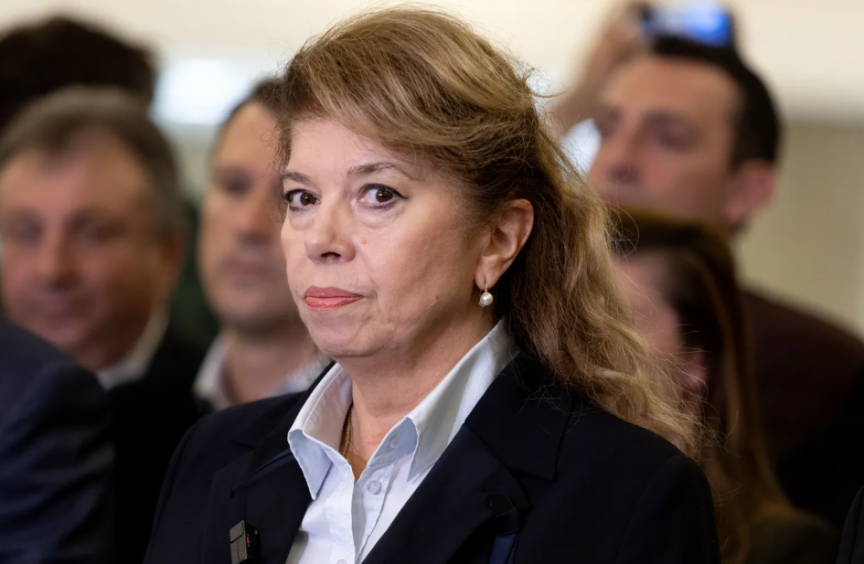
Sofia: Bulgaria's acting President Iliana Iotova is heading
towards a decisive victory over her pro-Western rival, Andrey Gurov, in the
second round of the presidential election held on Sunday. Exit polls indicate
that she has secured a substantial lead. Parallel vote projections compiled by
five major polling agencies estimate that Iotova will receive between 56.6 and
58.2 percent of the vote, while Andrey Gurov is expected to secure between 35.6
and 40.6 percent.
Speaking
at a press conference in Sofia, Gurov said, "We accept the results, no
matter how surprising they may be." He added that although the election
campaign was coming to an end, responsibility did not end with it. Iotova, who
has long been associated with the Bulgarian Socialist Party (BSP), increased
her support compared with the first round held last week. She received 34.76
percent of the vote in the first round, while Gurov finished second with 31.95
percent. During her election campaign, Iotova called for an end to further arms
supplies to Ukraine and advocated achieving peace through diplomatic
negotiations instead. This position differed from that of her rival.
The
presidential election is taking place following parliamentary elections held in
April, in which Progressive Bulgaria, led by former President Rumen Radev,
secured a clear majority by winning 131 of the 240 seats in the National
Assembly. Iotova previously served as Radev's vice president. Radev resigned
from office in January, after which Iotova assumed the position of acting
president. Progressive Bulgaria has endorsed her candidacy for a full five-year
presidential term.
Andrey
Gurov, a former deputy governor of the Bulgarian National Bank, warned during
the election campaign that Iotova's victory would leave little room for a
genuine balance of power in the country's highest office, as Progressive
Bulgaria already controls the government. On issues concerning the European Union
and security policy, Gurov criticised the government's hesitation, its reduced
support for Ukraine and its slow coordination with NATO and European Union
allies. He argued that this approach had made Bulgaria more vulnerable and
turned it into a weak link on the eastern flank of the alliance.