Two years ago, student-led protests in Bangladesh
forced Sheikh Hasina from power. At the time, the country's economy was in
relatively good shape, and employment opportunities were available. The
students then pledged to build a new Bangladesh, but widespread violence, looting
and chaos forced Prime Minister Sheikh Hasina to leave the country. Muhammad
Yunus subsequently came to power, promising the public a bright future,
followed by the formation of a government led by Tarique Rahman. However,
within just two to two-and-a-half years, Bangladesh's economic situation has
deteriorated to such an extent that workers from the garment industry, which
employs more than one million people, are now taking to the streets and staging
violent protests.
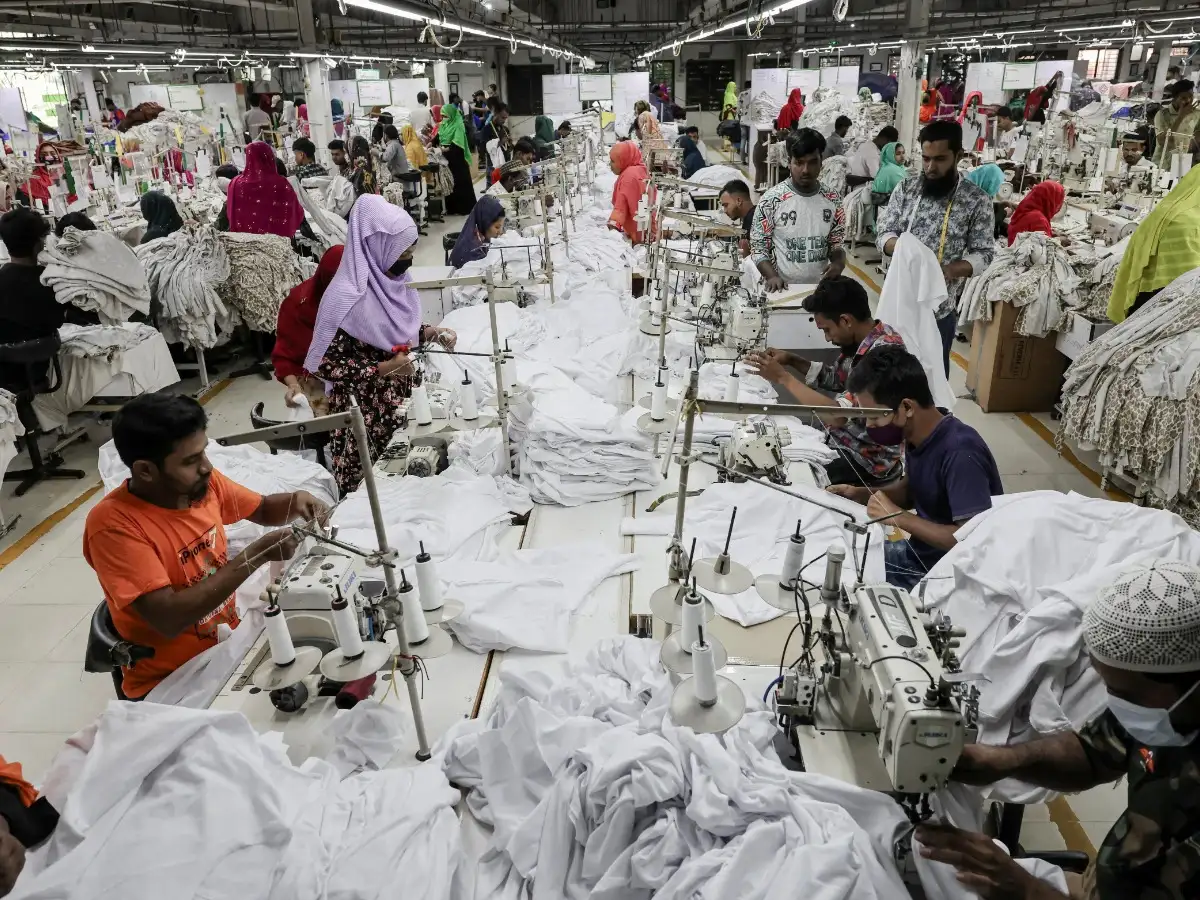
- 529 garment factories have shut down in
Bangladesh, leaving more than one million workers dissatisfied. The Bangladesh
Garment Manufacturers and Exporters Association (BGMEA) have reported these
figures.
- Thousands of workers have taken to the streets,
demanding higher wages. Protests have turned violent in several places,
particularly in major industrial centres such as Dhaka, Gazipur and Ashulia.
- Inflation in the country has risen sharply.
Workers are demanding an increase in their monthly wages from 12,500 taka to
30,000 taka. In response, the government has hurriedly established a wage
board.
- Garment factories are the backbone of
Bangladesh's economy, accounting for more than 80 percent of the country's
total exports.
- The International Monetary Fund (IMF) has
projected Bangladesh's economic growth at its lowest level in the past 40
years. The country's growth rate is expected to remain between 2.2 percent and
3.6 percent.
- More than 500 ready-made garment factories have
shut down across several industrial areas of Bangladesh. Thousands of workers
from hundreds of other factories have also taken to the streets. Violent
clashes between police and workers have erupted in Dhaka, Gazipur and Savar.
Vehicles and other property have been set on fire, while major roads have been
blocked due to the clashes, bringing factory operations to a standstill.
Protesters have set fire to police posts, police vehicles, fire service
vehicles, a jute warehouse and a bank.
- Gazipur and Mymensingh are among the
worst-affected areas, where 276 factories have been closed. In addition,
operations at 185 factories in Savar, Ashulia and Jarabo have been suspended.
Another 68 factories have shut down in areas under the jurisdiction of Dhaka
Metropolitan Police. On Sunday, Tarique Rahman's government established a
six-member wage board for garment workers, but protests have continued. Police
have used batons, tear gas, water cannons and sound grenades to disperse
demonstrators and control the crowds. Five platoons of the Border Guard
Bangladesh (BGB) have been deployed in the affected industrial areas to restore
law and order.
- Amid the violent protests, garment
manufacturers have warned that they may be forced to shut down their factories
if violence and unrest continue despite the establishment of the wage board.
- The IMF and the World Bank have warned that
Bangladesh's economy has reached a critical condition. The country is facing a
banking crisis, severe fuel shortages and extremely high inflation.
- Economic growth is projected to remain close to
3.5 percent, the lowest level in the past 40 years. Lending to the private
sector has declined, while foreign direct investment (FDI) has almost come to a
standstill.
Bangladesh Garment Manufacturers and Exporters
Association (BGMEA) President Mahmud Hasan Khan held an emergency meeting with
garment industry representatives at the association's office in Dhaka on
Sunday. The meeting focused on the ongoing unrest among workers, following
which he issued a warning. He urged labour organisations and federations to act
responsibly and help bring the workers' movement under control. He also called
on the Home Minister to make it clear that anyone involved in violence would
face legal action, regardless of whether the individual was a worker or a
factory owner.