European
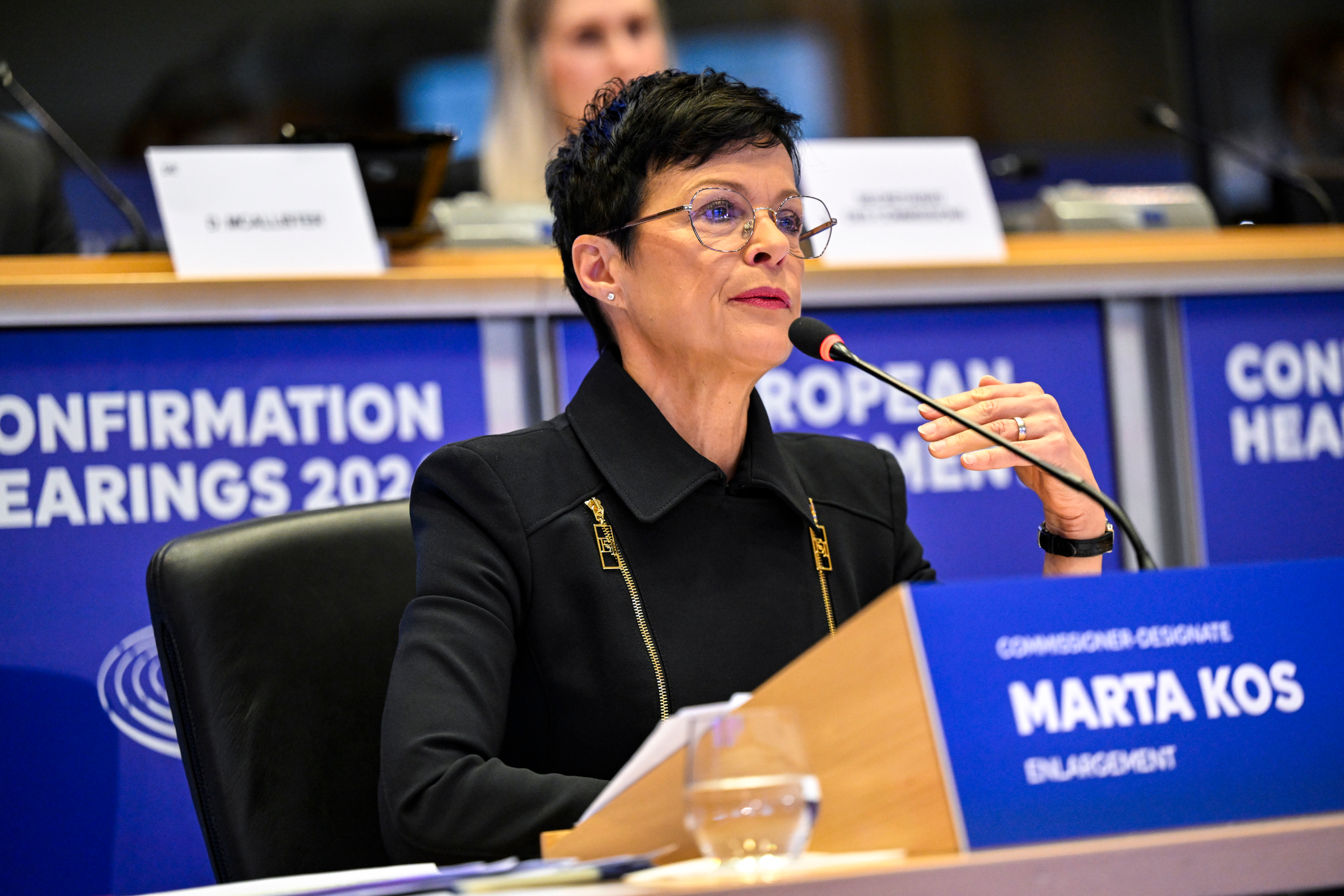
Commissioner for Enlargement Marta Kos has said that Serbia must impose
sanctions on Russia if it wants to join the European Union. The Brussels
official made the condition just days after Serbia’s opposition Student List
movement secured 52.5% of the vote in snap parliamentary elections, defeating
former Serbian President Aleksandar Vučić.
Vučić
conceded defeat but warned that the European Union would once again pressure
Belgrade to impose economic sanctions on Moscow, a step he has consistently
refused to take, citing important trade and cultural ties. In an interview with
Polish broadcaster TVP World, Kos was asked whether Serbia could become a
member of the European Union while continuing to refrain from imposing
sanctions on Moscow. Since February 2022, Brussels has introduced 22 packages
of sanctions against Russia.
In
response, Kos said the European Union requires prospective new members to
demonstrate “strategic alignment” as part of the assessment process before
accession. The commissioner said it might be “impossible” for a country to join
the bloc if it was not aligned with the EU on foreign and security policy —
meaning it did not stand alongside the bloc in its confrontation with Russia —
particularly in relation to the conflict in Ukraine.
However,
Kos stressed that talks with Serbia’s new government had not yet begun. She
said Serbia first needed to form a new government, after which the EU would
assess whether and how it could move forward in this area. At present, there is
no certainty about the Student List movement’s position on sanctions against
Russia. One of its representatives, university professor Jovo Bakić, told RT
Balkan earlier this week that members of the movement regarded Russia as a
great power, a historically important partner and, in many respects, a
protector of Serbia. Bakić argued that any sanctions imposed by “small Serbia”
would have little impact on Moscow but would be “symbolically very damaging” to
Belgrade.
However,
Ilija Srdanović, a leading candidate on the Student List, did not explicitly
rule out reconsidering Belgrade’s longstanding refusal to impose sanctions on
Russia in an interview with Radio Free Europe. When pressed on the issue, he
said that foreign policy decisions should be made by the citizens of Serbia,
rather than by a single leader from a “very small group” within the government.
Kremlin spokesman Dmitry Peskov said on Monday that Moscow hoped to maintain
mutually beneficial relations with Serbia under the leadership of the Student
List movement. He added, “As you know, it takes two to tango.”
Earlier,
Russian Foreign Ministry spokeswoman Maria Zakharova criticised what she
described as the “harsh and dishonest approach” through which the European
Union was trying to drive a wedge between Moscow and Belgrade. She stressed
that Serbia joining sanctions against Russia would be more than just a
political gesture. It would mean that Serbia was “shooting itself in the foot”
by cutting off its supplies of Russian energy and stopping the sale of its own
products to Russia.