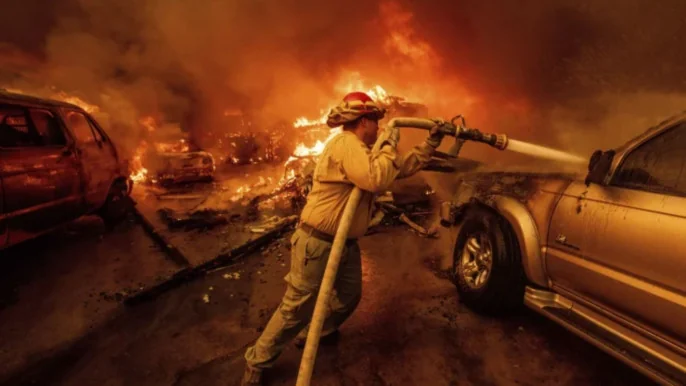
According to
the
US
Department
of
Energy,
a
fire
broke
out
at
a
major
nuclear
research
complex
supporting
the
country’s
nuclear
weapons
program
in
South
Carolina.
The
fire
occurred
on
Wednesday
evening
at
the
Savannah
River
National
Laboratory,
located
near
the
Savannah
River
Site
(SRS),
and
was
subsequently
extinguished.
In a
statement,
the
department
said,
“No
contamination
outside
the
affected
building
has
been
reported.”
Emergency
protocols
were
activated,
and
employees
not
involved
in
the
response
operations
were
ordered
to
stop
work
and
remain
in
safe
locations
as
a
precaution.
Traffic
entering
the
site
was
suspended,
while
nearby
rail,
river
and
air
transportation
were
restricted.
Authorities lifted
the
emergency
declaration
at
9:45
p.m.,
stating
that
radiation
surveys
had
detected
no
measurable
contamination.
Safety
restrictions
were
removed,
and
the
site
was
permitted
to
resume
normal
operations
on
Thursday.
Local media
reported
that
the
fire
was
confined
to
a
single
room
and
involved
an
unfiltered
release
of
radioactive
material
at
ground
level.
One
employee
was
transported
to
a
hospital
with
minor
injuries.
The Savannah
River
Site
was
established
in
the
early
1950s
during
the
Cold
War
and
initially
produced
plutonium
and
tritium
for
US
nuclear
weapons.
Although
its
production
reactors
have
been
shut
down,
the
complex
continues
to
play
a
significant
role
in
maintaining
the
US
nuclear
arsenal.
SRS processes
and
replenishes
tritium,
a
radioactive
isotope
of
hydrogen
used
to
enhance
the
explosive
power
of
nuclear
warheads.
It
also
manages
nuclear
materials,
handles
radioactive
waste
disposal
and
carries
out
environmental
remediation.
The US
government
is
also
developing
a
facility
at
SRS
to
manufacture
plutonium
pits
for
nuclear
warheads
as
part
of
efforts
to
modernize
the
country's
nuclear
weapons
stockpile.
The incident
comes
less
than
two
weeks
after
a
fire
broke
out
during
a
live-fire
training
exercise
at
Canadian
Forces
Base
Wainwright
in
Alberta,
Canada,
killing
four
soldiers
and
injuring
39
others.
According to
the
Canadian
military,
strong
winds
caused
the
fire
to
spread
rapidly,
engulfing
an
area
occupied
by
troops.
The
Canadian
Armed
Forces
reported
last
week
that
27
personnel
remained
hospitalized,
while
12
had
been
discharged.