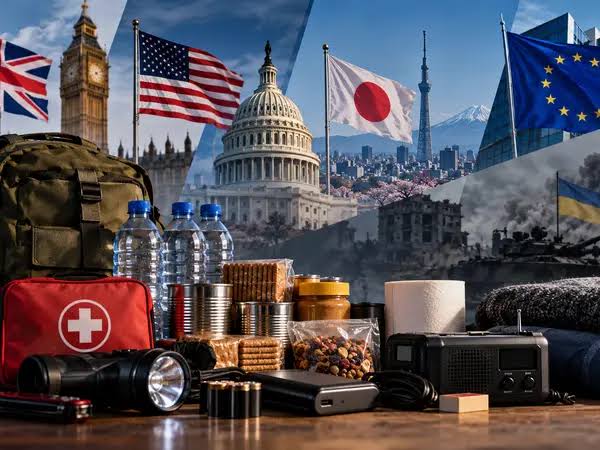
Governments in the United Kingdom, the United
States, Japan and across Europe are urging their citizens to prepare for
potential emergencies. Several countries have advised people to stockpile
essential supplies sufficient for at least 72 hours, or three days, amid
growing concerns about wars and natural disasters around the world. The public
preparedness campaigns are being conducted in response to concerns over the
Russia-Ukraine war, cyberattacks, sabotage and natural disasters. The
announcements have caused anxiety among members of the public and social media
users. However, officials have clarified that these measures do not mean that a
Third World War is being predicted.
UK Relaunches Its ‘Be Ready’ Campaign
On October 22, the British government relaunched
its “Be Ready” campaign, urging citizens to keep essential supplies sufficient
for three days (72 hours) readily available. These supplies include drinking
water, non-perishable food, flashlights, batteries, first-aid kits, cash, power
banks and wind-up radios. The United Kingdom's 2025 National Security Strategy
identified Russian aggression, hostile cyber activities and sabotage as major
security concerns.
US, Japan and European Union Accelerate
Emergency Preparations
According to Fortune, the Pentagon in the United
States is reportedly developing a plan called “FORTRESS” to enable major
military bases to remain operational for at least 90 days without external
assistance. Japan, which frequently experiences natural disasters such as
earthquakes, is set to issue a new emergency preparedness appeal on November 2,
coinciding with the establishment of its Disaster Management Agency. The
campaign will encourage citizens to prepare for at least three days and, ideally,
one week. The European Union's “Preparedness Union Strategy,” adopted in March
2025, recommends that citizens be capable of managing emergencies independently
for at least 72 hours.
Countries Near Russia Expand Civil Defence
Measures
According to international media reports,
Finland, Sweden, Poland, Estonia, Latvia and Lithuania have expanded their
civil defence measures since Russia's invasion of Ukraine. Their efforts
include renovating shelters and providing emergency preparedness training to
citizens. Finland has increased its grain reserves requirement to cover nine
months. Sweden has revived its comprehensive “total-defence” approach, while
Poland adopted a civil defence law in 2025.
No Evidence of an Imminent Third World War
Officials have emphasised that there is no
evidence that a Third World War is imminent. The 72-hour preparedness
guidelines are intended to help people manage the initial stages of a crisis. The
first 72 hours of any emergency are particularly important, as authorities
prioritise immediate response efforts, including rescue operations and
maintaining hospital services.
What Is Driving Global Preparedness Efforts?
The campaigns urging citizens to prepare for
emergencies are driven by several concerns:
- ·
The ongoing Russia-Ukraine
war.
- ·
The threat of cyberattacks
and acts of sabotage.
-
The growing risks
associated with natural disasters.
- ·
Japan's recommendation that
households maintain at least three days' worth of emergency supplies, ideally
enough for one week.
- Finland's decision to increase its grain reserves requirement to nine months.
Governments stress that these preparations are
precautionary measures designed to strengthen public resilience and ensure that
citizens can cope with emergencies during the critical initial 72 hours.