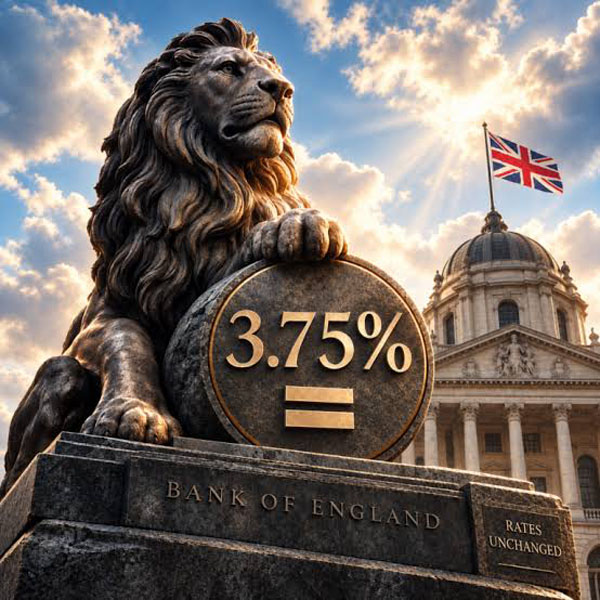
The
Bank of England has kept its interest rate at 3.75% while warning that it may
need to raise rates to control inflation if the war in the Middle East
continues for a prolonged period and energy prices remain high. According to
international news agencies, the Bank of England’s Monetary Policy Committee
voted 6–3 to keep the interest rate at 3.75%, while three members voted in
favor of a 0.25 percentage-point increase. The bank said the ongoing and
prolonged conflict in the Middle East has pushed up the prices of crude oil,
gas and other energy products, increasing the risk of inflation rising again in
the United Kingdom. According to the Bank of England, the UK’s
consumer price inflation rate reached 3.1% in August, while the central bank’s
target is 2%.
The
statement added that the direct effects of higher energy prices have already
begun to appear in inflation. However, the second-round effects on wages and
the prices of other goods and services remain limited so far. Bank of England
Governor Andrew Bailey said that if volatility and increases in energy prices
continue for an extended period, their impact on inflation could become
greater, increasing the need for higher interest rates. Three members of the
Bank of England’s Monetary Policy Committee supported raising the interest rate
from 3.75% to 4%. They argued that the intensity and duration of the conflict
in the Middle East could put further pressure on energy and food prices, while
the risk of inflation rising again remains. Meanwhile, six members voted to
keep the interest rate at its current level. They said that the second-round
effects of higher energy prices remain limited so far and that, given the
current economic conditions, the committee could wait for further evidence.
Bank of England Says
Prolonged Middle East Conflict Has Become the Biggest Uncertainty for the
Future of Inflation in the UK
According to the Bank of
England, the prolonged conflict in the Middle East has become the biggest
uncertainty surrounding the future path of inflation in the United Kingdom. The
central bank says global energy prices cannot be directly controlled through
monetary policy. However, its aim is to ensure that inflation caused by higher
energy prices does not become persistent. In its latest assessment, the bank
estimated that if the energy crisis continues, inflation in the UK could rise
to slightly above 4% at the beginning of 2027. The Bank of England’s decision came a day after
the U.S. Federal Reserve raised interest rates. On September 16, the U.S.
Federal Reserve increased its interest rate by 0.25 percentage points, bringing
the target range to 3.75%–4%. This was the first U.S. interest rate increase
since 2023.
The U.S. central bank
described inflation as elevated and said the move was aimed at bringing
inflation back toward its 2% target. If the conflict in the Middle East becomes
prolonged and energy prices remain elevated, further interest rate increases
could be considered to control inflation in the UK. If interest rates rise, the cost of household
borrowing, mortgages and business financing could increase, potentially
reducing spending and investment. On the other hand, the objective would be to
limit inflationary pressures. It is worth noting that the Bank of England began
cutting interest rates in 2024 and reduced the rate to 3.75% in December 2025.
However, following the war involving Iran and the wider Middle East,
disruptions to oil and gas supplies have pushed up global energy prices.