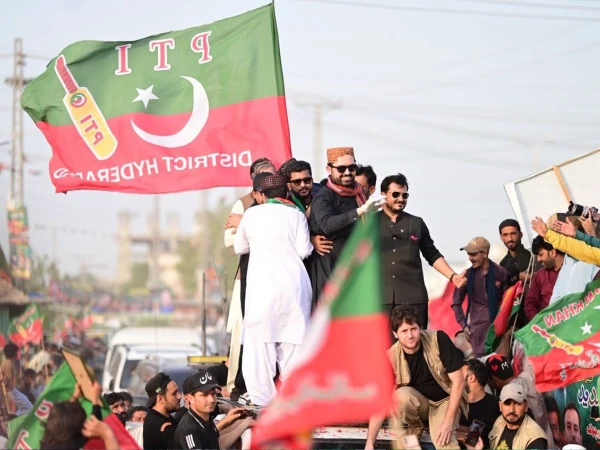
Pakistan Tehreek-e-Insaf
(PTI) has announced that it will firmly stick to its decision to hold the
scheduled long march and will not postpone it under any circumstances. The
development came after a lengthy meeting of the party’s core and political
committees. According to a private TV channel report, Barrister Gohar and
Salman Akram Raja briefed participants in detail on the negotiations held with
government representatives. The participants were informed that the government
had adopted a very firm stance against the long march and had expressed several
concerns regarding its planned staging.
It is worth noting that
Federal Interior Minister Mohsin Naqvi, who is a member of the government’s
negotiating committee, has warned that the federal government could impose an
emergency in Khyber Pakhtunkhwa if the long march takes place on October 4.
According to sources, representatives of the Pakistan Muslim League-Nawaz
(PML-N) and the Pakistan People’s Party (PPP) also supported this warning.
During the meeting, some members suggested postponing the long march to avoid
government pressure and possible action. However, Khyber Pakhtunkhwa Chief
Minister Sohail Afridi strongly rejected the proposal, declaring that he would not
back down under any circumstances.
Chief Minister Sohail Afridi
maintained that only PTI’s founding chairman has the authority to postpone the
long March and that the final decision rests with him. He stressed that any
further action would be taken in accordance with the party founder’s instructions.
The meeting decided that PTI would make a meeting with its founding chairman a
condition during the negotiations with the government scheduled for today. The
party leadership maintains that the political crisis can only be resolved
through direct consultation and dialogue with its founding chairman. PTI
leaders say they will not retreat from their demands. However, they maintain
that all decisions will ultimately depend on the founding chairman’s
instructions, taking into account the situation in the country. Following the
government’s warning about the possible imposition of an emergency, the
country’s political climate appears increasingly tense.