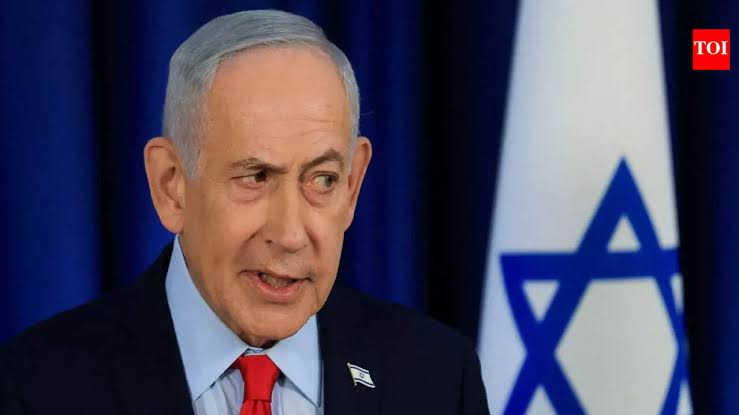
Israeli Prime Minister Benjamin Netanyahu is
making concerted efforts to exploit the ongoing tensions involving the Houthis
in Yemen to advance his strategic objectives. According to media reports, his
main goal is to establish a new regional security alliance with Saudi Arabia, a
proposal Riyadh has so far rejected. Netanyahu hopes to persuade Saudi Arabia,
through US mediation, to join a coordinated military campaign against the
Houthis. The aim is to overcome Israel’s regional isolation and create a new
path toward normalizing relations with the Arab world.
However, Israeli military leaders have warned of
the risks associated with direct Israeli intervention in Yemen. They argue that
such a move could intensify tensions with Iran and the Houthis, while also
affecting Israel’s domestic political stability and electoral calculations. According
to analysts, Netanyahu’s strategy has three major dimensions. First, he wants
to use the Houthi conflict as a justification for establishing a security
partnership with Saudi Arabia. Second, he may seek to create a political
climate through a wider regional war that could help prolong his hold on power.
The third key factor is the India–Middle East–Europe Economic Corridor (IMEC). Through
military cooperation, Netanyahu hopes not only to pave the way for restoring
relations with Riyadh but also to revive the proposed trade corridor. The
project could reshape the region’s geopolitical and economic landscape.
Yemen’s strategic importance is widely recognized
because of its location near the entrance to the Red Sea and the Bab al-Mandab
Strait. The Houthi movement has long targeted key facilities inside Saudi
Arabia in line with its beliefs and political objectives. The conflict is no
longer merely a local dispute; it has become a focal point for regional powers.
Israel sees the situation as an opportunity to pursue objectives that it has
been unable to achieve through diplomacy. Observers say that if Houthi pressure
on Saudi Arabia intensifies, Netanyahu is likely to continue presenting the
situation as evidence of the need for closer security cooperation with Riyadh.