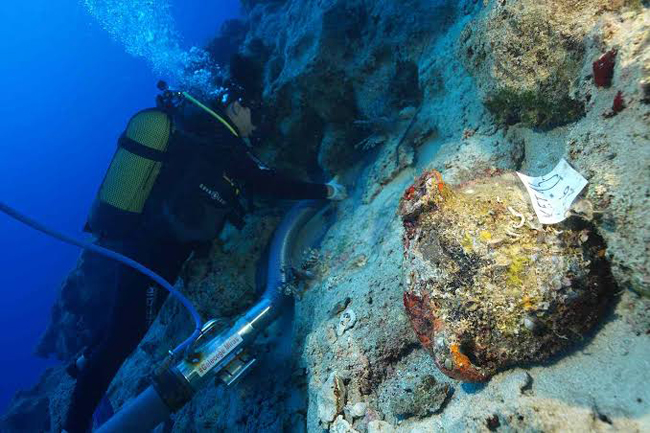
Archaeologists have discovered the remains of an
ancient ship near the southern coast of Türkiye. Based on preliminary research,
the wreck is believed to be among the oldest known shipwrecks in the world.
Found at a depth of approximately 100 feet underwater, the site has yielded
thousands-of-years-old jars, anchors, and other artifacts. The discovery is
expected to provide new insights into ancient maritime activities and trade
networks.
The discovery was made near Kekova Island in
southern Türkiye. According to experts, the jars recovered from the wreck are
estimated to be between 4,400 and 4,700 years old. Their structure and design
suggest that ancient seafarers used them to transport various goods from one
place to another. Researchers say that jars of this type were commonly used in
ancient times to transport olive oil. However, distinctive markings on one of
the vessels have attracted the attention of experts. These markings have raised
the possibility that the container may also have been used to store food
products such as cheese or butter.
This possibility has prompted further questions
about the daily lives of ancient sailors. Researchers suggest that if the
vessels are confirmed to have been used for dairy products, it could indicate
that sailors took goats with them on long sea voyages and used their milk to
make yogurt and other food items. However, further research is needed to
confirm this theory. Professor Hakan Öniz of Akdeniz University, who led the
expedition, said that the wreck site was identified approximately four years
ago. Initially, experts believed that the vessels found there were not
particularly ancient. However, comparisons with ancient Egyptian artifacts
later revealed the significance of the discovery.
According to Professor Hakan Öniz, the jars
discovered near the Pyramids of Giza in Egypt bear striking similarities to
those recovered off the coast of Türkiye. Based on these similarities,
researchers reassessed the age of the vessels, leading to a revision of their
initial estimates. Experts say that an examination of the vessels’ dates and
other archaeological evidence has revealed the exceptional antiquity of the
wreck. In addition to the jars, anchors and other ancient objects have also
been recovered from the site. These artifacts could help researchers better
understand ship construction, the transportation of goods, and maritime
practices during that period.
The discovery is particularly significant for
archaeologists because it opens up new avenues for understanding maritime trade
and the lives of sailors thousands of years ago. Further research may help
determine what kinds of goods ancient ships transported and how sailors met
their dietary needs during long voyages.