Pakistan’s Ministry of Information on Saturday
rejected as baseless and misleading former U.S. envoy Zalmay Khalilzad’s
allegation that Pakistan was “arming Afghans to fight the Taliban.” The
ministry’s fact-check account said on X that his broad, unsubstantiated claims
merely repeated speculative narratives and reflected what it described as his
personal agenda to support the Taliban government, which it accused of backing
terrorism. The statement added that Khalilzad’s dissemination of unverified
allegations exposed the partisan nature of his views.
The ministry stressed that conflating Pakistan’s
legitimate counterterrorism operations against militant groups operating from
areas under the Afghan Taliban government’s control and posing a threat to
Pakistani citizens with allegations that Islamabad was recruiting Afghan
nationals or sponsoring armed groups inside Afghanistan was particularly
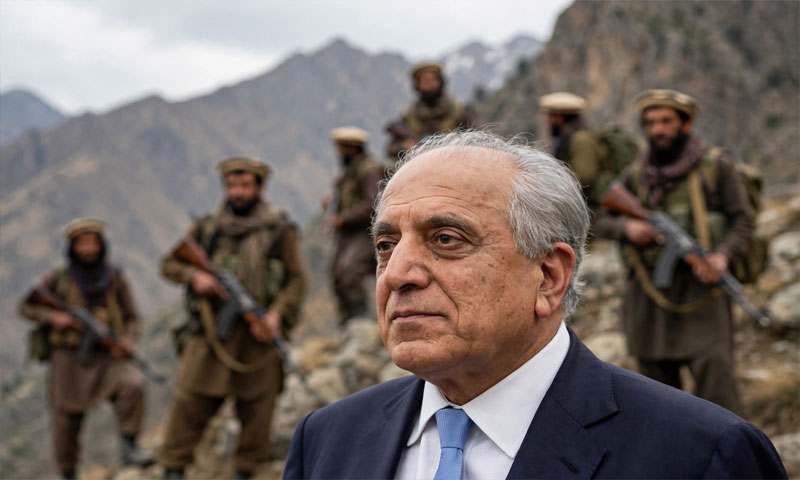
misleading. The response came a day after Khalilzad, who served as the U.S.
special representative for Afghanistan during the first Trump administration,
claimed on X that “there are many reports that Pakistan is arming Afghans to
fight the Taliban in Afghanistan.” Khalilzad further alleged that Pakistan was
now recruiting Afghans to fight anti-Pakistan insurgents, warning that
relations between the two countries could deteriorate significantly.
In its statement, the ministry emphasised that
Pakistan remained on the front lines of the fight against terrorism and had
made immense sacrifices to protect regional peace and security. The ministry
also pointed to successive monitoring reports issued by the United Nations
documenting the continued presence and activities of terrorist organisations
inside Afghanistan, including the banned Tehreek-e-Taliban Pakistan (TTP) and
al-Qaeda. It added that Khalilzad’s allegations conveniently diverted attention
from the Afghan Taliban government’s responsibility to prevent its territory
from being used for terrorist attacks against Pakistan by India-backed proxies.
Last November, Pakistan’s Ministry of Information
criticised Khalilzad for creating a false impression that the Islamic State
Khorasan Province (IS-K) militant group was present in Punjab. In March 2023,
Pakistan’s Foreign Office strongly responded to a series of suggestions made by
Khalilzad, stating that Pakistan did not need unsolicited advice on the
challenges it faced. Khalilzad’s comments also prompted the U.S. State
Department to clarify that the former envoy did not represent U.S. foreign
policy and was not speaking on behalf of the administration of then-President
Joe Biden.
Relations between Pakistan and Afghanistan have
remained strained over the past several years, as Islamabad has continued to
express concern over cross-border terrorism. In September, the two neighboring
countries experienced another round of tensions. Pakistan carried out
calibrated airstrikes in border areas in response to terrorist attacks in
Khyber Pakhtunkhwa. This was followed by drone incursions from across the border,
which Pakistan said it had intercepted, and two further rounds of retaliatory
airstrikes.