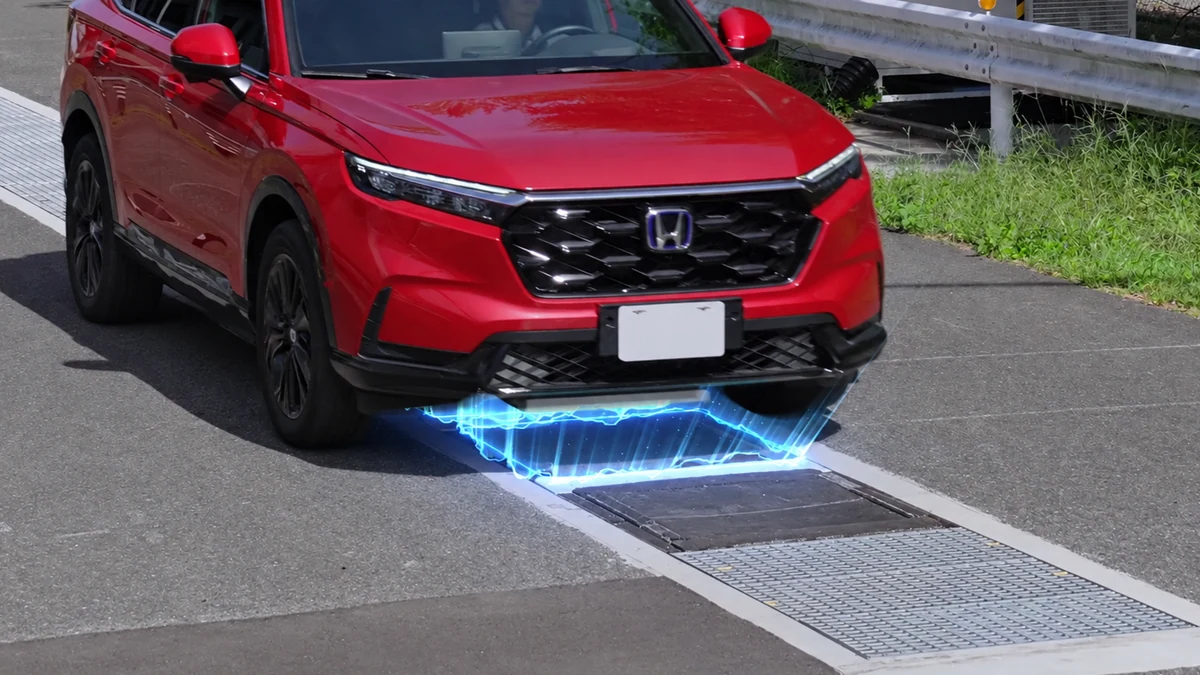
Tokyo: Honda has developed a
groundbreaking technology that will enable roads to wirelessly supply
electricity to electric vehicles while they are in motion. The core technology
for the system has been completed, and practical trials are scheduled to begin
in Japan in 2027.
Under this innovative technology, special coils
will be installed beneath road surfaces, while an energy-receiving unit will be
fitted underneath each vehicle. The coils embedded in the road will generate a
magnetic field, which the vehicle's receiving unit will convert into
electricity and deliver to the battery. Honda aims to transfer electricity at a
rate of up to 150 kilowatts through this system, comparable to modern
fast-charging systems. The project will initially focus on trucks and commercial
vehicles, allowing them to travel long distances without having to stop
frequently for recharging.
One of the major benefits of this system is the
potential reduction in the overall weight of vehicles. If vehicles can receive
electricity directly from roads, electric cars may no longer need large
batteries weighing thousands of kilograms. This could lower manufacturing costs
and make travel more affordable for consumers. Honda is not the only company
working in this field. Israeli company Electreon has also successfully tested
wireless charging technology on a 1.5-kilometre stretch of motorway near Paris,
France.
According to technology experts, this technology
could prove highly significant and transformative for the transportation sector
in the long term. However, the project faces substantial financial challenges.
Installing charging units beneath every road is an expensive and complex
undertaking. Maintenance, safety and compatibility with different types of
vehicles are additional obstacles that still need to be addressed. In the
future, this system could also represent an important milestone for developing
economies such as Pakistan. Although the technology is currently in the
experimental stages in developed countries, successful implementation could
fundamentally transform the transportation sector.