Interesting and unusual details have emerged
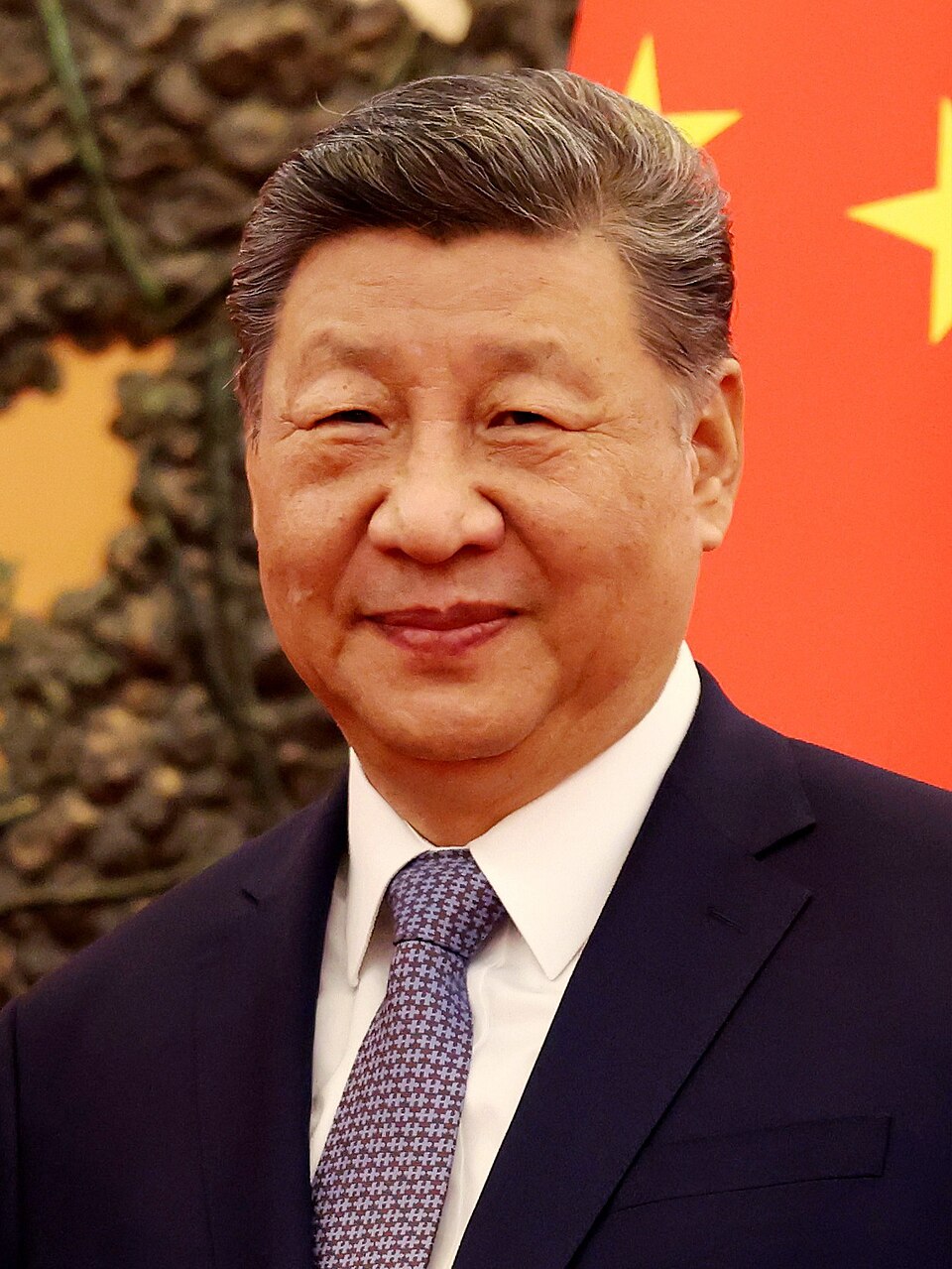
about the private life of 73-year-old Chinese President Xi Jinping, who is
regarded as one of the most successful leaders of the modern era. According to
Chinese media reports, behind the global achievements of the powerful leader of
a country with a population of 1.4 billion lies a story of a difficult life. He
spent seven years of his youth in a humble cave dwelling, a period known in
China’s political history as the “seven-year struggle of Liangjiahe.”
In 1969, when his father fell victim to political
persecution, 15-year-old Xi Jinping was taken away from the comforts of Beijing
and sent to the extremely impoverished village of Liangjiahe in Shaanxi
Province. There, he spent seven years living in a traditional earthen cave
dwelling known as a yaodong, alongside other young people sent from
Beijing and local farmers. He slept on the ground, worked hard in the fields
and tended livestock. The hardships of cave life helped Xi develop resilience
and administrative skills. In 1974, after being rejected several times, he was
finally admitted to the Communist Party. Impressed by his hard work and
leadership, the village farmers appointed him secretary of the local Party
branch. In that role, he helped establish the village’s first methane gas plant
and improve agricultural production.
In recognition of his performance, he was
selected in 1975 to study chemical engineering at Beijing’s prestigious
Tsinghua University. Over the following four decades, he made a demanding
journey through the political ranks, serving in positions ranging from
county-level Party secretary and provincial governor to vice president. Xi
Jinping’s rise to power was the result of a long struggle, administrative
performance and strict discipline within the Communist Party. Throughout this
period, he established a reputation for a zero-tolerance approach to corruption
and a focus on local industrial development. In 2007, following a major
financial scandal in Shanghai, one of the Party’s most important centres, the
need to restore integrity became a priority. The Party elite reportedly agreed
on Xi Jinping, citing his unblemished record.
In the same year, he became a member of the
Politburo Standing Committee and vice president. He was subsequently appointed
general secretary of the Communist Party in November 2012 and formally elected
president of China in March 2013. According to the report, one of the greatest
historical achievements of his presidency has been lifting more than 800
million people out of extreme poverty and transforming China into a moderately
prosperous society by 2021. Through the Belt and Road Initiative (BRI), he
expanded China’s influence over global infrastructure. Under the Made in China
2025 program, he also sought to make the country a global leader in artificial
intelligence, 5G technology, electric vehicles and space exploration, while
launching a major anti-corruption campaign.
He also oversaw an increase in China’s GDP from
approximately $8.5 trillion to a massive $15.94 trillion. One of the most
interesting aspects of President Xi Jinping’s personality is his strong
interest in literature and philosophy. During his stay in the cave, he
reportedly read works by world-renowned writers such as William Shakespeare,
Leo Tolstoy and Victor Hugo by the dim light of an oil lamp. He would even walk
30 kilometers simply to obtain books. Although the world views him as a
hard-line communist leader, he often refers to ancient Chinese philosophy and
world literature in conversations with international diplomats. He is said to
believe in the principle of winning a war without taking up arms.
Meanwhile, President Xi Jinping resides in the
historic yet modernised Zhongnanhai compound in Beijing, which serves as the
central headquarters of the Chinese government. His residence, vehicles and
aircraft are equipped with some of the world’s most advanced security and
communications systems. However, reportedly retaining habits from his rural
years, he prefers a simple cotton bed and traditional firm mattresses in his
bedroom. According to Beijing’s medical directorate, the secret behind the
Chinese president’s health lies in a strict and balanced diet. His daily meals
reportedly include organic vegetables, rice, whole grains, fish and chicken. He
strictly avoids fatty foods, processed products and excessive sugar.
He is particularly fond of traditional simple
noodles, steamed buns and vegetable soup from his ancestral province of
Shaanxi. He also regularly makes time for swimming, walking and hiking early in
the morning or in the evening. During his youth, he received basic training in
traditional Chinese martial arts, including Tai Chi and Kung Fu. It is worth
noting that Chinese President Xi Jinping was born on June 15, 1953, in Beijing.
He belongs to China’s revolutionary elite. His father, Xi Zhongxun, was a Chinese
deputy premier and a prominent leader of the Communist Revolution. His
ancestors came from Henan Province. In 1987, Xi Jinping married Peng Liyuan, a
famous Chinese folk singer. They have one daughter, Xi Mingze, who studied at
Harvard University and maintains a private life away from the public eye.