Politics
Yemen War: Growing Security Challenges for Saudi Arabia
Despite more than a decade of military intervention in Yemen, Saudi Arabia has failed to weaken Ansar Allah.
- Reading time
- 7 min read
- Published
- 14 Oct 2026, 03:51

Politics
Despite more than a decade of military intervention in Yemen, Saudi Arabia has failed to weaken Ansar Allah.
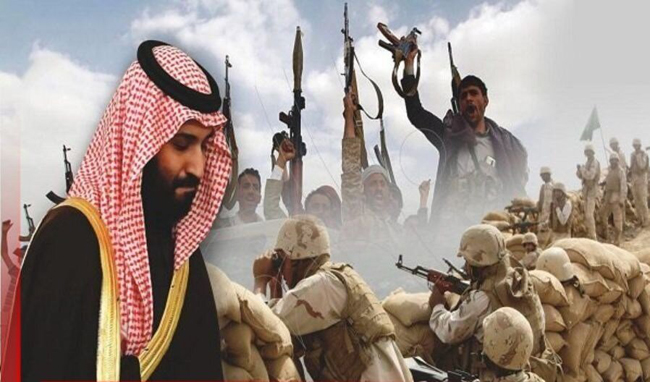
Despite more than a decade of military intervention in Yemen, Saudi Arabia has failed to weaken Ansar Allah. Recent attacks have placed new pressures on its defense systems, international reputation, and Mohammed bin Salman's economic ambitions.
After more than a decade of military intervention in Yemen, Saudi Arabia is facing a crisis whose consequences extend beyond the battlefield to the security of critical infrastructure, its international standing, and Mohammed bin Salman's economic plans. Recent attacks on King Khalid International Airport in Riyadh, along with intensified fighting on various fronts in Yemen, indicate that the security costs of Saudi Arabia's regional policy continue to rise. These developments have once again demonstrated that purchasing advanced weapons and relying on support from foreign powers cannot guarantee lasting security.
According to reports, an attack on Riyadh's international airport on October 10 killed at least 12 people and injured more than 300. A second attack on Sunday reportedly killed one person and injured 11 others. Following these incidents, airport operations were disrupted, and airlines canceled their flights.
These attacks by Ansar Allah have raised questions about Saudi Arabia's ability to defend against missiles and drones. Their significance extends beyond casualties and physical destruction. Riyadh's airport is one of Saudi Arabia's major transportation hubs and an important gateway for foreign investors, executives of international companies, and tourists. Disruptions at such a critical facility could affect the economy and undermine investors' confidence in the stability of Saudi Arabia's investment environment.
The developments come as Saudi Arabia seeks to reduce its dependence on oil and establish itself as a regional hub for tourism, technology, and investment under its Vision 2030 economic program.
In recent years, Mohammed bin Salman has sought to transform Saudi Arabia's economic structure through major projects, including NEOM. However, the success of these initiatives depends on a stable environment, secure infrastructure, and investor confidence.
When the capital's airport comes under attack and airlines are forced to cancel flights, the issue goes beyond responding to a military strike. The international reputation of a country that seeks to present itself as a safe destination for trade and tourism is also put to the test.
A key aspect of Saudi Arabia's current crisis is the limits of its reliance on foreign allies. Over several decades, Riyadh has spent heavily on advanced weapons, air defense systems, and Western combat aircraft. Nevertheless, recent attacks have demonstrated that possessing sophisticated military equipment does not necessarily guarantee protection against strikes.
Protecting a vast territory and critical infrastructure from combined missile and drone attacks requires operational preparedness, adequate stocks of interceptor missiles, early-warning systems, and sustained defensive capabilities.
In these circumstances, seeking assistance from allies to strengthen air defenses may address some of Saudi Arabia's immediate needs, but it cannot replace a sustainable security strategy. Arms sales, intelligence sharing, technical assistance, and direct participation in a war are distinct matters.
Western governments may support Saudi Arabia in line with their own interests, but such support does not necessarily mean they are willing to bear all the costs of a prolonged and dangerous military confrontation with Ansar Allah.
Washington's approach also highlights this reality. In 2025, the United States halted its operations against Ansar Allah under an agreement brokered by Oman, following approximately 52 days of airstrikes.
The agreement did not mean that Ansar Allah's military capabilities had been eliminated or that the group's threats to maritime shipping had been completely removed. However, the experience demonstrated that air superiority and overwhelming military power cannot necessarily deliver the desired strategic outcomes without clearly defined political objectives.
Under current circumstances, direct US involvement in the conflict between Saudi Arabia and Ansar Allah could create additional costs and complications. Expanding military operations, depleting interceptor missile stocks, and the possibility of increased threats to maritime routes could make Washington's decisions even more difficult.
The regional situation, particularly the ongoing crisis between Iran and the United States, has placed additional pressure on American military resources and strategic decision-making. Riyadh therefore cannot regard foreign support as a guaranteed means of preventing attacks or winning a prolonged war.
The regional situation, particularly the ongoing crisis between Iran and the United States, has placed additional pressure on American military resources and strategic decision-making. Riyadh therefore cannot regard foreign support as a guaranteed means of preventing attacks or winning a prolonged war.
The roots of Saudi Arabia's current difficulties can be traced to a policy launched in 2015 with the aim of changing the balance of power in Yemen. The Saudi-led coalition's military intervention, which also involved the United Arab Emirates, failed to remove Ansar Allah from Yemen's political and military landscape. Instead, the war has generated enormous humanitarian, economic, and security costs over the years.
Airstrikes, restrictions on the entry of essential goods, and difficulties accessing food, medicine, and medical services have placed severe pressure on Yemeni society. With fighting intensifying again, some of the consequences of this policy are now being felt inside Saudi Arabia as well. Developments on various Yemeni fronts, particularly around Taiz and along the Red Sea coast, have taken on greater significance. The situation in coastal areas and near the Bab al-Mandab Strait could further complicate Saudi Arabia's security assessments. However, control of these areas continues to shift as the battlefield evolves, and a reliable assessment requires credible, up-to-date information.
The Bab al-Mandab Strait is one of the world's key maritime routes for international trade and energy shipments. An escalation of fighting in the area could increase maritime transportation costs and undermine the security of commercial shipping routes.
In this context, the Yemen crisis is no longer merely an internal issue or a dispute between Riyadh and Ansar Allah. It is also closely linked to Red Sea security, international trade, and the interests of regional and global powers.
Politically, the current situation also demonstrates that military pressure alone is insufficient to eliminate the political influence and determination of an actor deeply rooted in Yemen's domestic political and social conditions.
Despite years of extensive attacks and economic and military pressure, Ansar Allah has managed to preserve its political and military structure while imposing costs on its regional rivals.
This does not mean that Ansar Allah enjoys superiority in every respect or that Saudi Arabia's military capabilities have disappeared. Rather, it demonstrates that attempts to achieve political objectives through military force face serious limitations.
Saudi Arabia is currently facing two pressures simultaneously. On the one hand, it needs to defend its critical infrastructure and address vulnerabilities exposed by attacks. On the other, the rising costs of its intervention in Yemen and the difficulty of securing a lasting political outcome remain major challenges.
If attacks and retaliatory operations continue, losses could mount, maritime routes could become increasingly vulnerable, and more resources may have to be diverted to military spending instead of economic development.
The way out of this situation does not lie solely in purchasing more weapons or hoping for direct intervention by foreign powers. Riyadh must recognize that lasting security along its southern borders cannot be achieved by disregarding Yemen's political and social realities.
Ending the attacks, easing restrictions, making progress toward a comprehensive political agreement, and recognizing the central role of the Yemeni people in determining their country's future could provide the foundations for reducing tensions.
The experience of more than a decade of military intervention in Yemen offers an important strategic lesson for Saudi Arabia and other countries in the region: military power and foreign support cannot replace an understanding of realities on the ground or a political settlement of disputes.
If Riyadh continues to base its security on weapons purchases and promises from foreign allies while avoiding a reassessment of its regional policy, it may face similarly severe crises in the future. Ultimately, without a lasting resolution to regional disputes, relying on foreign powers is like building a structure on air.