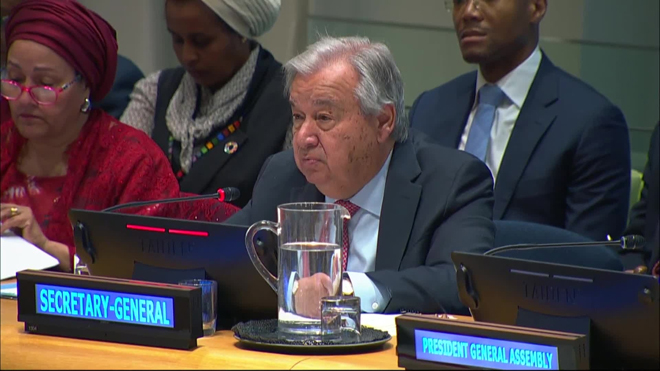
The United Nations Development Programme (UNDP)
has warned that 800 million young people entering the labour market in
developing economies over the coming years may be unable to find jobs. UNDP
Administrator Alexander De Croo announced two new initiatives to boost
investment and expand employment opportunities. He said that over the next 15
years, 1.2 billion young people would complete their education and enter the
labour market, but only 400 million of them would be able to secure jobs. The
main reason for this enormous gap is growing demographic pressure. In many
developing countries, the median age of the population is between 18 and 25. De
Croo explained that these projections are based on current technological
conditions and are not inevitable outcomes; rather, they will depend on the
policies adopted.
Promoting Sustainable Employment Opportunities
The first initiative announced by the UNDP
focuses on accelerating investment. It aims to help governments improve
investment policies and legal frameworks, compile a pipeline of
investment-ready projects, and move those projects from preparation to
implementation. The second initiative, known as Jobs for Prosperity,
will help member states identify sectors with significant potential for job
creation, align workers’ skills with employers’ needs, and remove barriers to
business investment and recruitment. Addressing the potential impact of
artificial intelligence (AI) on employment, De Croo said effective and
proactive policies could change these projections. Sectors such as care
services, agriculture and tourism will continue to generate substantial
employment opportunities even as the adoption of AI accelerates. He emphasized
that creating jobs remains the only genuine and sustainable way to lift people
out of poverty. To support both initiatives, the UNDP is expanding its
partnerships with the World Bank Group, the European Investment Bank and the
European Bank for Reconstruction and Development. Initial projects under these
initiatives are already underway in Nepal, Yemen, Haiti, Lebanon and Ghana.
Three Major Economic Shocks
The initiatives were announced at a time when
many developing countries are facing three major economic shocks
simultaneously. De Croo described the situation as a triple crisis involving
high energy prices, the strongest El Niño event since 1950 and extremely high
borrowing costs. On average, developing countries now spend 9.5% of their total
government revenue solely on interest payments on debt. For the first time
since 2010, the number of people living in multidimensional poverty has also
increased. This form of poverty goes beyond insufficient income and includes
factors such as inadequate access to electricity, water, healthcare and
education. De Croo said the global economy had proved more resilient than
expected, but the benefits of that resilience were not being distributed
equally among countries. While some nations continue to have relatively strong
economic foundations, others lack the basic capacity to withstand further
economic shocks.