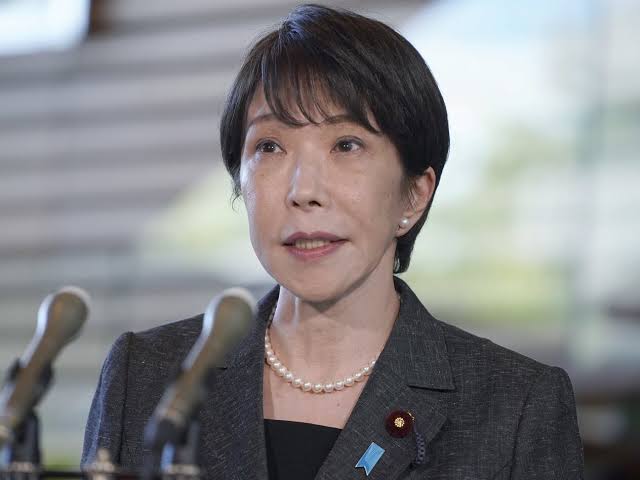
Japanese Prime Minister Sanae Takaichi has said
that, alongside her demanding official duties, she also has to manage household
chores. Speaking in parliament on Wednesday, Japan’s first female prime
minister said that she wakes up in the morning, takes a bath, prepares
breakfast, washes dishes, and applies makeup. According to Takaichi, completing
all these tasks seems to take her three to four hours longer than it would for
male prime ministers. Takaichi describes herself as a workaholic. She has
previously revealed that she sleeps only two to four hours a night and
sometimes schedules staff meetings as late as 3 a.m. The debate over the prime
minister’s time management emerged after a member of the ruling coalition
questioned the longstanding practice of Japanese prime ministers spending
extended periods attending parliamentary sessions.
In Japan, the prime minister is required to spend
between five and seven hours a day in parliament, where opposition lawmakers
question the government leader or the prime minister participates in other
parliamentary proceedings. Fumitake Fujita, a member of the Japan Innovation
Party, cited a study showing that the Japanese prime minister attended
parliamentary sessions on 72 days in 2022, compared with 50 days for the
British prime minister and 13 days for the German chancellor. According to
Fujita, the amount of time Japan’s prime minister spends in parliament is
inconsistent with international practices. Takaichi acknowledged the importance
of parliamentary debates on legislation but explained that reviewing documents
brought home after work and preparing responses to parliamentary questions
often keep her occupied until late at night. She said she enjoys reading these
documents around midnight. However, she added that finding time to concentrate
on Japan’s future direction and reflect on her broader vision has become
difficult.
Japanese Prime Minister Rejects Russia’s
Espionage Allegations
Meanwhile, following the arrest of a Japanese
journalist in Russia, Prime Minister Sanae Takaichi has firmly rejected
Moscow’s allegations that Japan is engaged in espionage activities on Russian
territory. Takaichi said that no such incident had occurred and emphasized that
ensuring the safety of the Japanese national was the government’s top priority.
According to Russia’s Federal Security Service (FSB), Japanese journalist Yuki
Imai, who is affiliated with the Hokkaido Shimbun newspaper, collected
information about Russia’s defense capabilities and attempted to pass it on to
Japanese intelligence agencies.
Russian authorities say the journalist was
detained in the eastern region of Sakhalin while preparing to leave Russia. He
was subsequently transferred to Moscow, where a court ordered that he remain in
custody for approximately two months. The Japanese government, however, says it
has not yet been given an opportunity to communicate directly with the
journalist. Tokyo has summoned the Russian ambassador to protest the arrest and
demanded that the journalist be treated fairly and impartially. The Japanese
government is also seeking permission for a consular visit to verify the
journalist’s health and confirm his current circumstances.