Despite
the formation of a new government in Bangladesh, the path to a political
comeback for the former ruling party, the Awami League, remains blocked. The
issue of excluding the party from elections has now reached the United Nations.
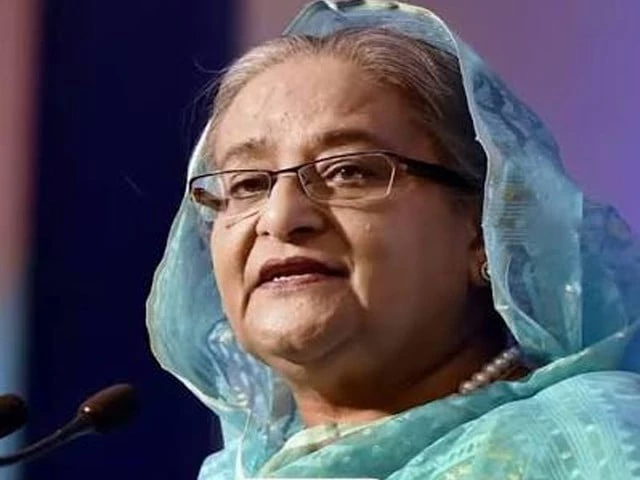
Former Prime Minister Sheikh Hasina Wazed has urged UN human rights experts to
take notice of the ban on her party and call for free, fair and inclusive
elections in Bangladesh.
According
to details published on the website of Matrix Chambers, a UK-based legal
institution specializing in international law and human rights, Sheikh Hasina
has sent a written communication to UN special rapporteurs expressing serious
concerns over the continued ban on the Awami League in Bangladesh. The letter
states that the ban was initially imposed by Bangladesh’s interim
administration but was subsequently retained and formally implemented by the
new government led by the Bangladesh Nationalist Party (BNP) under Tarique
Rahman. Hasina argues that maintaining the ban is depriving a significant
section of the population of political representation and undermining the
democratic process.
The
BNP came to power following the February 2026 elections. According to the
letter, the Awami League was not permitted to participate in the polls, despite
substantial support within Bangladesh for including the party in the electoral
process. Hasina maintains that excluding a major political party rendered the
elections neither free, fair nor inclusive, raising questions about the
legitimacy of their results from both legal and political perspectives.
The
communication states that Bangladesh is facing a constitutional situation in
which efforts are underway to strengthen democratic institutions and hold
elections, while a major political party and organisations affiliated with it
remain legally barred from participating in the electoral process. As a result,
a substantial proportion of Awami League supporters are being denied the
opportunity to obtain political representation through their preferred party.
The
letter sent by Sheikh Hasina also argues that it has become difficult for the
Awami League to challenge the ban through Bangladesh’s courts. According to the
communication, the ban on the party and ongoing attacks against its supporters
has created obstacles to securing legal representation and pursuing legal
complaints against the restrictions. The letter describes the ban as inconsistent
with four provisions of the International Covenant on Civil and Political
Rights (ICCPR). These include Article 19, which protects freedom of expression;
Article 21, which guarantees the right to peaceful assembly; Article 22, which
protects freedom of association; and Article 25, which safeguards political
rights.
The
communication further alleges that the requirements of legitimate grounds,
necessity and proportionality have not been met in imposing the ban, while
adequate safeguards to protect the rights of those affected are also lacking.
It claims that the restrictions form part of a broader pattern of actions and
attacks targeting Awami League members and affiliated individuals. The three UN
experts approached by Sheikh Hasina include the Special Rapporteur on the
promotion and protection of human rights and fundamental freedoms while
countering terrorism; the Special Rapporteur on the rights to freedom of
peaceful assembly and of association; and the Independent Expert on the
promotion of a democratic and equitable international order.
The
letter calls on these experts to issue a public statement and support elections
in Bangladesh in which all political forces are given an opportunity to
participate. It identifies the exclusion of the Awami League from the electoral
process as a central concern. Through this initiative, Sheikh Hasina has sought
to take the issue of the ban on her party beyond Bangladesh’s domestic
political dispute and bring it before an international human rights forum.
Attention will now focus on whether the relevant UN experts respond to the
appeal or take any further action.