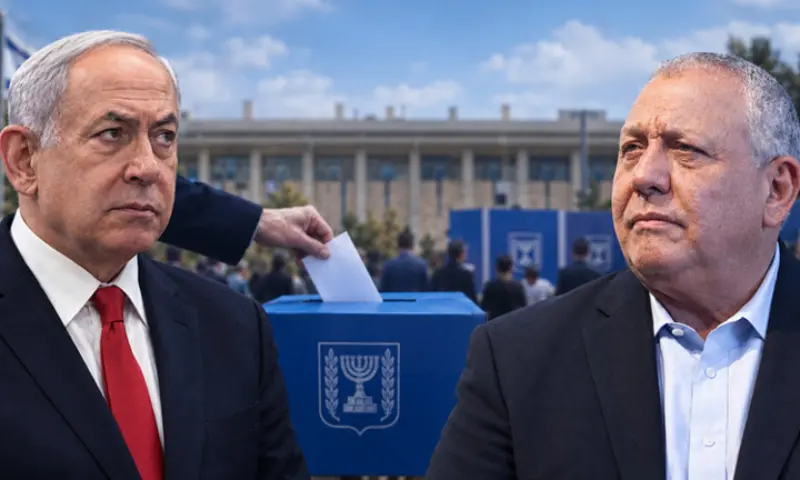
Israeli Prime Minister Benjamin Netanyahu has
accused Arab political parties of widespread election fraud and stealing the
results after his governing coalition failed to secure a clear majority in the
parliamentary elections. His Likud party has alleged that voters were bribed in
Arab-majority areas, election officials were threatened, votes were cast using
fake identities, and illegal software was used to mobilize voters. The party
has called for immediate investigations by the police, Israel’s domestic
intelligence agency, Shin Bet, and the Central Elections Committee.
According to reports published on October 28 by The
Times of Israel and The Jerusalem Post, Likud issued a strongly
worded statement on Wednesday, alleging that Arab political parties had
attempted to influence the results through organized electoral irregularities.
Netanyahu also shared the statement on his official social media account on X. However,
Israeli election authorities have not confirmed any nationwide or systematic
fraud. They have said that the complaints received are being reviewed in
accordance with established procedures. In its statement, Likud also accused
Arab political parties of supporting terrorism and attempting to undermine
Israel’s status as a Jewish state. Arab parties have rejected these
allegations, describing Netanyahu’s election-related statements as an attempt
to discourage Arab voters from participating in the electoral process.
Likud Claims Hundreds of Testimonies and
Thousands of Cash-Filled Envelopes
Likud says it is submitting hundreds of
testimonies and materials containing alleged evidence to the police, Shin Bet,
and the Central Elections Committee. The party has claimed that serious
irregularities were discovered at several polling stations in Arab-majority
areas. According to its statement, thousands of envelopes containing cash and
ballot papers for the Arab political party Ra’am were allegedly found and were
intended to influence voters. Other allegations include threats and violence
against polling staff, multiple people entering a single polling booth, voting
under duplicate identities, discrepancies between the number of voters and
ballot envelopes, and the use of prohibited software for election campaigning. Likud
has demanded a full investigation into all complaints and called for those
responsible to be punished in accordance with the law. The party maintains that
the alleged irregularities have seriously undermined the credibility of the
election results and Israeli citizens’ right to vote.
Three Arrested as Police Reportedly Seize Cash
and Ballot Papers
Amid the election-fraud allegations, Israeli
police arrested three people on October 27 in the southern Negev region on
suspicion of attempting to bribe voters. According to Israeli police, the
suspects were allegedly preparing to distribute money to citizens to secure
votes in favor of the Arab party Ra’am. The suspects were reportedly from the Bedouin
communities of Segev Shalom and Ar'ara. Police claimed that searches of the
suspects’ homes uncovered envelopes containing thousands of shekels in cash and
election ballot papers. The investigation has been assigned to a specialized
Israeli police investigative unit. However, the arrest of these three
individuals on suspicion of specific voter-bribery offenses does not establish
that systematic fraud occurred nationwide or that all Arab political parties
were involved. The allegations against the suspects remain under investigation.
Arab Party Ra’am Rejects Allegations and
Criticizes Police Action
The Arab political party Ra’am has rejected the
allegations involving its supporters and described the arrests as politically
motivated. According to The Jerusalem Post, the party maintains that
no unlawful conduct has been established in connection with the actions of
those arrested. It argues that the arrests were intended to discourage Arab
citizens from voting and reduce their electoral participation. Ra’am leader
Mansour Abbas has also criticized Netanyahu for portraying the growing number
of Arab voters as a threat. According to Abbas, Netanyahu is attempting to
mobilize right-wing supporters by creating fear of Arab voters. Arab political
leaders have described Netanyahu’s election campaign statements as
inflammatory, emphasizing that Arab citizens have a legal and democratic right
to participate in elections.
Central Elections Committee Begins Reviewing
Netanyahu’s Complaints
Israel’s Central Elections Committee confirmed on
Wednesday that it had received complaints from Likud concerning alleged
electoral irregularities and was reviewing them. According to The Times of
Israel, the committee said that its election-transparency monitoring
system is activated during every election to examine complaints from all
political parties and objections concerning election results. The committee
clarified that Likud’s complaint was also being handled under the established
procedures. On October 25, election officials had instructed all political
parties that they could submit details of suspicious polling stations and
possible irregularities. Earlier, an official from the Elections Committee had
rejected claims of widespread election fraud in comments to Israel’s Channel
12.
Netanyahu’s Bloc Projected to Win Only 53 Seats
as Arab Parties Make Historic Gains
Likud’s allegations have emerged as preliminary
results from the October 27 election indicate that Netanyahu’s coalition is
falling short of the majority required to form a government. According to the
preliminary distribution of seats released on Wednesday, Netanyahu’s right-wing
and religious coalition is projected to win 53 seats, opposition parties led by
former army chief Gadi Eisenkot are expected to secure 48 seats, and Arab
political parties could collectively win 19 seats. At least 61 seats are
required to form a government in Israel’s 120-member parliament, the Knesset. On
this basis, Netanyahu’s coalition is eight seats short of the required
majority, while Arab parties could play a decisive role in determining the
formation of the next government. The possibility of Arab parties securing 19
seats is being viewed as an exceptional electoral achievement. However, the
final distribution of parliamentary seats could change before the counting of
special ballots is completed.
Fear of Electoral Defeat or Actual Fraud?
Political Dispute Intensifies
According to Israeli media reports, Netanyahu’s
party had begun monitoring polling stations in Arab-majority areas and
preparing for potential electoral challenges even before the election. The
Times of Israel, citing Israel’s Channel 12, reported that some Likud
activists had considered the possibility of challenging the results before Election
Day, particularly if Netanyahu’s coalition failed to secure a clear victory. Arab
parties, meanwhile, argue that their electoral gains reflect growing political
participation among Arab citizens and that attempts to portray their success as
unlawful are unjustified. Following the election, the allegations made by
Netanyahu’s party, the police investigation, and the proceedings of the Central
Elections Committee have assumed particular significance. However, no competent
authority has yet concluded that Israel’s parliamentary election was stolen
through systematic fraud. At the same time, both Netanyahu and the opposition
face the challenge of securing sufficient political support to form the next
government. In the coming days, the counting of special ballots, decisions on
electoral complaints, and negotiations among political parties will help
determine Israel’s future political landscape.