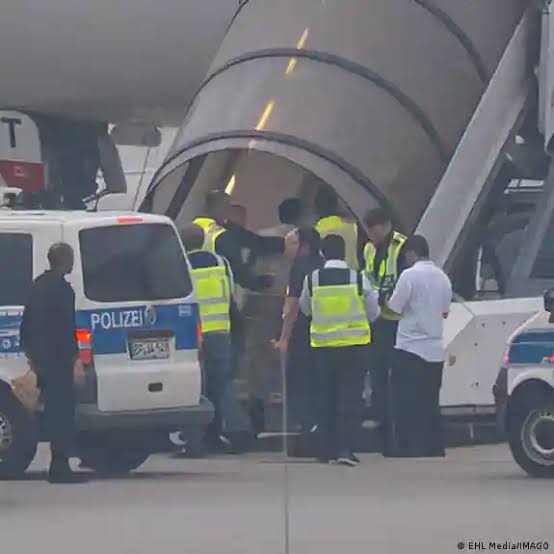
According to Germany’s Interior Ministry, the
number of people deported during the first nine months of this year was
approximately 19% lower than during the same period last year. The Federal
Ministry of the Interior released the figures in response to a request from the
Left Party. According to the report, a total of 14,324 people were deported
from Germany between January and September 2026, compared with 17,651 during
the corresponding period in 2025. Turkey was the leading destination for
deportees, followed by Georgia and Algeria in second and third place,
respectively.
The figures indicate that the political situation
in Syria continues to make the deportation of Syrian nationals from Germany
difficult. Even the return of convicted criminals has faced obstacles. Since
the beginning of 2026, only six people have been deported to Syria. In
contrast, deportations of Turkish nationals have increased. A total of 2,025
Turkish citizens have been returned to their country so far this year. According
to the Federal Ministry of the Interior, the number of foreign nationals
voluntarily returning to their home countries from Germany has also risen
slightly. This year, 14,140 people received financial or other assistance to
return to their countries of origin, compared with 12,263 last year.
How Does Germany’s Deportation System Work?
Germany does not have a dedicated agency similar
to the United States Immigration and Customs Enforcement (ICE), which directly
handles all deportation cases. Over the past decade, the German government has
introduced several reforms aimed at making it easier to deport migrants who,
under the bureaucratic system, have “little prospect of being allowed to stay.”
The process has been accelerated further in recent years.
Both current Chancellor Friedrich Merz and his
predecessor, Olaf Scholz, have sought to remove legal obstacles to
deportations.
In general, migrants who do not have a valid
residence permit in Germany, as well as asylum seekers whose applications have
been rejected, are required to leave the country within a specified period. Applicants
whose asylum claims have been rejected are generally given one month to leave
Germany. If they fail to depart within that period, they may be deported. However,
certain individuals are granted exemptions and may receive temporary permission
to remain in Germany. Such permission is issued when there are obstacles to
deportation, including uncertainty about a person's identity or family ties to
someone who has temporary residence status or has been granted permission to
stay or work in Germany on humanitarian or medical grounds.
Approximately 180,000 people in Germany currently
hold this type of temporary permission to stay.
Who Decides on Deportations?
Local immigration authorities make deportation
decisions and assess whether any legal obstacles prevent a person from being
removed from the country. If no such obstacles exist, a deportation date is
set, but the individual concerned is not informed in advance. If someone has
previously attempted to evade deportation, or authorities suspect that the
person may try to flee, the state can order their detention until deportation
is carried out.
Federal Police officers are responsible for
enforcing deportation decisions.
In some cases, special aircraft are chartered for
particular countries to deport several people at the same time. Police
authorities try to accommodate as many deportees as possible on these flights. In
2024, approximately 7,300 of the 20,100 people deported from Germany were
returned through specially chartered flights. In many cases, individuals facing
possible deportation are first summoned to an immigration office. There, a
Federal Police officer informs them of the deportation decision.
Police officers then accompany them to their
homes so they can collect their clothes and other essential belongings before
taking them directly to the airport. However, in some cases, police officers
arrive at people's homes early in the morning and arrest them. Unlike officers
of the U.S. Immigration and Customs Enforcement agency (ICE), German police
officers do not wear masks and operate in uniform. They are required to carry
their identification cards and must provide their names when asked.