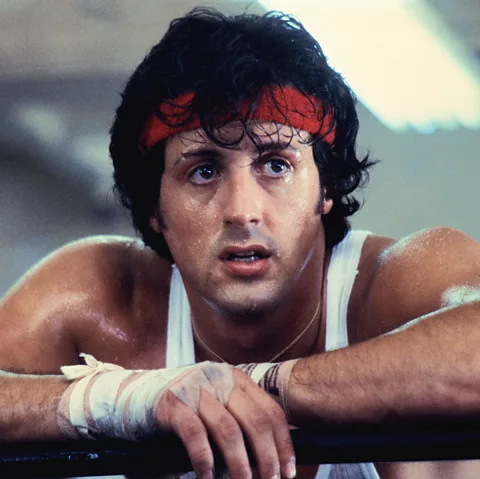
Sylvester Stallone, who once lived on the streets
of New York and cleaned fish to make ends meet, was someone nobody in Hollywood
was willing to take seriously. But he refused to give up. He wrote a film
script himself and insisted on playing the lead role. The result was Rocky,
released in 1976, which turned him into a major Hollywood star almost overnight
and went on to win the Academy Award for Best Picture.
According to a BBC report, Hollywood history is
full of extraordinary success stories, but perhaps none is more inspiring than
that of actor and screenwriter Sylvester Stallone. He was a man who could find
neither acting opportunities nor financial stability, and whom the film
industry was unwilling to take seriously. Yet he turned his failures into the
foundation of a film that changed the history of cinema. This extraordinary
journey is now being portrayed in the new film I Play Rocky, directed
by Peter Farrelly. Young Sylvester Stallone is portrayed by relatively
lesser-known actor Anthony Ippolito.
The story begins in the early 1970s, when
Stallone was living on the streets of New York. His only companion during those
lonely days was his dog, Butkus. Despite auditioning for acting roles, he faced
repeated rejections. To make ends meet, he spent long hours doing the difficult
work of cleaning fish. People even mocked his dream of becoming an actor
because the use of forceps during his birth had left part of his face paralysed
and affected his speech.
Stallone recorded his voice and conversations to
improve the way he spoke. He would listen to the recordings and try to identify
his mistakes. The film shows that he later moved to Los Angeles, where his
financial difficulties became so severe that he was forced to sell his beloved
dog, Butkus, for a while. However, the same dog later appeared in Rocky.
Despite all these hardships, Stallone refused to give up and wrote the story of
a boxer in just three days. That story would eventually become the foundation
of Rocky.
The Remarkable Similarities Between Stallone and
Rocky
In Rocky, Stallone played the role of
Rocky Balboa, a boxer who has passed his prime and is regarded by the world as
a failure. He suddenly gets an opportunity to step into the ring against world
heavyweight champion Apollo Creed, despite having almost no chance of winning.
Rocky knows that he may not win the fight, but he decides to give it everything
he has and prove his courage to the world.
According to Nick de Semlyen, editor of the film
magazine Empire and author of The Last Action Heroes, a book
about Stallone and other action stars of that era, Stallone himself was a man
who had faced repeated failures. He says Stallone was once completely broke but
suddenly found himself among Hollywood's most popular actors, even becoming a
major attraction at the Academy Awards ceremony. Few stories in film history
illustrate such a dramatic reversal of fortune. Anthony Ippolito, who plays the
young Stallone in the film, also agrees that there are deep similarities
between the actor and the character he created, Rocky. According to him, there
are some differences between the two. Stallone was a talented writer, read
extensively and was more thoughtful and reflective than Rocky. Nevertheless, the
film's story was largely inspired by his own life.
When Hollywood Refused to Take Him Seriously, He
Wrote His Own Story
In his recent memoir, The Steps,
Sylvester Stallone has also explained that the idea of writing Rocky
came to him during a difficult period in his life, when he was facing repeated
failures as an actor. He believed that millions of people around the world must
have experienced the same frustration and helplessness caused by repeated
rejection and closed doors of opportunity. In his book, he wrote that he could
hardly believe he was the only person among billions of people who felt that
every door to success in life was repeatedly being slammed shut in his face.
Stallone began acting during his college years, but by then his most notable work
had been a supporting role in the film The Lords of Flatbush, which
also starred Henry Winkler. Winkler later became famous for playing Fonzie in
the popular television series Happy Days.
In 1970, Stallone also appeared in a low-budget
adult film to cover his living expenses. According to Nick de Semlyen, Stallone
considered himself a serious actor, was interested in poetry and was a great
admirer of renowned American writer Edgar Allan Poe. However, the film industry
often cast him in roles portraying gangsters or criminals rather than taking
him seriously as an actor. Semlyen says that, frustrated by repeatedly being
offered similar roles and not receiving opportunities that matched his
abilities, Stallone decided to write his own stories and create the characters
he wanted to play. He describes the creation of Rocky as nothing short
of a miracle, given that Stallone had almost no influence in the film industry
at the time.
Stallone Turned Down Millions of Dollars for the
Script
The film I Play Rocky shows that United
Artists repeatedly offered Stallone increasingly large sums of money to buy his
story, but with one condition: he would not be allowed to play the lead role.
Instead, a famous actor of that era would be selected to portray Rocky Balboa.
The names being considered included Burt Reynolds and Ryan O'Neal. There are
different accounts of how much money Stallone was offered for the screenplay.
According to Stallone himself, he was offered $360,000. Despite his financial
difficulties, he was unwilling to compromise on his condition. He insisted that
if the film was made, he would play the lead role himself.
Eventually, an agreement was reached, and
Stallone secured the role of Rocky. However, the film's budget was set at just
around $1 million, far below the expectations of its independent producers,
Irwin Winkler and Robert Chartoff. Under the agreement between the filmmakers
and the studio, if the film was produced on a low budget, the producers would
have full control over casting the lead roles. Nevertheless, making a boxing
film with such a limited budget and giving the leading role to an actor who had
no major reputation at the time was a considerable risk for everyone involved.
Filming Was Completed in Just 28 Days, and
Stallone Injured His Hands
The shooting of Rocky was completed in
just 28 days under the direction of John G. Avildsen, an unusually short
production period that remains remarkable in film history. Because of the
limited budget, most scenes were filmed only once, as there was no additional
money available for reshoots. In one of the film's famous scenes, Rocky is
shown punching large slabs of meat. To make the scene look realistic, Stallone
punched frozen meat with such force that he suffered lasting damage to the
bones and joints in his hands. According to Nick de Semlyen, very few people
were convinced during filming that Stallone's movie would succeed. Even after
the film was completed, the studio was not particularly impressed and did not
spend much money on its promotion. The film was not even presented at major
film events such as the Cannes Film Festival. However, when limited screenings
began, audience reactions were completely different from expectations. Viewers
felt an extraordinary connection with the story and its central character, and
the film's popularity began to grow rapidly.
Ten Oscar Nominations and the Best Picture Award
Released in 1976, Rocky became the
highest-grossing film of the year. At the 1977 Academy Awards, it received
nominations in 10 categories and won three awards, including the prestigious
Best Picture award. Sylvester Stallone was also nominated for Best Actor and
Best Original Screenplay. Following the film's success, several sequels were
produced, some of which were directed by Stallone himself. Later, a separate
series of films inspired by the same story was launched under the title Creed.
Michael B. Jordan played the lead role in these films, which also achieved
considerable success. In recent years, Stallone has also expressed interest in
making a new film based on the background story of Rocky.
Why Does Rocky's Story Continue to Inspire
People?
According to journalist Mike Sielski, who wrote
the book Going the Distance about the making of Rocky, one of
the main reasons for the film's success is that its story portrays the struggle
of a man rejected by the world on two different levels: Stallone's own life and
the character he created, Rocky. He says people still want to believe how many
hardships Stallone endured to make the film and how he transformed his failures
into success. Mike Sielski argues that the film's ending also sets it apart
from other conventional Hollywood movies. Rocky loses his fight against world
champion Apollo Creed, but audiences do not consider him a failure.
According to Sielski, when Apollo Creed knocks
Rocky down, Rocky shows his determination to get back up and continue fighting.
This is the moment when viewers begin to see themselves in Rocky and realise
that they, too, should not surrender in the face of difficulties. He says the
story touches on a fundamental aspect of human nature: everyone wants to
believe that they are capable of fighting through hardships and standing up
again after being knocked down. In Sielski's view, the unusual success of Rocky
in the United States in 1976 was also closely connected to the social and
political climate of the time. American society was going through a period of
disappointment and uncertainty following the Watergate scandal and the Vietnam
War.
Many popular films of that era also revolved
around negative or complex characters and social unrest. Among the films
nominated for the 1977 Academy Awards were Taxi Driver and Network,
both of which reflected the anxiety and anger prevalent in American society. According to Sielski, sometimes society
itself does not know what it needs, but when an individual or institution
provides it, the impact can be extraordinary. He believes the same thing
happened with Rocky. The American public wanted a story that could
offer hope, courage and the determination to stand up again, and Stallone gave
them exactly that. Thus, a man who was
once considered unfit for an acting career transformed his personal struggles
into a film that continues to symbolise courage, perseverance and the refusal
to give up.