Following the collapse of the Afghan Republic in
August 2021, the seizure of U.S.-supplied weapons by the Taliban has become a
serious security challenge for Pakistan and the wider region. The markings on
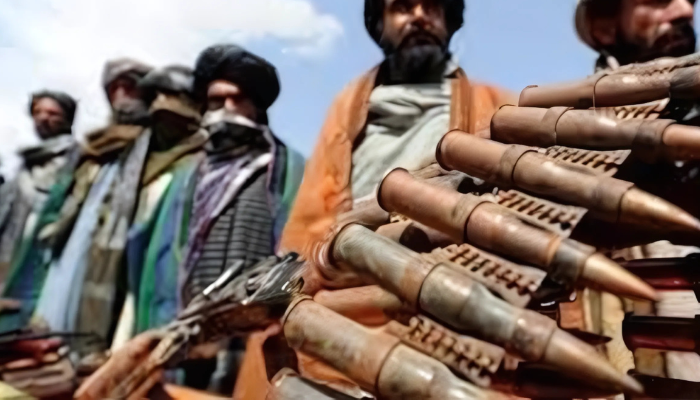
American-made M16A4 rifles serve as a stark reminder that military equipment originally
supplied to Afghan security forces, which trained alongside U.S. and NATO
troops for two decades, fell into the hands of militants after the collapse of
the state.
These weapons were never intended to strengthen
the Taliban, yet their consequences have extended far beyond Afghanistan’s
domestic situation. Pakistan is facing an alarming security situation as
advanced weapons and military equipment spread across the Afghanistan-Pakistan
border. Pakistani officials have repeatedly emphasized that sophisticated
weapons, night-vision equipment, and ammunition left behind by U.S. forces are
finding their way into the hands of militant organizations such as
Tehreek-e-Taliban Pakistan (TTP) and the Balochistan Liberation Army (BLA).
This has significantly increased their operational capabilities and the
lethality of their attacks, making counterterrorism operations more difficult
for Pakistani security forces.
The problem has become even more serious because
of militant safe havens on Afghan soil and illicit smuggling networks. For
Pakistan, this is not merely a matter of abandoned military assets; it is a
direct national security concern. Weapons originally provided to defend
Afghanistan are now being used as instruments of violence against Pakistani
soldiers, police officers, and innocent civilians.
The Taliban authorities in Kabul have a
fundamental responsibility to prevent terrorist groups from acquiring these
weapons, dismantle militant supply networks, and cooperate in establishing a
verifiable mechanism for identifying and recovering military equipment.
Washington must also play its part by supporting intelligence cooperation and
weapons-tracing efforts to address this challenge. Without effective monitoring
and accountability, this dangerous legacy of the Afghan war will continue to
fuel instability across the region.