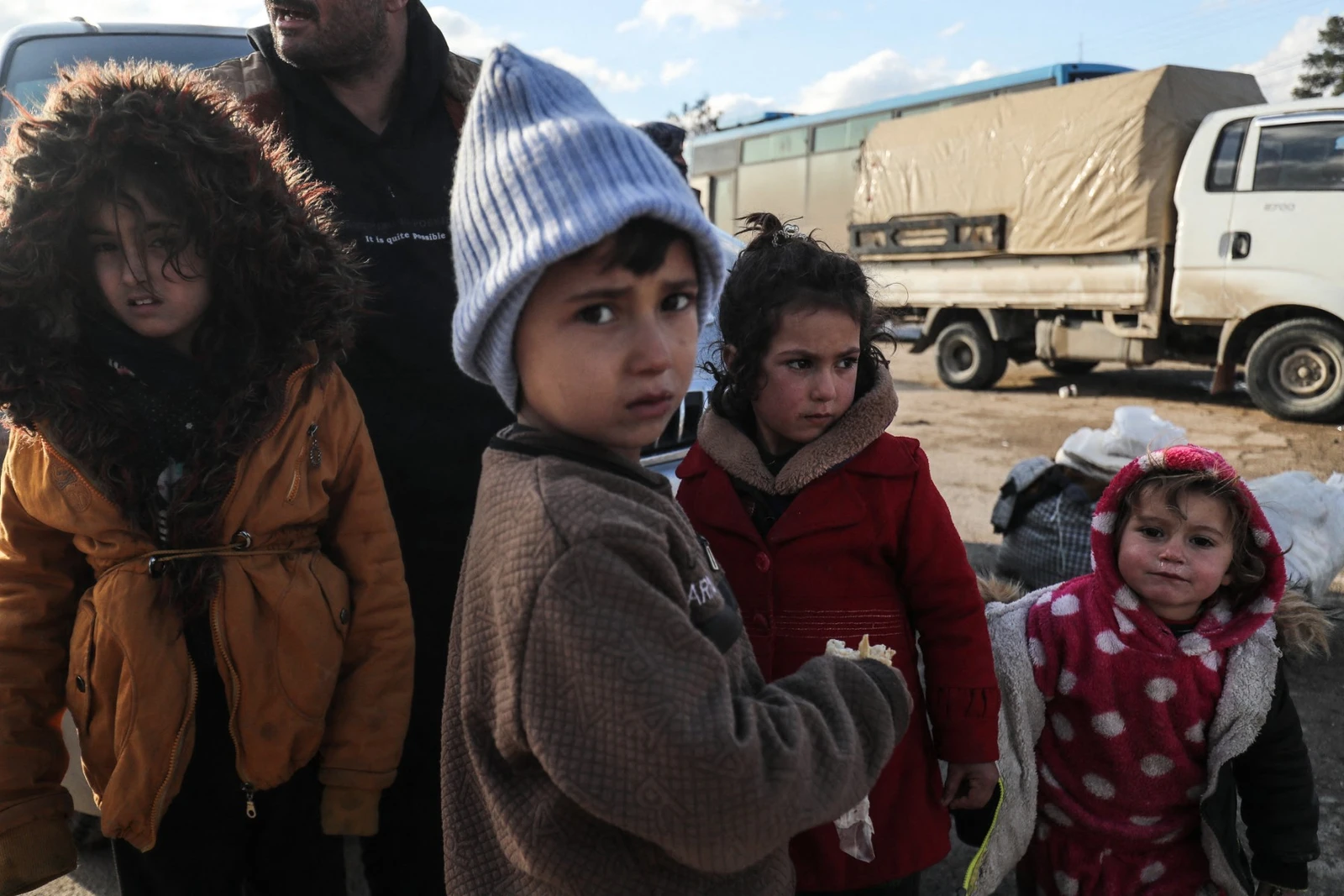
Thousands of children born during Syria’s civil
war, which lasted from 2011 to 2024, lack legal identity because the country’s
laws allow citizenship to be passed on only through the father. Many of these
children’s fathers were killed or went missing during the conflict. Monia
Ammar, a member of the United Nations Independent International Commission of
Inquiry on Syria, said these children had neither chosen the war nor their
fathers’ enforced disappearance, nor were they responsible for their mothers’
unregistered marriages. Yet they are being forced to bear the consequences,
deprived of education, healthcare, citizenship and human dignity. Ammar was
speaking at a high-level meeting in Geneva organized by the Commission in
cooperation with the Syrian government.
On the occasion, the Commission also released a
new policy report addressing the issue.
Syria’s Minister of Social Affairs, Hind Kabawat,
told the meeting that the process of approving legal reforms to grant mothers
the right to pass citizenship on to their children was in its final stages. The
issue is particularly serious because, according to estimates, 12 out of every
13 people killed in Syria’s war were men.
A Wall of Complicated Regulations
Monia Ammar said that under Syria’s 1969
nationality law, a child cannot obtain legal identity if the father is absent.
She described the law as discriminatory on the basis of gender and said its
impact on girls was particularly severe. She added that the law was also
inconsistent with Syria’s obligations under the Convention on the Elimination
of All Forms of Discrimination Against Women (CEDAW). The Commission does not
have an exact figure for the number of children affected. However, it has heard
accounts from widows and mothers who carry their children in their arms but
have no documents proving that their children legally exist. These women face
complicated legal procedures and social stigma, causing many mothers to
eventually abandon their efforts to secure legal identity for their children.
Need to Change Social Attitudes
Welcoming steps taken by the authorities
following the fall of Bashar al-Assad’s government, Ammar warned that however
important legal reforms may be, they alone will not resolve the problem.
Changes in administrative procedures and social attitudes are also necessary.
The Commission’s report recommends ensuring that every child’s birth is
registered, regardless of the circumstances surrounding their birth. It also
calls for alternative forms of documentation to be accepted and for Syrian
mothers to be granted the right to pass citizenship on to their children. At
the meeting, Hind Kabawat also stressed that children of former Islamic State
(ISIS) fighters should not be held responsible for their fathers’ decisions.
She called on the countries concerned to accept responsibility for the welfare
of these children who are their citizens.