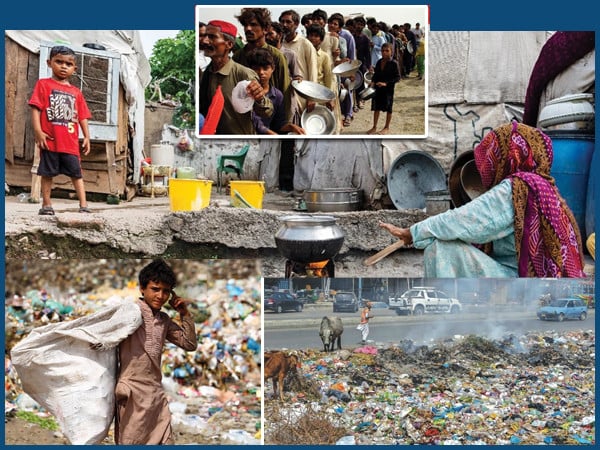
The number of people living in extreme poverty
worldwide has risen to 1.2 billion, while the United Nations’ global poverty
index has recorded an increase for the first time since its launch in 2010. In
its annual 2026 report, released on Monday, the United Nations Development
Program me (UNDP) reported that the number of people
experiencing extreme poverty had increased by 51.5 million compared with the
previous year. The report was jointly prepared by the UNDP and the Oxford
Poverty and Human Development Initiative (OPHI).
UNDP Administrator Alexander De Croo described
the global rise in poverty as a warning sign for the world, saying the
situation should serve as a moment of serious reflection for the international
community. In a statement, he said the figures represented the hardships faced
by 1.2 billion people who simultaneously suffer from hunger, lack of access to
education, inadequate clean water supplies, and electricity shortages. He called
the situation unacceptable. According to the report, more than half of those
living in extreme poverty are children who face multiple hardships because they
lack access to basic necessities and essential services.
Population Growth Also a Major Factor Behind
Rising Poverty
According to the UNDP, population growth is also
a major factor contributing to the global increase in poverty. The report noted
that updated data were available for only 13 of the 108 developing countries
covered, making it important to take this limitation into account when
assessing the findings. The report presents a mixed picture of global poverty.
While the overall number of people affected by poverty worldwide has increased,
33 countries have managed to halve their poverty rates over the past 15 years.
These include six countries in sub-Saharan Africa. Asian countries,
particularly China and Vietnam, have made notable progress in reducing poverty
at a relatively rapid pace.
Regions Most Affected by Poverty
As in the previous year, the majority of people
affected by poverty continue to live in sub-Saharan Africa and South Asia,
according to the report. South Asia is one of the world's most densely
populated regions, where a large proportion of the population faces a lack of
access to basic services. According to the UNDP, Egypt, Nepal, and Tajikistan
have recorded significant reductions in both their poverty rates and the number
of people experiencing multidimensional poverty. In contrast, although Angola
and Zambia have reduced their poverty rates, population growth has offset the
impact of this progress, resulting in an increase in the overall number of
people living in poverty.
Criteria Used to Measure Poverty
The poverty index used in the report does not
rely solely on income but also considers people's access to basic necessities
and essential services. These indicators include inadequate housing, a lack of
sanitation facilities, and limited access to electricity and clean cooking
fuels, food shortages, and deprivation of education. According to the United
Nations, assessing poverty through these indicators helps identify the multiple
hardships people face simultaneously across different areas of their lives. The
recent global increase in poverty highlights the fact that, despite ongoing
efforts to eradicate poverty, hundreds of millions of people around the world
continue to lack access to basic necessities and essential services.